
Filters:
The small farming villages of the Ubaid …
Years: 2637BCE - 2494BCE
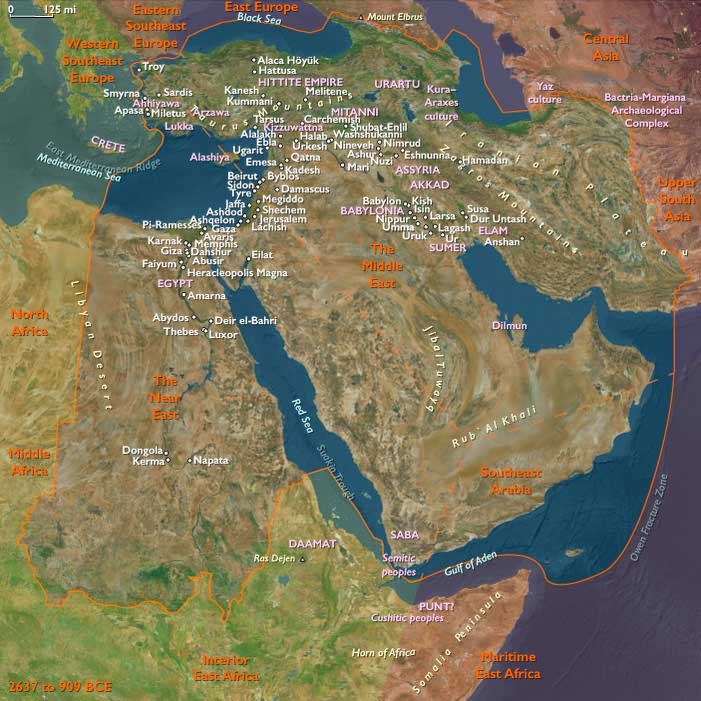
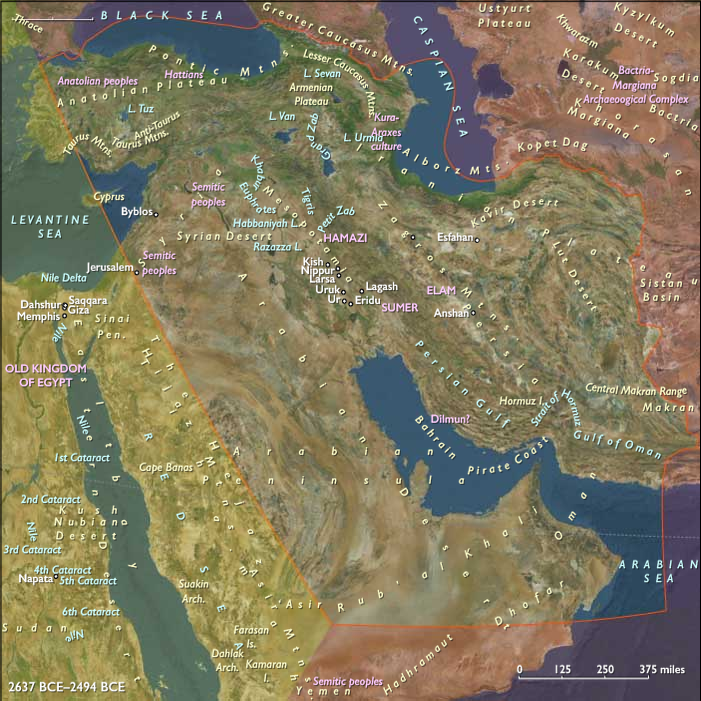
The small farming villages of the Ubaid culture consolidated into larger settlements, arising from the need for large-scale, centralized irrigation works to survive the dry spell as the climate changed from relatively moist to drought in the early third millennium BCE.
The Sumerians dig canals along the southern reaches of the Tigris River near the site of Ur, inhabited in the earliest stage of village settlement in southern Mesopotamia, the Ubaid period, but later apparently abandoned.
The southernmost of the great Sumerian cities known to archaeology, well-situated for trade into Arabia by both sea and land routes, Ur begins again to flourish as a Sumerian capital, where street vendors hawk fried fish and grilled meats to passersby.
Locations
Groups
Topics
Commodoties
Subjects
Regions
Subregions
Years: 2637BCE - 2494BCE
Locations
Groups
Topics
Commodoties
Subjects
Regions
Subregions