Four thousand people have signed confessions acknowledging…
December 1787 CE
Four thousand people have signed confessions acknowledging participation in the events of the rebellion in exchange for amnesty.
Several hundred participants are eventually indicted on charges relating to the rebellion.
Most of these are pardoned under a general amnesty that only exclude a few ringleaders.
Eighteen men are convicted and sentenced to death by the Supreme Court of Massachusetts.
Most of these are either overturned on appeal, pardoned, or have their sentences commuted by John Hancock, who soundly defeats Bowdoin in the gubernatorial election.
General Lincoln himself comes out in favor of mercy, but Samuel Adams, the influential Revolutionary patriot and head of the governor's advisory council, calls for the execution of convicted traitors to the republic.
Ultimately, only two of the condemned men, John Bly and Charles Rose, are executed.Bly and Rose, who are also accused of common-law crime as both were looters, are hanged on December 6, 1787.
Shays will be pardoned in 1788 and he will return to Massachusetts from hiding in the Vermont woods.
He is vilified by the Boston press, who paint him as an archetypal anarchist opposed to the government.
He will later moved to the Conesus, New York area, where he will live until he dies poor and obscure in 1825.
The crushing of the rebellion and the harsh terms of reconciliation imposed by the Disqualification Act all work against Governor Bowdoin politically.
In the gubernatorial election held in April 1787, Bowdoin receives few votes from the rural parts of the state, and is trounced by John Hancock
The military victory will be tempered by tax changes in subsequent years.
The legislature elected in 1787 begins to undertake the slow work of reform, cutting taxes and placing a moratorium on debts.
It also refocuses state spending away from interest payments, resulting in a thirty percent decline in the value of Massachusetts securities as these payments fall in arrears.
Groups
Topics
Commodities
Subjects
Regions
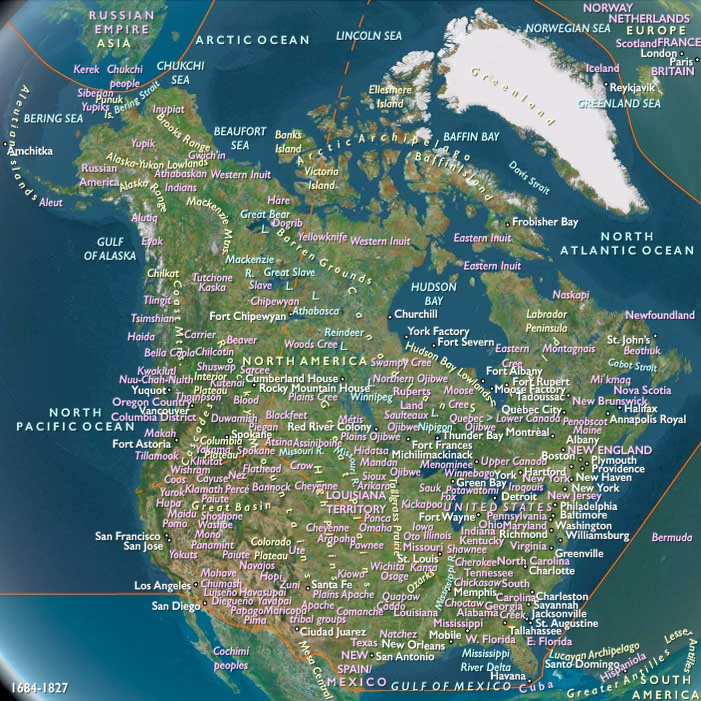
Northern North America
View →Subregions