
The Susquehannock people have occupied areas adjacent …
Years: 1608 - 1608
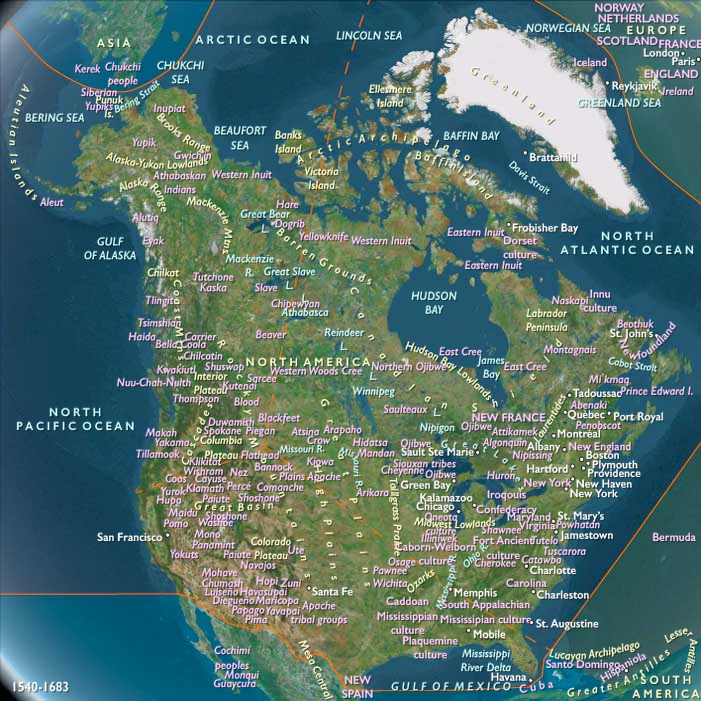
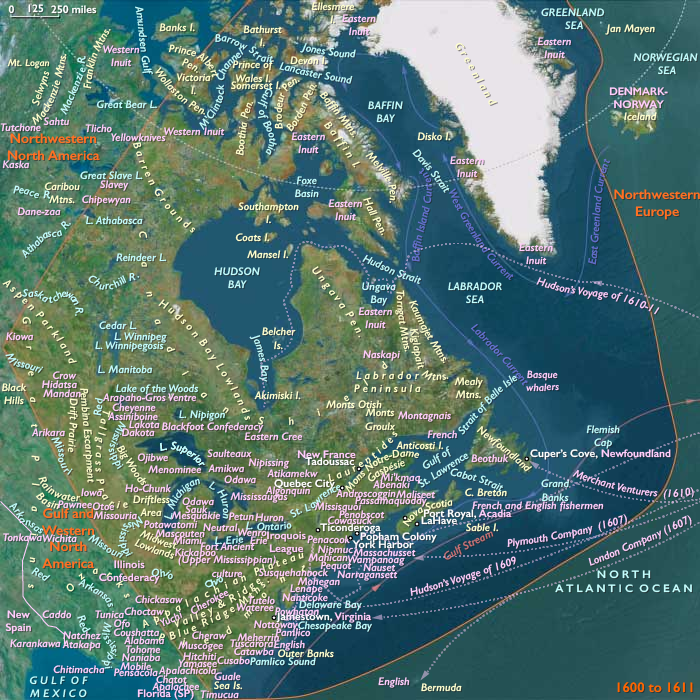
The Susquehannock people have occupied areas adjacent to the Susquehanna River and its tributaries, likely for several hundred years, from the southern part of what is now New York, through Pennsylvania, to the mouth of the Susquehanna in Maryland at the north end of the Chesapeake Bay.
Called Andastes by the French (from their Huron name Andastoerrhonon), Minquas by the Dutch and Swedes (their Lenape (Delaware) name meaning "treacherous"), Susquehannocks by the English of Maryland and Virginia (an Algonquin name meaning "people of the muddy river", and Conestogas by the English of Pennsylvania (from Kanastoge, meaning "place of the immersed pole", the name of their village in Pennsylvania), it is unknown what the Susquehannocks call themselves.
The Susquehannocks are Iroquoian-speaking people who, having rejected invitations to join the Five Nations Iroquois League to the north, have thus become a typical enemy of the Five Nations.
The true nature of their society, whether comprised of a single tribe in a single village, or a confederacy of smaller tribes occupying scattered villages, will probably never be known, since Europeans seldom visited this inland region during the early colonial period.
They have a formidable village in the lower river valley near present-day Lancaster, Pennsylvania, when Captain John Smith of Jamestown meets them in 1608.
He estimates the population of their village to be two thousand, although he never visits it. (Modern estimates of their population, including the whole territory in 1600, range as high as seven thousand.)
Locations
People
Groups
- Iroquois (Haudenosaunee, also known as the League of Peace and Power, Five Nations, or Six Nations)
- France, (Valois) Kingdom of
- Susquehannock (Amerind tribe)
- New France (French Colony)
Topics
Commodoties
Subjects
Regions
Subregions
Years: 1608 - 1608
Locations
People
Groups
- Iroquois (Haudenosaunee, also known as the League of Peace and Power, Five Nations, or Six Nations)
- France, (Valois) Kingdom of
- Susquehannock (Amerind tribe)
- New France (French Colony)
Topics
Commodoties
Subjects
Regions
Subregions