
Filters:
The Bell Beaker Culture and Its Evolution …
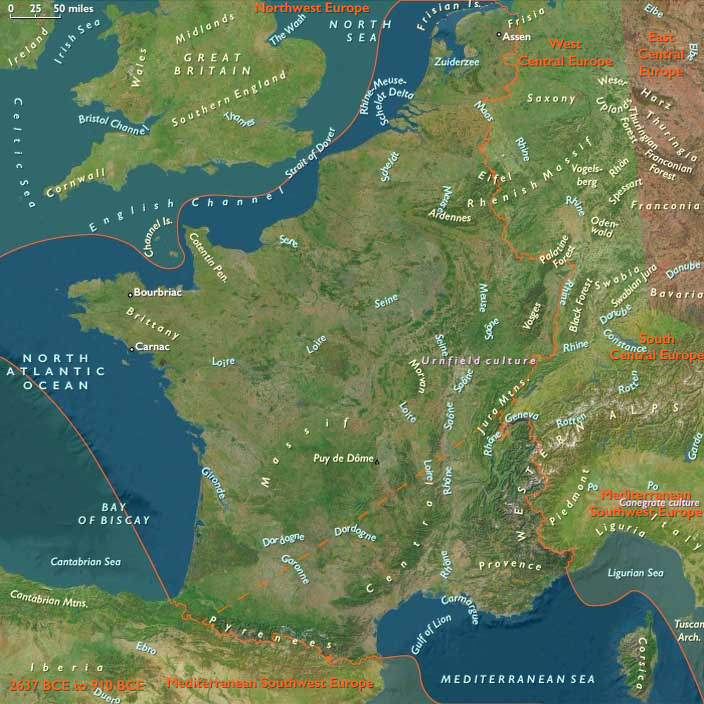
Years: 2637BCE - 910BCE
The Bell Beaker Culture and Its Evolution in the Low Countries (2700–800 BCE)
The Bell Beaker culture (c. 2700–2100 BCE) originated in multiple regions, with proposed centers in the Iberian Peninsula, the Netherlands, and Central Europe. Succeeding the Corded Ware culture, the Bell Beaker peoplesplayed a crucial role in introducing metallurgy, particularly copper, gold, and later bronze, and expanding long-distance trade networks.
Metalwork and Trade in the Low Countries
- The Bell Beaker culture established extensive trade routes that had not existed before, as evidenced by copper artifacts found in the Netherlands, a region lacking natural copper deposits.
- The numerous discoveries of rare bronze objects in Drenthe suggest that it became a major trading center during the Bronze Age (2000–800 BCE), facilitating the exchange of metals, ceramics, and other goodsbetween different European regions.
Cultural Evolution: From Bell Beaker to Elp and Hilversum Cultures
The Bell Beaker culture developed locally into:
- The Barbed-Wire Beaker Culture (2100–1800 BCE) – Characterized by distinctive barbed-wire-decorated pottery, continuing Bell Beaker traditions while developing local variations.
- The Elp Culture (c. 1800–800 BCE) – A Middle Bronze Age culture of the Low Countries, noted for its low-quality earthenware pottery and funerary practices.
The Elp Culture: Tumuli and the Urnfield Transition
-
Early Phase (1800–1200 BCE)
- Characterized by tumuli (burial mounds), which were strongly tied to contemporary burial practices in northern Germany and Scandinavia.
- These burial traditions are linked to the Tumulus culture of Central Europe, suggesting cultural exchange and shared ritual practices.
-
Later Phase (1200–800 BCE)
- Marked by a shift to cremation burials, in which the dead were cremated and their ashes placed in urns.
- These urns were then buried in fields, following the Urnfield culture traditions that spread across much of Europe during the Late Bronze Age.
The Hilversum Culture: Southern Connections to Britain
- The Hilversum culture (1800–800 BCE) dominated the southern Netherlands, distinct from the Elp culture to the north.
- It appears to have inherited cultural ties with Britain, continuing influences from the earlier Barbed-Wire Beaker culture.
- This suggests that maritime exchange networks between Britain and the Low Countries remained active, shaping regional cultural developments.
Significance of These Cultural Developments
- The Bell Beaker culture introduced metalworking and trade networks, laying the foundation for the Bronze Age economy in Northwestern Europe.
- The Elp culture’s transition from tumuli to urn burials reflects broader shifts in funerary traditions and social structures.
- The Hilversum culture’s ties to Britain highlight the continued importance of North Sea trade and cross-cultural interactions.
Together, these developments mark the evolution of Bronze Age societies in the Low Countries, shaping their role within the wider European prehistoric landscape.
Groups
Topics
Commodoties
Subjects
Regions
Subregions
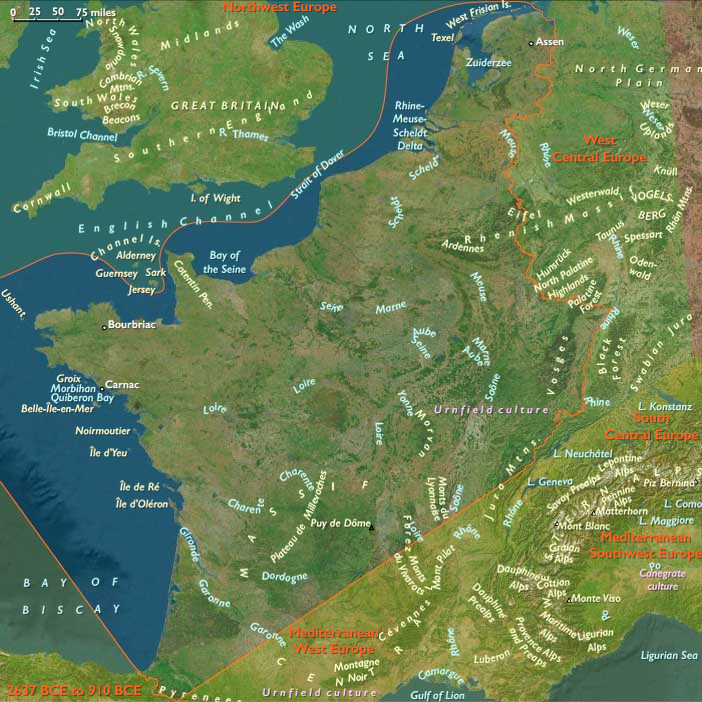
Years: 2637BCE - 910BCE
Groups
Topics
Commodoties
Subjects
Regions
Subregions