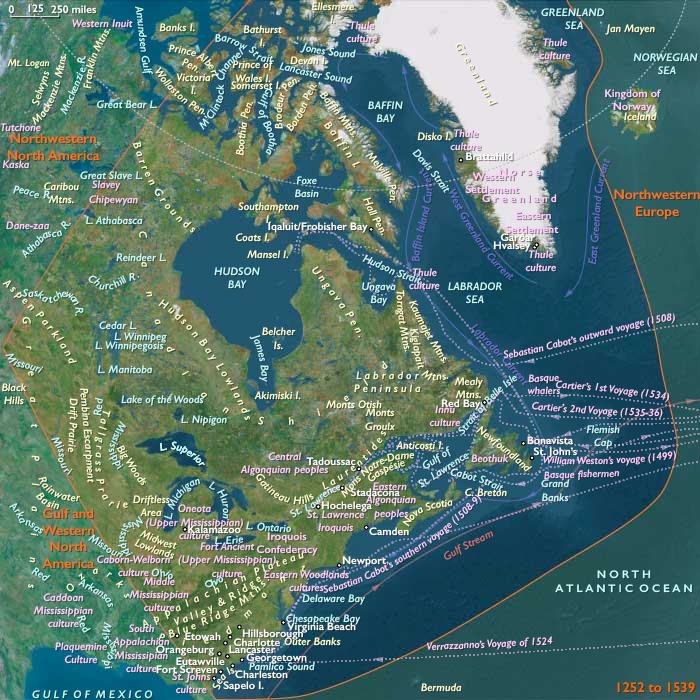
The Thule culture, whose bearers had arrived…
1252 CE to 1395 CE
The Thule culture, whose bearers had arrived at western Alaska in around the year CE 500, have spread eastwards across the Arctic, displacing the related Dorset culture (in Inuktitut, the Tuniit).
Inuit legends speak of the Tuniit as "giants", people who were taller and stronger than the Inuit.
Researchers believe that the Dorset culture lacked dogs, larger weapons and other technologies that gave the expanding Inuit society an advantage over them.
The Thule, known for using slate knives and toggling harpoons, subsist primarily on marine animals—especially large sea mammals—and resources.
Thule winter settlements usually have one to four houses with around ten people.
Their houses are made of whale bones from summer hunts.
Other structures include kill sites, food caches, and tent encampments.
Some major settlements may have had more than a dozen houses, although not all were inhabited at the same time by the fifty residents.
Some Thule migrated southward, in the "Second Expansion" or "Second Phase".
By the thirteenth or fourteenth century, the Thule had occupied an area currently inhabited by the Central Inuit.
Groups
Commodities
Subjects
Regions
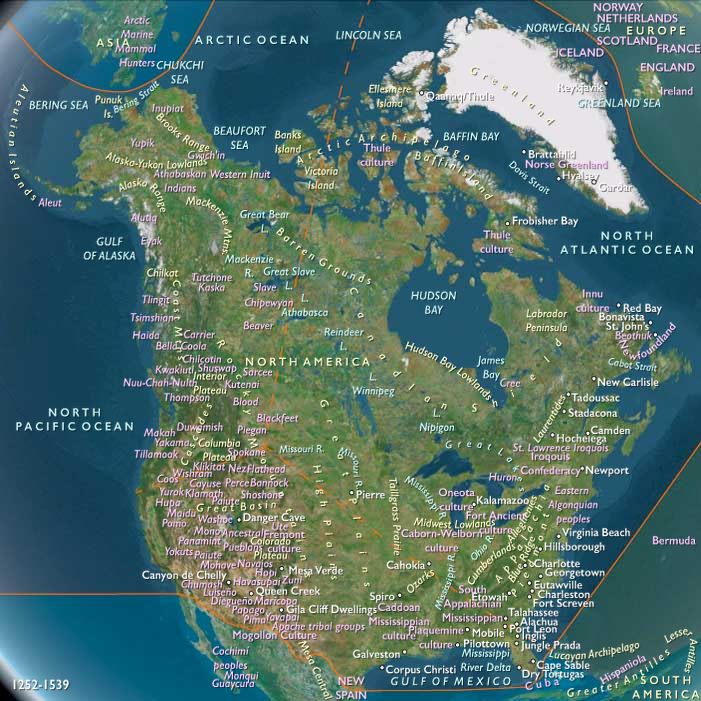
Northern North America
View →Subregions