The traditional view of the Book of…
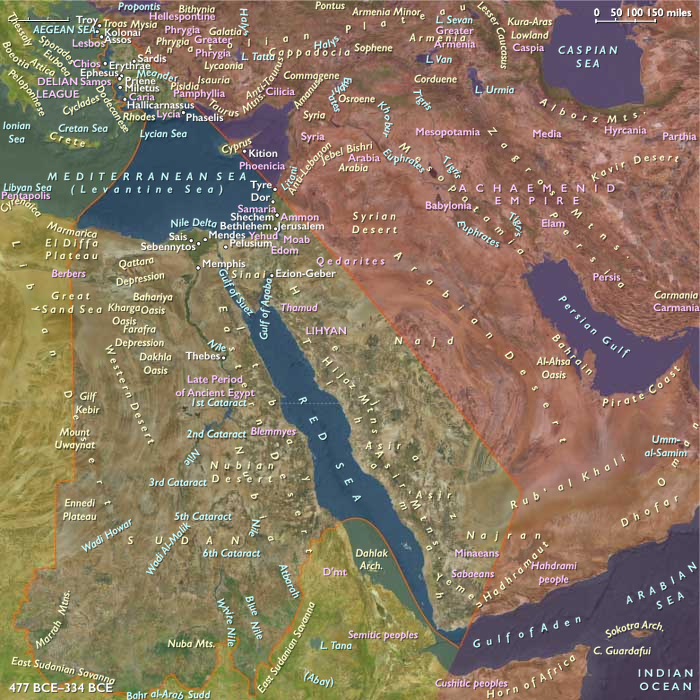
477 BCE to 334 BCE
The traditional view of the Book of Leviticus, the third book of the Pentateuch, is that is was compiled by Moses, or, in less extreme form, that the material was contemporary with his life.
This tradition dates from Josephus, a first century CE historian, and scholars are practically unanimous that the book had a long period of growth, that it includes some material of considerable antiquity, and that it reached its present form in the Persian period (538-332 BCE).
Though compiled in postexilic times from individual laws and various legal collections, some of the individual laws and collections appear to be quite ancient.
The major collections of laws (kept by the tribe responsible for overseeing Israel’s ritual worship, the Levites, from which the book derives its name), together with several shorter supplements, are part of the “P”, or priestly, source, which also supplemented, edited, and occasionally altered the older sources for the Book of Numbers, the fourth book of the Pentateuch.
Zechariah 1-8, sometimes referred to as First Zechariah, was written in the sixth century BCE.
Zechariah 9-14, often called Second Zechariah, which consists of sayings against foreign nations together with promises of power for the returning exiles, contains within the text no datable references to specific events or individuals, but most scholars give the text a date in the fifth century BCE.
A contemporary prophet named Jonah, the apparent subject of the Bible’s short novella entitled the “Book of Jonah” (thought to have been composed during the fourth century BCE) is mentioned in 2 Kings.
In the story, Jonah, seeking to evade God's command to go to Nineveh to preach repentance, secures passage on a ship to Tarshish, only to have his escape interrupted by a divinely ordained storm.
Thrown overboard and swallowed by a great fish, Jonah is spat upon the shore after three days and nights in the fish’s belly.
He then follows God's command and preaches in Nineveh.
When the Assyrians respond to his preaching and repent, God reverses his decision to destroy their city.
The book, which dramatizes God’s care for Jews and Gentiles alike, serves to demonstrate the universality of divine mercy.
Groups
Regions
The Near and Middle East
View →Subregions