
Most ethnic groups constituting the modern Ghanaian …
Years: 820 - 963
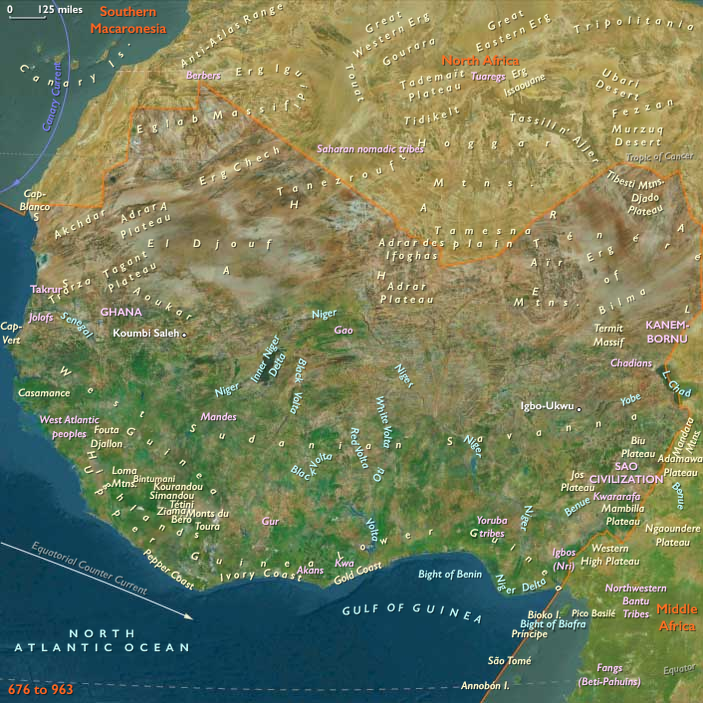
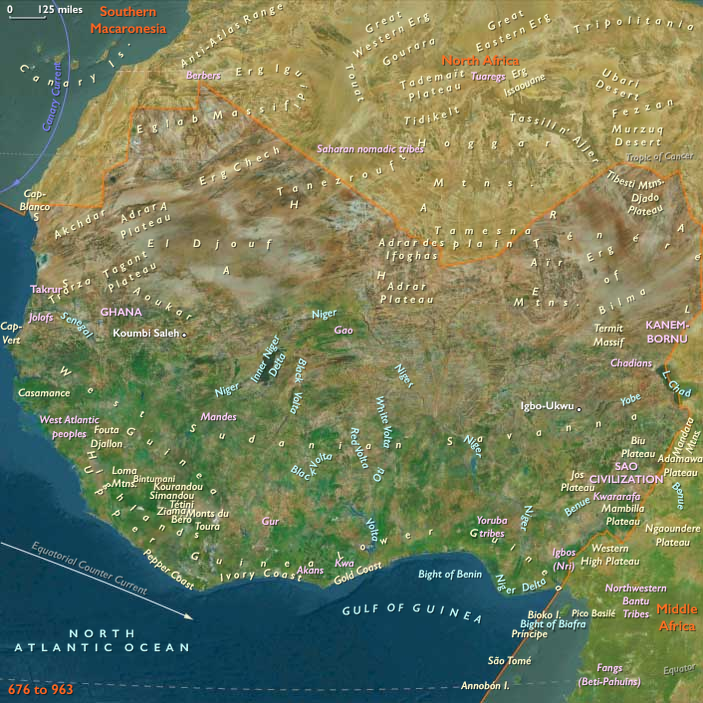
Most ethnic groups constituting the modern Ghanaian population had settled in their present locations by the end of the sixteenth century.
Archaeological remains found in the coastal zone indicate that the area has been inhabited since the early Bronze Age (circa 4000 BCE), but these societies, based on fishing in the extensive lagoons and rivers, left few traces.
Archaeological work also suggests that central Ghana north of the forest zone is inhabited as early as three thousand to four thousand years ago.
Oral history and other sources suggest that the ancestors of some of Ghana's residents entered this area at least as early as the tenth century CE and that migration from the north and east continued thereafter.
These migrations result in part from the formation and disintegration of a series of large states in the western Sudan (the region north of modern Ghana drained by the Niger River).
Prominent among these Sudanic states is the Soninke kingdom of Ghana.
Strictly speaking, ghana is the title of the king, but the Arabs, who leave records of the kingdom, apply the term to the king, the capital, and the state.
Locations
Groups
Subjects
Regions
Subregions
Years: 820 - 963
Locations
Groups
Subjects
Regions
Subregions