The recovery of the Muslim community from…
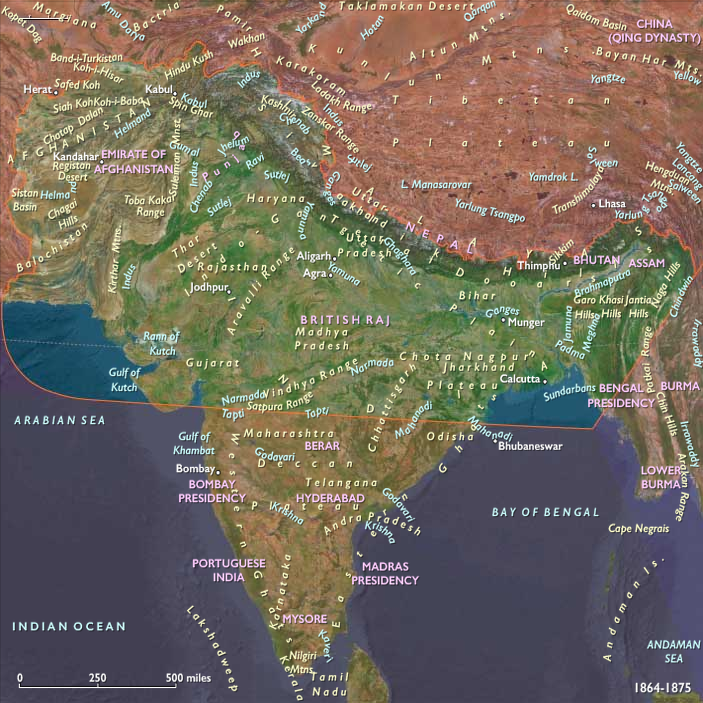
1864 CE to 1875 CE
The recovery of the Muslim community from its low status after the 1857 mutiny is a gradual process that will go on throughout the ensuing century.
In education, commerce, and government service the Muslims lag behind the Hindus, who had more quickly adapted themselves to rapidly changing socioeconomic conditions.
During British rule in India, most industry will be Hindu-owned and Hindu-operated.
Muslims lag behind in business and in industry, especially those from eastern Bengal, which has long been regarded as remote from the hub of commerce.
The words of Bengali commentator Mansur Ali succinctly describe the Hindu dominance and Muslim inferiority in virtually all spheres of society in the nineteenth and early twentieth centuries: "In Bengal, the landlord is Hindu, the peasant Muslim. The money lender is Hindu, the client is Muslim. The jailor is Hindu, the prisoner is Muslim. The magistrate is Hindu, the accused is Muslim."
By remaining aloof from the Western-oriented education system, the Muslims have alienated themselves from the many new avenues opening up for the emerging middle class.
This self-imposed isolation leads to an intensified awareness of their minority role.
Curiously, however, it is Muslim opposition to the extension of representative government—a political stance taken out of fear of Hindu dominance—that helps to reestablish rapport with the British, who by 1900 will welcome any available support against mounting Hindu nationalism.
Locations
People
Groups
Regions
South Asia
View →Subregions