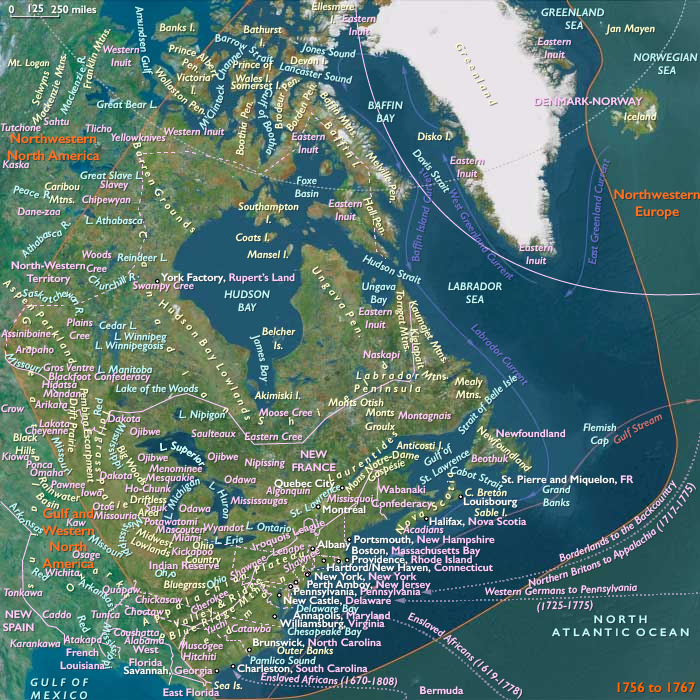
Most of the frontiers in Upper North…
1756 CE to 1767 CE
The "French and Indian Wars" are imperial wars between Britain and France, with the French making up for their small colonial population base by enlisting native war parties as allies.
The series of large wars spilling over from European wars ends in a complete victory for the British in the worldwide Seven Years' War.
In the peace treaty of 1763, France loses practically everything, as the lands west of the Mississippi river, in addition to Florida and New Orleans, go to Spain.
Otherwise lands east of the Mississippi River and what is now Canada go to Britain.
Regardless of wars, Americans are moving across the Appalachians into western Pennsylvania, what is now West Virginia, and areas of the Ohio Country, Kentucky and Tennessee.
In the southern settlements via the Cumberland Gap, their most famous leader is Daniel Boone.
To the north, closer to dense colonial populations and Europe immigrants, a certain Virginia gentleman, George Washington, promotes settlements in West Virginia and Southwestern Pennsylvania to lands he had acquired title to both as a surveyor and as someone who had distinguished himself as an officer in Virginia's colonial militia.
West of the mountains, settlements are curtailed abruptly by a decree by the British crown in 1763, which also obviates many of the conflicting claims made by various colonies.
Groups
English people
View →
Florida (Spanish Colony)
View →
France, (Bourbon) Kingdom of
View →
Ohio Country
View →
Thirteen Colonies, The
View →
British people
View →
Britain, Kingdom of Great
View →
Louisiana (New France)
View →
Louisiana (British colony)
View →
Louisiana (Spanish colony)
View →
Americans
View →
Topics
Commodities
Subjects
Regions

Northern North America
View →Subregions