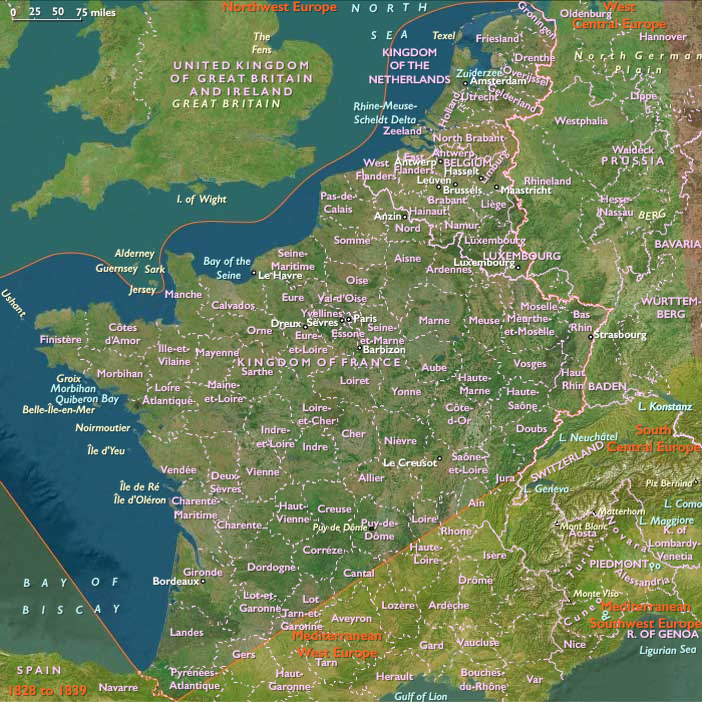
Jean Baptiste Gay, vicomte de Martignac, had…
April 1829 CE
Jean Baptiste Gay, vicomte de Martignac, had succeeded the Comte de Villèle, as prime minister of France.
On January 4, 1828 he had been appointed minister of the interior, and, though not bearing the title of president, becomes the virtual head of the cabinet.
He succeeds in passing the act abolishing the press censorship, and in persuading the king to sign the ordinances of 16 June 1828 on the Jesuits and the little seminaries.
A Bordeaux native, he had become secretary to Emmanuel Joseph Sieyès; after serving for a while in the army, he turned to literature, producing several light plays.
Under the Empire he practiced with success as an advocate at Bordeaux, where in 1818 he became advocate-general of the cour royale.
In 1819 he was appointed procureur-général at Limoges, and in 1821 was returned for Marmande to the Chamber of Deputies, where he supported the Ultraroyaliste policies of Villèle.
In 1822 he was appointed councillor of state, in 1823 he accompanied the duc d'Angouléme to Spain as civil commissary; in 1824 he was created a viscount and appointed director-general of registration
His ultra-royalist views were gradually modified in the direction of the Doctrinaires, and on the fall of Villèle he was selected by Charles X to carry out the new policy of compromise.
He was exposed to attack from both the extreme left and the extreme right, and when in April 1829 a coalition of these groups defeated him in the chamber, Charles X, who had never believed in the policy he represented, replaced him by the prince de Polignac.
Locations
Subjects
Regions

West Europe
View →Subregions