
The American paddle steamer SS Arctic sinks…
April 1854 CE
Owned by the Collins Line of New York, passenger and crew lists indicate that there were probably more than four hundred on board; of these, only eighty-eight survived, most of whom were members of the crew.
All the women and children on board perished.
Arctic is the largest and most celebrated of the four Collins steamers that have operated a regular transatlantic passenger and mail carrying service since 1850.
After the collision, Arctic's captain, James Luce, had first attempted to assist the stricken Vesta, which he believed was in imminent danger of sinking.
When he discovered that his own ship had been seriously holed below the waterline, he decided to run her towards the nearest land, in the hopes of reaching safety.
His plan failed; the engines had stopped when the ship was still a considerable distance from land.
Arctic's lifeboat capacity was sufficient for less than half of those on board; when Luce ordered these launched, a breakdown in order and discipline meant that most places in the boats were taken by members of the crew or the more able-bodied male passengers.
The rest struggled to build makeshift rafts, but most were unable to leave the ship, and went down with her when she sank, four hours after the collision.
Vesta, which initially appeared to have sustained mortal damage, is kept afloat by her watertight bulkheads, and manages to limp into harbor at St. John's, Newfoundland.
Two of the six lifeboats that left Arctic reach the Newfoundland shore safely, and another is picked up by a passing steamer, which also rescues a few survivors from improvised rafts.
Among those saved is Captain Luce, who had regained the surface after initially going down with the ship.
The other three lifeboats disappear without a trace.
The limited telegraph facilities of the time mean that news of Arctic's loss will not reach New York until two weeks after the sinking.
Initial public sorrow at the ship's loss will quickly turn to anger at the perceived cowardice of the crew.
Despite press calls for a full investigation into the disaster, none will take place, and nobody will be held legally responsible.
Demands for the introduction of further safety measures on passenger-carrying vessels will be likewise sidestepped.
Luce, who will be generally exonerated from blame by the public, will retire from the sea; some of the surviving crew will choose not to return to the U.S.
The Collins Line will continue its transatlantic service until further maritime losses and insolvency lead to its closure in 1858.
Groups
Subjects
Regions
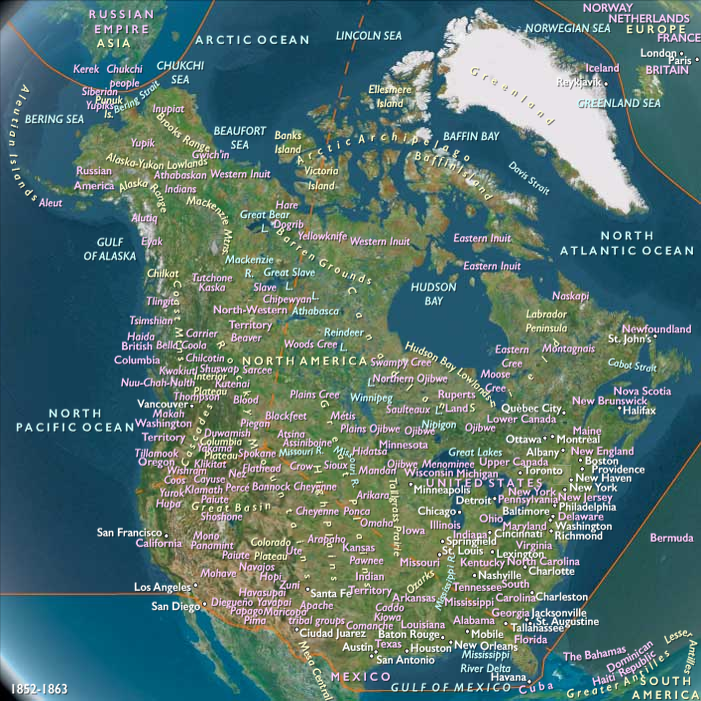
Northern North America
View →Subregions
