A vigorous post-war debate among Bolivia's civilian…
1876 CE to 1887 CE
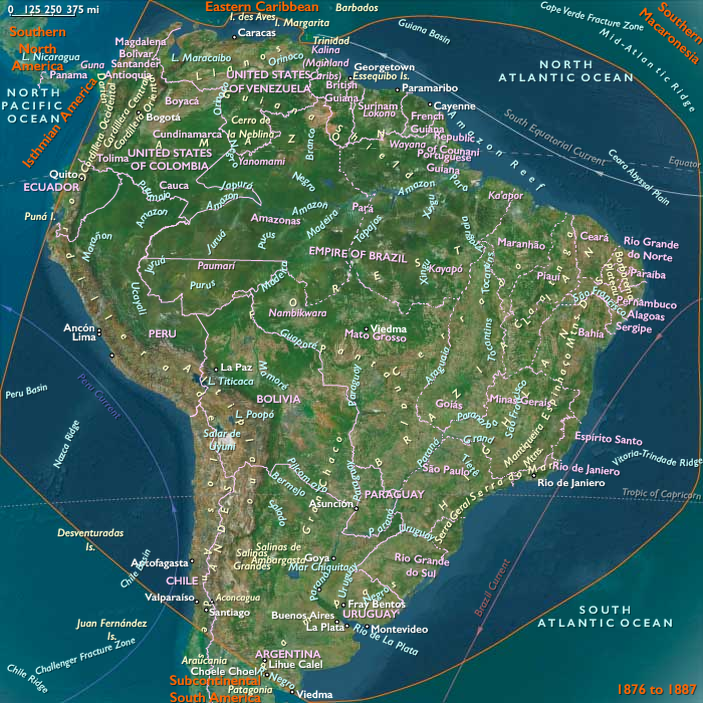
A vigorous post-war debate among Bolivia's civilian elites spawns the development of new political parties.
Mining entrepreneurs, who have become the most important economic group in the country because of increasing production, create the Conservative Party (Partido Conservador), led by Mariano Baptista, a vocal opponent of the War of the Pacific.
Conservatives favor reaching a quick peace settlement with Chile that will include indemnification for lost territories and enable Bolivia to construct a railroad for mining exports.
The Liberal Party (Partido Liberal), founded in 1883 by the former chief of staff, General Eliodoro Camacho, denounces the pacifism of the Conservatives.
It also resents the economic dependence of the mining sector on Chilean and British capital and hopes to attract United States investment.
Despite these differences, both parties are primarily interested in political and economic modernization, and their ideological outlooks are similar.
Civilian politicians reorganize, reequip, and professionalize the discredited armed forces and try to subject them to civilian control.
Still, both Conservatives and Liberals initially support military candidates for the presidency.
The governments in power from 1880 to 1920—elected by a small, literate, and Spanish-speaking electorate—bring Bolivia its first relative political stability and prosperity.
Locations
People
Topics
Regions
South America
View →Subregions