
The Yaocomico are one of the Algonquian-speaking …
Years: 1634 - 1634
March
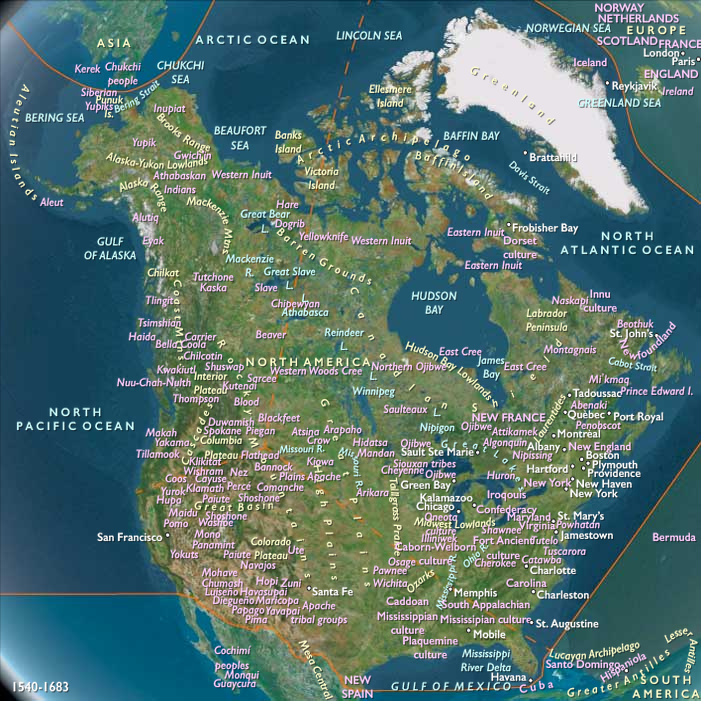
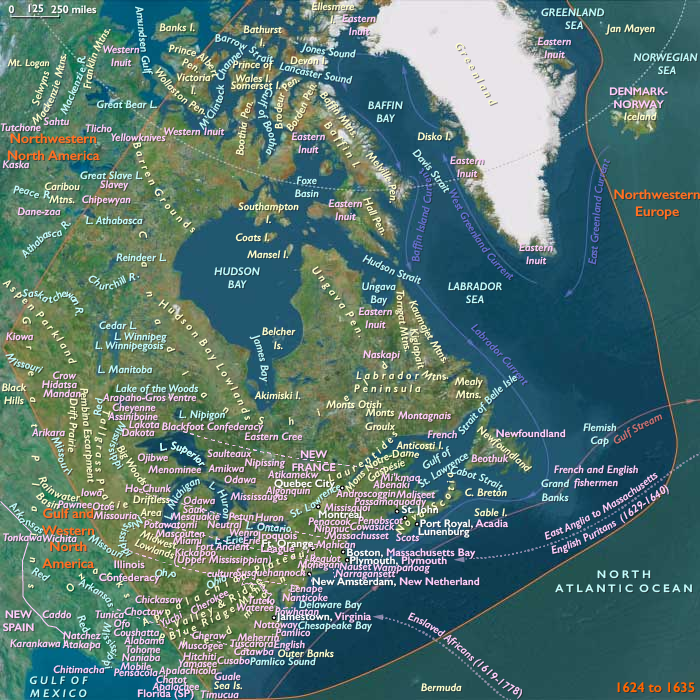
The Yaocomico are one of the Algonquian-speaking groups that live mostly in the coastal tidewater areas of present-day Maryland.
The Piscataway are dominant to the north of the Potomac River, but there are many smaller tribes such as the Yaocomico.
Maryland also has Iroquoian-speaking tribes, particularly the Susquehannock along the Susquehanna River, who have been raiding into Algonquian territory.
There are also Siouan-speaking tribes to the west and southwest.
English explorer Captain John Smith had first visited the upper Potomac River in 1608, and referred to the Piscataway by the name Moyaons, after their "king's house", i.e., capital village or Tayac's residence, also spelled Moyaone.
Closely associated with them were the Nacotchtank people (Anacostans) who lived around present-day Washington, DC, and the Taux (Doeg) on the Virginia side of the river.
Rivals and reluctant subjects of the Tayac had hoped that the newcomers would alter the balance of power in the region.
In search of trading partners, the Virginia Company, and later, Virginia Colony, has consistently allied with Piscataway enemies.
Their entry into the dynamics had begun to shift regional power.
The Tayac's hold over some of his subordinate werowances had weakened considerably by the early 1630s.
When the group of English settlers led by Leonard Calvert, one of the Barons Baltimore and a Roman Catholic, arrive on March 25, 1634, to the eastern shore of the St. Mary's River, a tributary of the Potomac, in the ships Dove and Ark, the Tayac Kittamaquund, paramount chief of the Piscataway nation, manages to turn the newcomers into allies.
He had come to power earlier in the year year after killing his brother Wannas, the former Tayac.
A Yaocomico village occupies the location, but Kittamaquund orders the village cleared and gives it to the English newcomers, who he wants to develop as allies and trading partners.
European accounts claim the Yaocomico were ready to sell the land to the Maryland colonists because they were being threatened by Iroquoian-speaking tribes from the north, specifically the Susquehannock and Seneca, the latter a part of the Iroquois Confederacy.
Despite relations with the Piscataway and the larger Powhatan Confederacy to the south, the Yaocomico had apparently decided to abandon the area before the arrival of Europeans.
Both the Yaocomico and their neighbors have been raided repeatedly by groups of Susquehannock warriors based further up the Chesapeake, along what the settlers name the Susquehanna River.
Such raids have pushed most Alonquian-speaking tribes out of the lands along the upper Chesapeake Bay, concentrating them in the south, where they have encountered English settlers.
The Yaocomico seek to use the new settlers as buffers against the Susquehannock.
The settlers lay St. Mary’s City according to a Baroque town plan, but most residents of St. Mary's City will soon prefer to live on their tobacco plantations in the surrounding countryside.
The settlement is meant to be the capital of the new Maryland Colony.
For some time, the Piscataway, their tributary tribes, and the English will coexist peacefully.
Locations
Groups
- Christians, Roman Catholic
- Piscataway (Amerind tribe)
- Seneca (Amerind tribe)
- Susquehannock (Amerind tribe)
- Yaocomico (Amerind tribe)
- Protestantism
- Jesuits, or Order of the Society of Jesus
- England, (Stuart) Kingdom of
- Maryland, Province of (English Colony)
Topics
- Protestant Reformation
- Counter-Reformation (also Catholic Reformation or Catholic Revival)
- Colonization of the Americas, English
Commodoties
Subjects
- Origins
- Commerce
- Products
- Watercraft
- Labor and Service
- Games and Sports
- Faith
- Government
- Custom and Law
- Finance
- Movements
Regions
Subregions
Years: 1634 - 1634
March
Locations
Groups
- Christians, Roman Catholic
- Piscataway (Amerind tribe)
- Seneca (Amerind tribe)
- Susquehannock (Amerind tribe)
- Yaocomico (Amerind tribe)
- Protestantism
- Jesuits, or Order of the Society of Jesus
- England, (Stuart) Kingdom of
- Maryland, Province of (English Colony)
Topics
- Protestant Reformation
- Counter-Reformation (also Catholic Reformation or Catholic Revival)
- Colonization of the Americas, English
Commodoties
Subjects
- Origins
- Commerce
- Products
- Watercraft
- Labor and Service
- Games and Sports
- Faith
- Government
- Custom and Law
- Finance
- Movements
Regions
Subregions