Thomas Hancock has experimented with rubber solutions…
1825 CE
Thomas Hancock has experimented with rubber solutions and in 1825 patents a process of making artificial leather using rubber solution and a variety of fibers.
His choice of solvents, coal oil and turpentine, had probably been influenced by Charles Macintosh’s 1823 patent.
In the same year, he begins working with Macintosh to manufacture his "double textured" fabric.
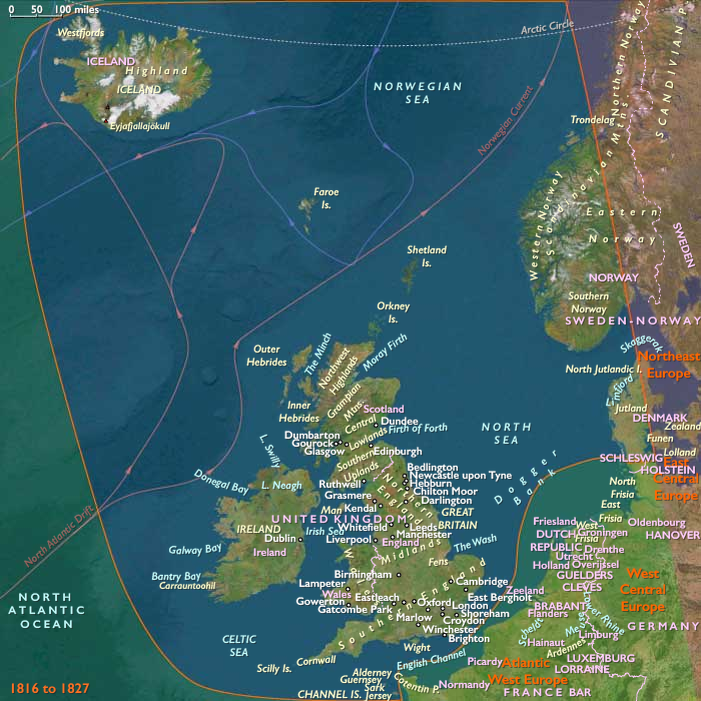
Hancock was born in 1786 in Marlborough, Wiltshire, and little is known about his early life.
His father was a cabinet maker and it is possible that Thomas Hancock was trained in the same trade: in 1815 he is recorded as being in partnership with his brother, Walter, in London, as a coach builder.
Hancock's interest in rubber, at this time a little-used and expensive tropical curiosity, seems to have sprung from a desire to make waterproof fabrics to protect the passengers on his coaches.
He had begun to experiment with making rubber solutions by 1819.
In 1820, he had patented fastenings for gloves, suspenders, shoes and stockings; in the process of creating these early elastic fabrics, Hancock had found himself wasting large amounts of rubber.
He has invented a machine to shred the waste rubber, his "Pickling machine" (or "masticator" as it is now known).
In 1820, Hancock had rented a factory in Goswell Road, London, where he worked raw rubber with the machines he had invented.
His machines produce a warm mass of homogeneous rubber, which can then be shaped and mixed with other materials, and is more easily dissolved than raw rubber.
The prototype of his masticator was operated by one man and could only hold three ounces (eighty-five grams); it was a wooden machine with a hollow cylinder studded with metal "teeth", with an inner studded core that was hand-cranked.
By 1821 he had produced a two-man machine that holds one pound (0.45 kilograms)
Locations
Commodities
Subjects
Regions
North Europe
View →Subregions