News that Revolutionary France had declared war…
April 1793 CE
President Washington, who was at Mount Vernon attending the funeral of a nephew when he was given the news, had hurried back to Pennsylvania and summoned an emergency meeting foremost came the question: "Should the United States issue an official proclamation of neutrality?"
Washington's cabinet members had agreed that neutrality is essential; the nation is too young and its military is too small to risk any sort of engagement with either France or Britain.
Secretary of State Thomas Jefferson, in particular, sees in this question, as well as in the other twelve, the influence of the Federalists—his political rivals; yet he too agrees a proclamation is in order, though perhaps not an official one.
In a cabinet meeting of January 14th, Thomas Jefferson had argued that while neutrality is a sine qua non, there is no real need to make a Proclamation of Neutrality either immediately or even officially; perhaps there might be no need for an official declaration at all.
The United States can declare its neutrality for a price, Jefferson had intimated, "Why not stall and make countries bid for [American] neutrality?"
In response, Secretary of the Treasury Alexander Hamilton had declared that American neutrality is not negotiable.
Jefferson will eventually resign from his duty as Secretary of State in disagreement with the Proclamation of Neutrality, a formal announcement issued by President Washington on April 22, 1793, that declares the nation neutral in the conflict between France and Great Britain.
It threatens legal proceedings against any American providing assistance to any country at war.
People
Groups
Topics
Regions
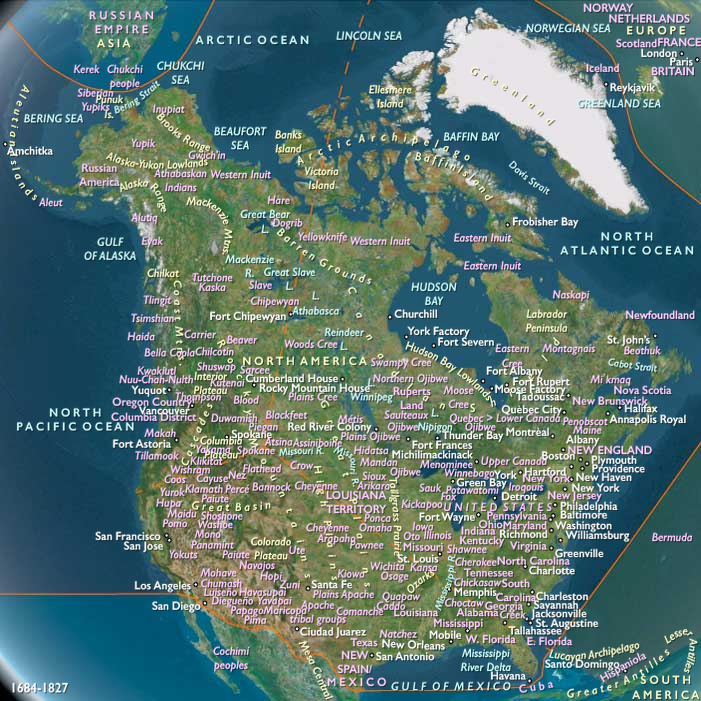
Northern North America
View →Subregions