Napoleon desires equality for the Jews, but…
March 1808 CE
Napoleon desires equality for the Jews, but he describes his hostility to them in a letter to his brother Jerome dated March 6, 1808: “I undertook the mission to correct the Jews, but I didn't want to attract any new ones into my states. Far from it. I avoided doing anything that might show esteem to the most despicable of men." (Cited in Robert Anschel, Napoleon et les Juifs (Paris: Les Presses universitaires de France, 1928), p. 64)
The Great Sanhedrin has been forced during its eight sessions to condone intermarriage between Frenchmen and Jews in order that the Jewish people might be absorbed into France, since Jews are considered substandard citizens and need to be either absorbed or expelled.
The group also has to support other actions to assimilate the Jews by removing their Jewish ties, such as approving military service to attach young Jewish men to France rather than to their religion and ethnic background.
Such measures are a prelude to the passing of the three decrees on March 17, 1808.
The group is largely ineffective, as nothing had been done during the month they had met to ameliorate the conditions on the Jews that will be imposed by the coming decrees.
After Napoleon’s emancipation of the Jews he “wanted to mandate what some proponents of emancipation had hoped would happen, namely the total assimilation, or biological fusion of Jews with the rest of the French people.” (Hyman, Paula E. The Jews of Modern France. London: University of California Press Ltd., 1998.)
To mandate the assimilation of Jews in to French society, three decrees are issued on March 17, 1808.
The first two decrees set up the consistories—one for every town that contains two thousand or more Jews—that are designed to enforce the decrees.
Some of the members also are participants in the Great Sanhedrin.
The consistories, composed of a grand rabbi, possibly another rabbi, and three lay members who are residents of the town, act to enforce Sanhedrin rules through the use of education; they also function as informants to the government monitors of Jewish activity.
The Infamous Decree, also known as the “third decree," put into place to end Jewish money lending, presumes all Jews guilty of chicanery (the use of trickery to achieve a political, financial or legal purpose) unless proven innocent.
It restricts Jewish commerce and money lending for a period of ten years.
It annuls all debts owed to Jews by married women, minors, and soldiers, and voids any loan that has interest rates exceeding 10 percent.
This is an attempt by Napoleon to get rid of alleged usury by Jewish businessmen and to turn these former businessmen into craftsman and farmers to promote supposed equality between the Jews and non-Jews in France.
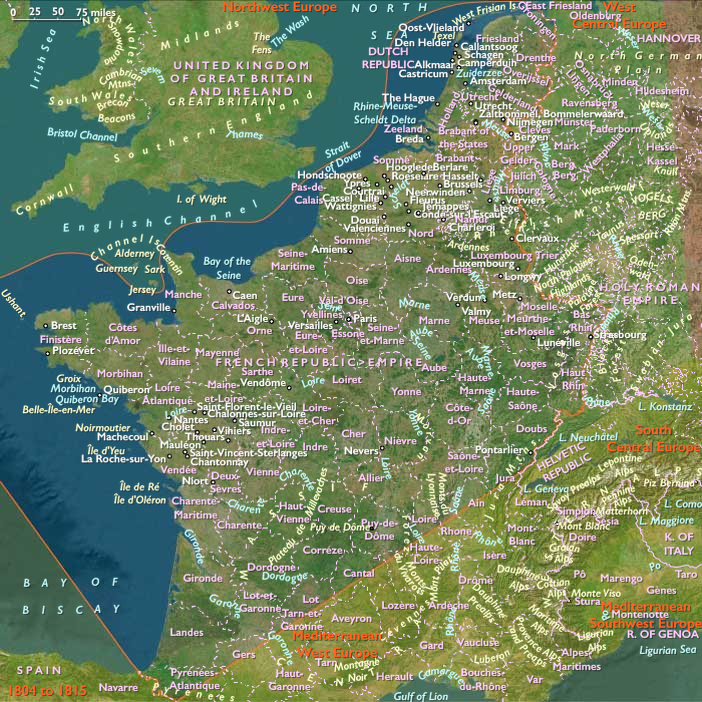
To encourage Jews to move into this niche, the French Jews are prohibited from settling in the area of the Rhineland and restricted in changing residency to certain parts of France unless they “acquired rural property and devoted themselves to agriculture without entering into any commercial or business transactions.” (The Jew in the Modern World: A Documentary History, edited by Paul Mendes-Flohr and Jehuda Reinharz. New York: Oxford University Press Inc., 1995.)
To keep tabs on businesses that had survived the new restrictions, the decree mandates that all business require a patent or license that has to be renewed yearly from the local prefectures.
The final restriction of the Jews is an attempt to strengthen their bond with the government and the country.
Not only does the decree hurt the Jews economically but it changes their military rights, mandating that Jewish conscripts (required enlistees in military service) cannot purchase replacements for themselves when drafted as other Frenchmen are allowed to do.
Locations
People
Subjects
Regions
West Europe
View →Subregions