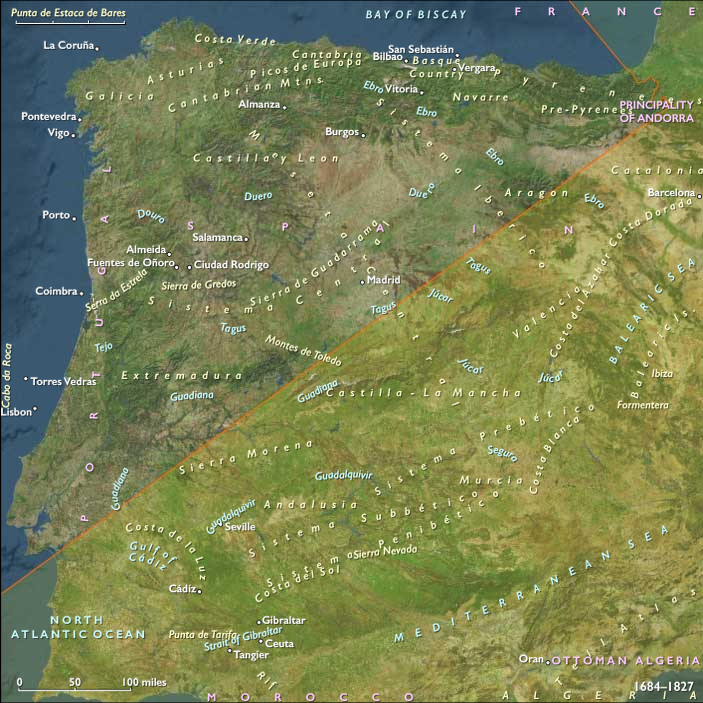
Wellington’s Strategic Retreat to the Lines of…
September 1810 CE
Wellington’s Strategic Retreat to the Lines of Torres Vedras (1810–1811)
Following his victory at the Battle of Talavera (July 27–28, 1809), Sir Arthur Wellesley was elevated to the British peerage as Viscount Wellington of Talavera. With the third and largest French invasion of Portugal underway, he faced a formidable challenge—Marshal André Masséna's 65,000-strong army advancing southward.
The Retreat Toward Lisbon – A Calculated Withdrawal
- Wellington knew he was outnumbered and could not face Masséna in open battle indefinitely.
- After defeating Masséna at the Battle of Buçaco (September 27, 1810), Wellington withdrew deliberately, falling back toward Lisbon.
- Unlike previous retreats, this was carefully planned, designed to lure the French into a logistical nightmare.
The Secret Defensive Masterpiece – The Lines of Torres Vedras
- Unknown to the French, Wellington had prepared one of the most formidable defensive systems in military history—the Lines of Torres Vedras.
- These were fortifications stretching across the Lisbon peninsula, built in secrecy under the direction of Sir Richard Fletcher.
- The lines consisted of three interconnected layers of defenses, including:
- Forts, redoubts, blockhouses, and ravelins, all heavily armed with artillery.
- Mutually supporting defensive positions, creating interlocking fields of fire.
- A semaphore system allowing instant communication across the defenses.
A Devastating Scorched Earth Strategy
- To further cripple the French, Wellington ordered a scorched earth policy, stripping the land north of the lines of all food, forage, and shelter.
- 200,000 civilians were relocated inside the lines, ensuring the French would find no support from the population.
- This forced Masséna’s massive invading army to survive entirely on its own dwindling supplies, making it impossible to sustain a long-term campaign.
Strategic Significance – The Turning Point in the War in Portugal
- The Lines of Torres Vedras ensured that no French army could take Lisbon.
- Wellington transformed Portugal from a vulnerable British foothold into an impenetrable fortress.
- The trapped French army would soon find itself unable to advance or retreat, leading to starvation, desertion, and eventual withdrawal.
The fortification of the Torres Vedras lines was Wellington’s strategic masterstroke, setting the stage for the ultimate failure of Masséna’s invasion and the eventual Allied counteroffensive that would drive the French from Iberia.
Locations
Groups
Commodities
Subjects
Regions
Southwest Europe
View →Subregions