
Over twenty people are killed in the…
May 1849 CE
Theater as entertainment is a mass phenomenon, and theaters are the main gathering places in most towns and cities.
As a result, star actors amass an immensely loyal following, comparable to modern celebrities or sports stars.
At the same time, audiences have always treated theaters as places to make their feelings known, not just towards the actors, but towards their fellow theatergoers of different classes or political persuasions, and theater riots are not a rare occurrence in New York.
In the early- to mid-nineteenth century, the American theater was dominated by British actors and managers.
The rise of Edwin Forrest as the first American star and the fierce partisanship of his supporters is an early sign of a home-grown American entertainment business.
The riot had been brewing for eighty or more years, since the Stamp Act riots of 1765, when an entire theater was torn apart while British actors were performing on stage.
British actors touring around America had found themselves the focus of often violent anti-British anger, because of their prominence and the lack of other visiting targets.
The fact that both Forrest and his rival William Charles Macready are specialists in Shakespeare can be ascribed to the reputation of Shakespeare in the nineteenth century as the icon of Anglo-Saxon culture.
Ralph Waldo Emerson, for instance, writes in his journal that beings on other planets probably called the Earth "Shakespeare."
Shakespeare's plays are not just the favorites of the educated: in gold rush California, miners while away the harsh winter months by sitting around campfires and acting out Shakespeare's plays from memory; his words are well known throughout every stratum of society.
Between twenty-two and thirty-one rioters are killed, and forty-eight are wounded.
Fifty to seventy policemen are injured.
Of the militia, one hundred and forty-one are injured by the various missiles.
Many of those killed are innocent bystanders, and almost all of the casualties are from the working class; seven of the dead are Irish immigrants.
People
Regions
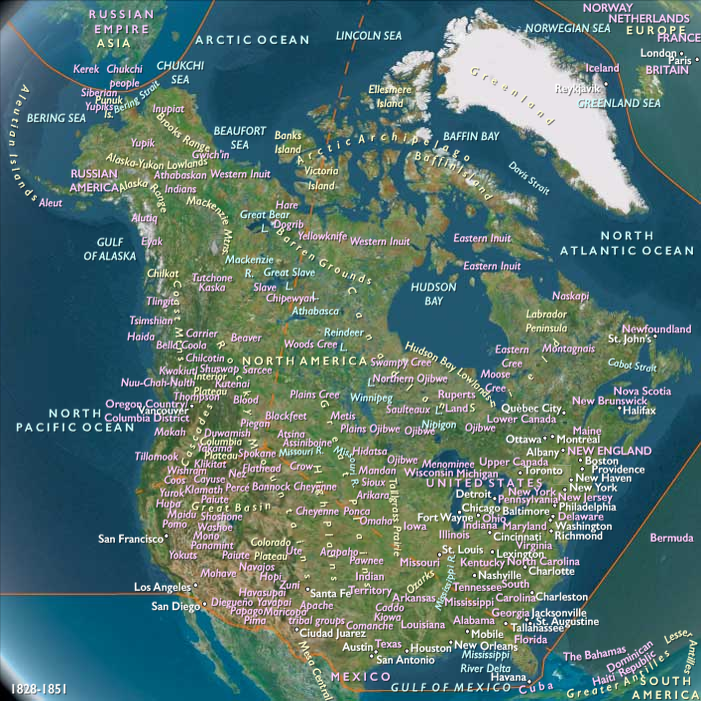
Northern North America
View →Subregions
