Sugarcane had been produced and refined in…
1888 CE to 1899 CE
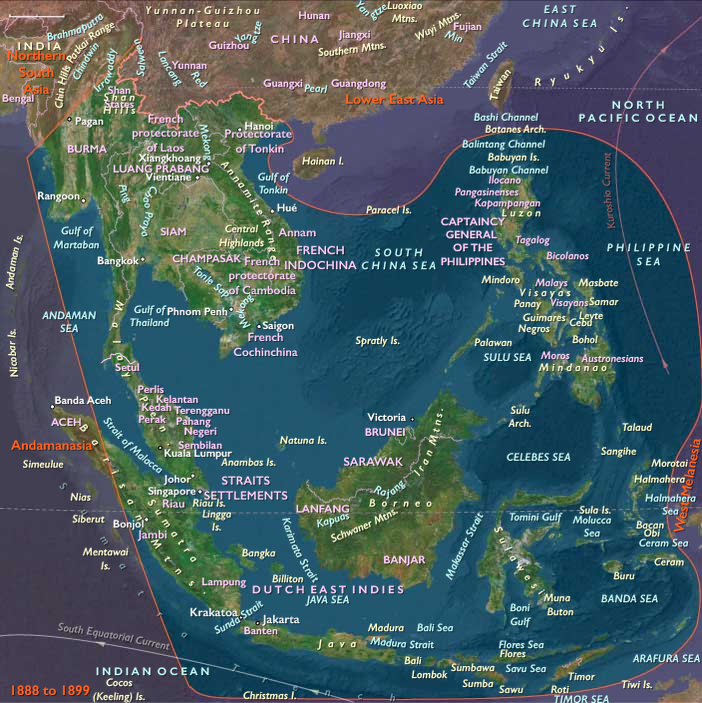
Sugarcane had been produced and refined in the Philippines using crude methods at least as early as the beginning of the eighteenth century.
The opening of the port of Iloilo on Panay in 1855 and the encouragement of the British vice consul in that town, Nicholas Loney (described by a modern writer as "a one-man whirlwind of entrepreneurial and technical innovation"), had led to the development of the previously unsettled island of Negros as the center of the Philippine sugar industry, exporting its product to Britain and Australia.
Loney had arranged liberal credit terms for local landlords to invest in the new crop, encouraged the migration of labor from the neighboring and overpopulated island of Panay, and introduced stream-driven sugar refineries that replaced the traditional method of producing low-grade sugar in loaves.
The population of Negros has tripled.
Local "sugar barons"—the owners of the sugar plantations—become a potent political and economic force by the end of the nineteenth century.
Groups
Commodities
Regions
Southeast Asia
View →Subregions