
The Treaty of Paris (February 1763) – …
Years: 1763 - 1763
February
The Treaty of Paris (February 1763) – Portugal’s Triumph in Europe and South America
Following the Franco-Spanish defeat in Portugal, a preliminary peace treaty was signed at Fontainebleau, paving the way for the definitive Treaty of Paris, which was concluded on February 10, 1763. The Portuguese representative, Martinho de Melo e Castro, attended the negotiations alongside the diplomats of Britain, France, and Spain.
The treaty formally ended the Seven Years’ War, with Spain forced to make significant concessions to both Portugal and Britain.
Portugal’s Gains in Europe – The Return of Almeida and Chaves
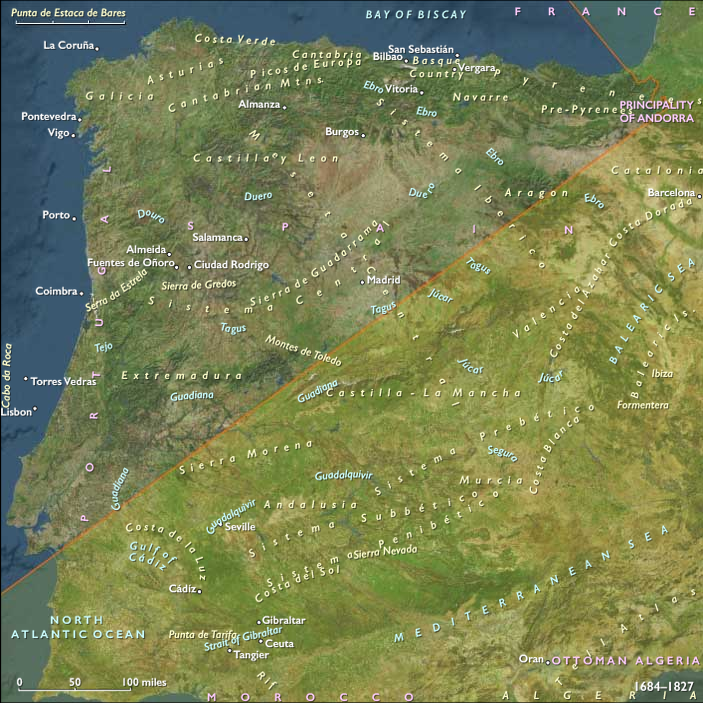
- Spain was obliged to return the Portuguese frontier strongholds of Almeida and Chaves, which had remained under Spanish occupation at the war’s end.
- Portugal’s independence was secured, and its centuries-old alliance with Britain remained unbroken.
- Spain’s humiliating failure in Portugal, coupled with its territorial losses to Britain, marked a severe blow to its military prestige.
The War in South America – Portugal Expands in the Amazon and Mato Grosso
While the European conflict had ended in Portugal’s favor, the Portuguese and Spanish continued to fight in South America, where territorial disputes raged over the Rio Negro Valley and the Guaporé River in the Amazon Basin.
Portugal’s Victories in the Amazon – The Capture of Spanish Territories
- Portuguese forces secured most of the Rio Negro Valley, dislodging the Spanish from São José de Marabitanas and São Gabriel, where they built two new fortresses to solidify their control.
- These victories allowed Portugal to strengthen its hold over the northern Amazon Basin, expanding Brazil’s frontiers at Spain’s expense.
The Siege of Mato Grosso – Portugal Repels a Spanish Invasion
- In Mato Grosso, a Spanish army from Santa Cruz de la Sierra (Bolivia) attempted to expel the Portuguese from the right bank of the Guaporé River, where Fort São Rosa (or Conceição) guarded the gateway to the gold-rich province.
- Under Portuguese commander Rolim Moura, the garrison resisted fiercely, using similar scorched earth tactics to those employed by Count Lippe in Portugal.
- The Spanish siege collapsed, with the invaders losing over half their men to disease, starvation, and desertion.
- The Portuguese remained in possession of the disputed territory, dealing Spain another humiliating defeat, mirroring their failure in Portugal itself.
The Aftermath – A Tactical Stalemate in South America
While Portugal and Spain reached a tactical stalemate, the final territorial outcome favored Portugal:
- Spain was forced to return Colônia do Sacramento (a strategic settlement on the Rio de la Plata), which had been occupied in 1762.
- Portugal retained all its conquests, including:
- The Rio Negro Valley (Amazon Basin).
- The right bank of the Guaporé River (Mato Grosso), securing Brazil’s western frontiers.
A Lasting Portuguese Victory
- Spain’s failure to secure its territorial ambitions in both Portugal and South America reinforced Portugal’s military and political standing.
- Although Spain would briefly occupy Rio Grande do Sul in 1763, it was later retaken by Portuguese forces in the undeclared war of 1763–1777, further proving Portugal’s resilience against Spanish aggression.
- Portugal not only survived the Seven Years' War but expanded its territories, securing Brazil’s frontiers and reinforcing its status as a global colonial power.
The Seven Years’ War had thus ended in a resounding strategic victory for Portugal, ensuring its territorial integrity in Europe and expanding its influence in South America, while Spain suffered significant setbacks in both theaters.
Locations
People
- Charles François Dumouriez
- Charles III of Spain
- Charles Juste de Beauvau, , Prince of Craon
- George Townshend, 1st Marquess Townshend
- John Burgoyne
- José I of Portugal
- Leopoldo de Gregorio, Marquis of Squillace
- Pedro Pablo Abarca de Bolea y Jiménez de Urrea, 10th Count of Aranda
- Sebastião José de Carvalho e Melo, 1st Marquis of Pombal
- William Pitt
- William, Count of Schaumburg-Lippe
Groups
- Portuguese people
- Scottish people
- French people (Latins)
- English people
- Spaniards (Latins)
- France, (Bourbon) Kingdom of
- Portugal, Bragança Kingdom of
- Spain, Bourbon Kingdom of
- Britain, Kingdom of Great
Topics
Subjects
Regions

Subregions
Years: 1763 - 1763
February
Locations
People
- Charles François Dumouriez
- Charles III of Spain
- Charles Juste de Beauvau, , Prince of Craon
- George Townshend, 1st Marquess Townshend
- John Burgoyne
- José I of Portugal
- Leopoldo de Gregorio, Marquis of Squillace
- Pedro Pablo Abarca de Bolea y Jiménez de Urrea, 10th Count of Aranda
- Sebastião José de Carvalho e Melo, 1st Marquis of Pombal
- William Pitt
- William, Count of Schaumburg-Lippe
Groups
- Portuguese people
- Scottish people
- French people (Latins)
- English people
- Spaniards (Latins)
- France, (Bourbon) Kingdom of
- Portugal, Bragança Kingdom of
- Spain, Bourbon Kingdom of
- Britain, Kingdom of Great
Topics
Subjects
Regions
Subregions