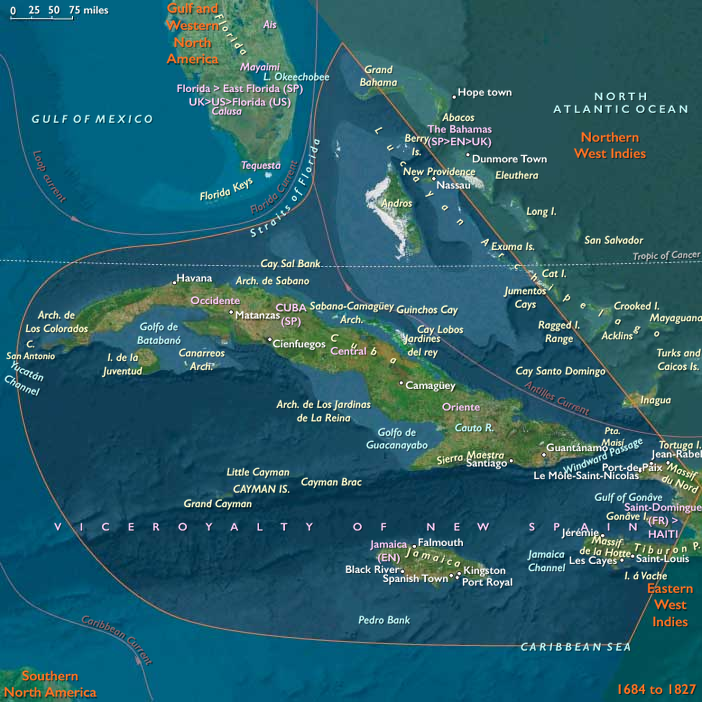
Tobacco becomes an important export item to…
1684 CE to 1827 CE
Throughout this period, the tobacco business remains in private hands, but under the administration of Charles III (1759-88), it is converted into a government monopoly.
The crown advances money to the growers, who sell their crops to the government at a fixed price.
The value of tobacco as an export begins to decline in the early nineteenth century, by which time the price of land has increased tremendously, partly as a result of the growth of sugar estates.
Tobacco growers find themselves either squeezed out of their lands or selling them to the sugar capitalists.
The crown's emphasis on coffee and sugar growing is also detrimental to the tobacco industry.
The Spanish monarchs, in desperate need of capital, encourage the more lucrative sugar business as a source of revenue.
People
Groups
Commodities
Regions
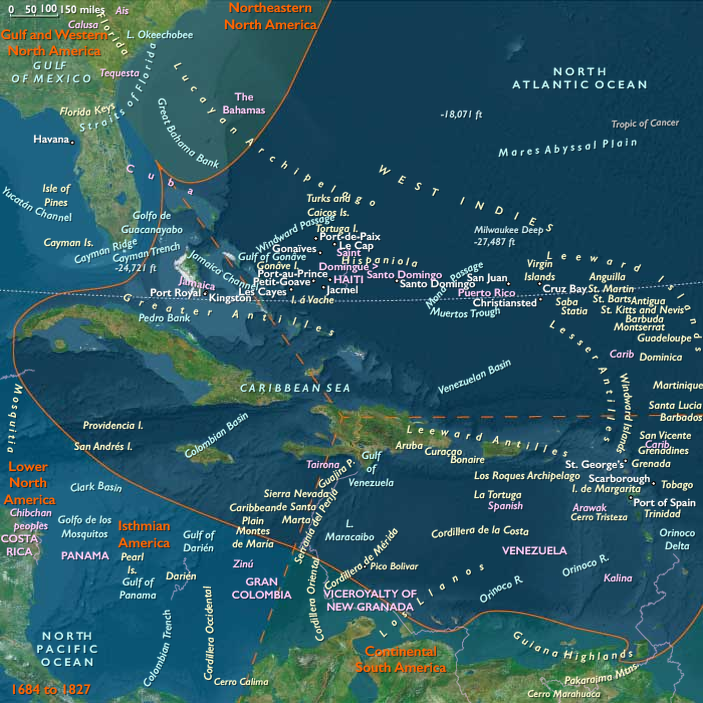
West Indies
View →Subregions