
Northern Australia (964 – 1107 CE): …
Years: 964 - 1107
Northern Australia (964 – 1107 CE):
Monsoon Rhythms, Saltwater Law, and Stone Country Traditions
Geographic and Environmental Context
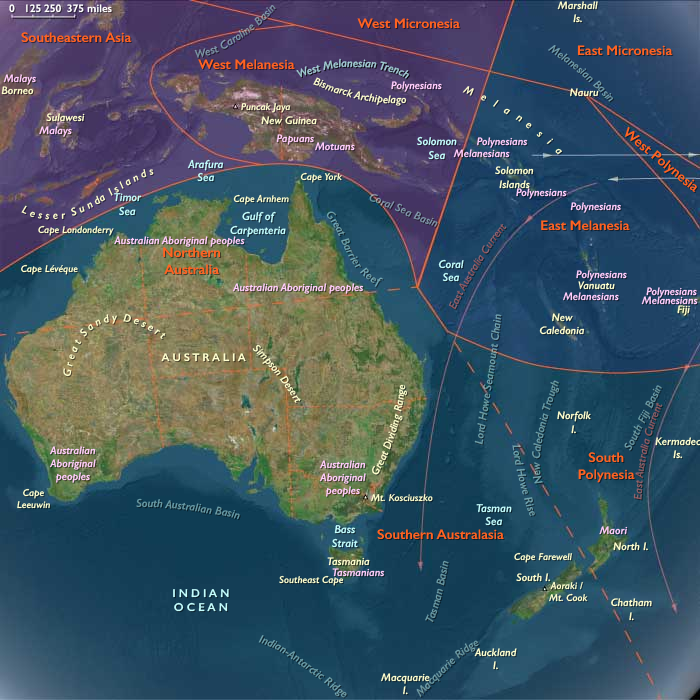
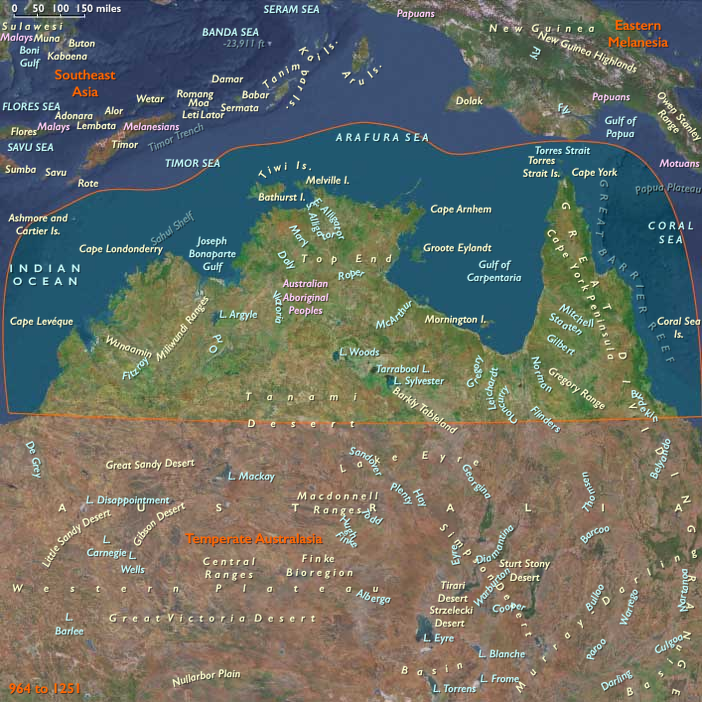
Northern Australia comprises northern Queensland, the Northern Territory (north of the arid interior), and northern Western Australia—a realm of monsoon savannas, sandstone plateaus, and mangrove-fringed coasts.
Offshore archipelagos—the Tiwi, Wessel, and Kimberley islands—integrated coastal and ceremonial life.
Climate and Environmental Shifts
The Medieval Warm Period brought slightly warmer, wetter conditions.
Monsoons governed seasonal abundance; cyclones periodically reshaped coasts, but deep adaptive knowledge ensured stability.
Societies and Political Developments
Northern Aboriginal nations—Bininj/Mungguy, Yolŋu, Tiwi, Yanyuwa, Garawa, Wardaman, and others—maintained Dreaming law anchored in moiety systems and totemic custodianship.
Regional ceremonies unified extensive networks across Arnhem Land, Kimberley, and Gulf Country.
Economy and Trade
-
Coastal harvests: dugong, turtle, fish, shellfish.
-
Floodplains: magpie geese, barramundi, turtles, waterlilies.
-
Savannas: kangaroo, wallaby, emu, yams, fruits, seeds.
Trade linked ocher, spear shafts, resin, shells, and ornaments across vast distances.
Subsistence and Technology
Fire-stick farming maintained productive mosaics.
Fishing technologies—stone tidal traps, woven baskets, bark-netting—were highly refined.
Canoes, spears, and woomeras enabled versatile hunting.
Rock art in Dynamic Figure and X-ray styles flourished, depicting both natural and ancestral beings.
Movement and Interaction Corridors
Songlines spanned the north, linking river headwaters and coasts; offshore voyaging connected Tiwi Islands with the mainland; dry-season gatherings along rivers reaffirmed law and alliance.
Belief and Symbolism
Dreaming law defined social and ecological order.
The Rainbow Serpent symbolized water and fertility.
Rock shelters served as sacred archives; ritual performance in song and dance sustained the covenant between people, land, and spirits.
Adaptation and Resilience
Seasonal planning synchronized with monsoon pulses.
Food preservation, controlled burning, and ceremonial redistribution balanced abundance and scarcity.
Ecological knowledge embedded in kinship ensured long-term resilience.
Long-Term Significance
By 1107 CE, Northern Australia embodied millennia-old ecological governance:
-
Floodplain and reef economies thrived.
-
Fire-management maintained biodiversity.
-
Saltwater law integrated land and sea.
-
Songlines and art perpetuated cultural memory across one of the world’s longest continuous traditions.
Groups
Commodoties
Subjects
Regions
Subregions
Years: 964 - 1107
Groups
Commodoties
Subjects
Regions
Subregions