
Northern Australia (820 – 963 CE): Saltwater …
Years: 820 - 963
Northern Australia (820 – 963 CE): Saltwater Dreaming, Stone Country, and Fire Landscapes
Geographic and Environmental Context
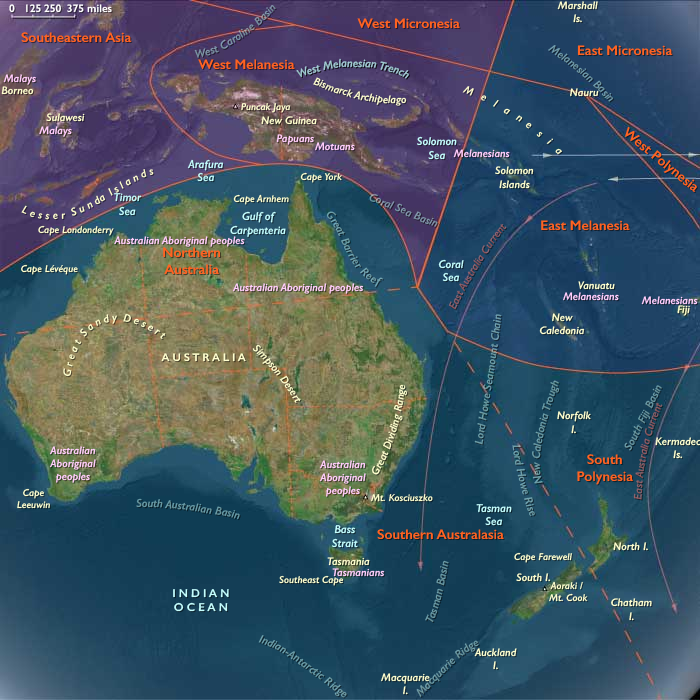
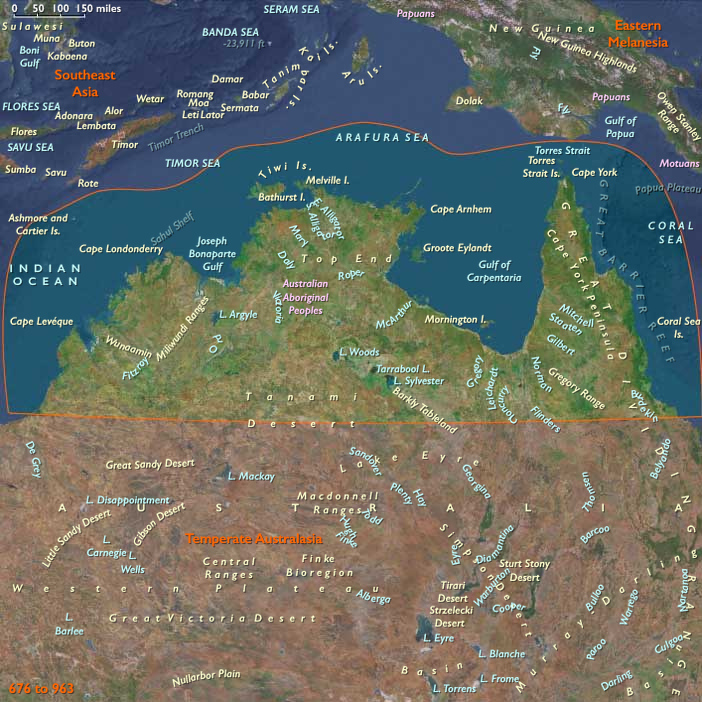
Northern Australia includes northern Queensland, the Northern Territory (except its southern temperate portion), and northern Western Australia.
-
A region of monsoon savannas, sandstone escarpments, tropical rivers, and mangrove-fringed coasts.
-
Rich estuaries, floodplains, and offshore reefs provided abundant fish, shellfish, and turtle resources, while the inland stone plateaus and savannas supported diverse hunting and gathering economies.
-
Iconic cultural landscapes included Arnhem Land’s stone country, the Kimberley coast, and the Gulf of Carpentaria wetlands.
Climate and Environmental Shifts
-
Dominated by the monsoon cycle: hot, wet summers with heavy rains and flooding; long, dry winters with controlled burning.
-
Between 820 and 963 CE, climate conditions were stable, with wet–dry rhythms structuring seasonal movements.
-
Occasional cyclones struck the Gulf and Kimberley coasts, reshaping mangrove and reef ecologies but rarely destabilizing subsistence systems.
Societies and Political Developments
-
Tropical Australia was home to numerous Aboriginal nations including the Bininj/Mungguy (Arnhem Land), Yolŋu (northeast Arnhem), Tiwi (Bathurst and Melville Islands), Yanyuwa and Garawa (Gulf country), Wardaman and Jawoyn (Katherine plateau), and groups across the Kimberley.
-
Societies were organized through kinship systems, moiety structures, and totemic affiliations, with responsibilities allocated across land, water, ceremony, and story.
-
Songlines mapped spiritual and practical knowledge across Country, linking sacred sites, travel routes, and seasonal harvest grounds.
-
Ceremonial exchange (dance, song, body painting, and gift-giving) mediated diplomacy between groups.
Economy and Trade
-
Coastal economies: harvested fish, shellfish, dugong, turtle, and crabs; large reef fisheries sustained coastal clans.
-
Floodplain harvesting: geese, magpie geese eggs, freshwater fish (barramundi, catfish), turtles, and water lilies from Arnhem Land and Gulf wetlands.
-
Savanna hunting and gathering: kangaroos, wallabies, emus, reptiles, yams, and fruits; seeds were ground into bread.
-
Exchange systems moved ocher (Kimberley and Arnhem quarries), stone tools, shells, resin, and ceremonial objects across hundreds of kilometers.
-
Some long-distance trade corridors (e.g., Macassan trepang fleets) developed later, but Aboriginal exchange systems were already extensive.
Subsistence and Technology
-
Fire management: patch burning created green shoots for game, reduced wildfire risk, and maintained open travel corridors.
-
Fishing techniques: stone fish traps, woven nets, wooden spears, and bark canoes; fish were dried or smoked for storage.
-
Hunting tools: spear-throwers (woomeras), boomerangs, clubs, and composite barbed spears.
-
Gathering technologies: digging sticks, coolamons (carved wooden bowls), fiber nets, and bark containers.
-
Art and symbolism: ongoing production of rock art in Arnhem Land and Kimberley, including figurative “X-ray” styles showing internal anatomy of animals.
Movement and Interaction Corridors
-
Songlines crisscrossed Country, connecting ceremonial centers, hunting grounds, and sacred waterholes.
-
Coastal voyaging (rafts, bark canoes) linked offshore islands such as the Tiwi and Wessel Islands.
-
Overland routes across the Gulf plains and Kimberley facilitated inter-group exchange, with ocher and stone axes moving over vast distances.
Belief and Symbolism
-
Dreaming law (often called the Dreamtime) governed relations between humans, animals, land, and spirit ancestors.
-
Ancestral beings such as the Rainbow Serpent shaped rivers and waterholes, regulating ceremonial responsibilities.
-
Ceremonial sites with rock art, carved trees, or earthworks inscribed spiritual authority into the landscape.
-
Totemic affiliations bound groups to particular species or sites, regulating harvest through taboo systems.
Adaptation and Resilience
-
Monsoon scheduling: careful timing of movements between wet-season shelters and dry-season hunting grounds ensured year-round abundance.
-
Fire-stick farming increased biodiversity and stabilized resources.
-
Preservation techniques (drying fish, smoking meat) extended food security through leaner seasons.
-
Kinship and ceremonial exchange provided resilience through mutual obligations and redistribution during scarcity.
Long-Term Significance
By 963 CE, Northern Australia sustained dense, stable, and ritually governed economies:
-
Floodplain aquaculture and savanna hunting provided dependable abundance.
-
Fire landscapes and songlines managed Country at regional scale, blending ecology with cosmology.
-
Rich rock art traditions documented spiritual narratives and practical knowledge.
This was a world of deep continuity, its institutions capable of adapting to climatic variation while preserving ancestral law across generations.
Groups
Commodoties
Subjects
Regions
Subregions
Years: 820 - 963
Groups
Commodoties
Subjects
Regions
Subregions