Event
Tropical West Southern Africa (676–819 CE) Early…
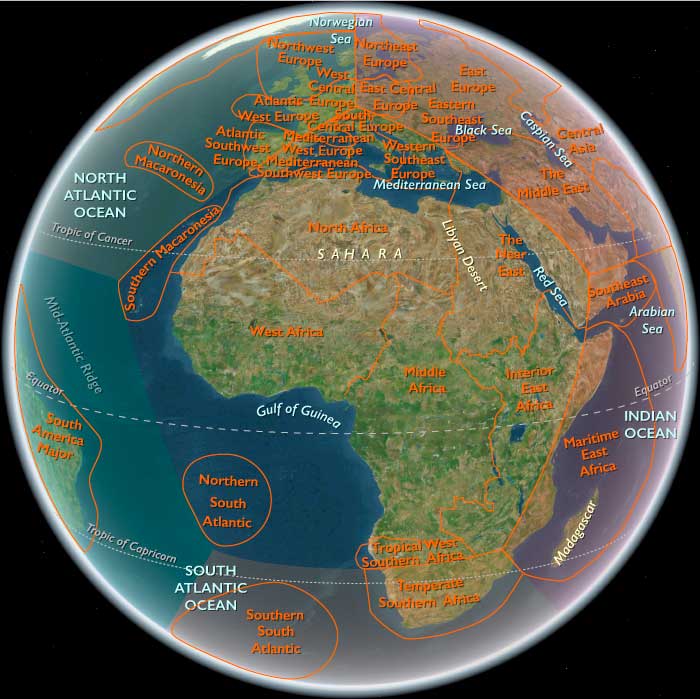
Tropical West Southern Africa (676–819 CE) Early Medieval
Wetland Political Ecology and Regional Integration
Geographic & Environmental Context
Annual inundation continued organizing the Okavango Delta, Chobe–Caprivi floodplains, Etosha margins, and adjoining savannas into one of southern Africa's richest ecological mosaics.
Climate & Environmental Shifts
Alternating drought clusters and productive flood decades continued shaping settlement, fisheries, grazing, and exchange while reinforcing the importance of ecological diversity.
Subsistence & Settlement
Lineage-based communities coordinated seasonal grazing, fisheries, and floodplain cultivation with increasing sophistication. Permanent villages remained widely dispersed across levees, islands, and spring-fed margins, while San communities maintained extensive seasonal mobility and exchange relationships.
Technology & Material Culture
Ironworking, canoe transport, ceramic production, basketry, leatherworking, and cattle management all reached a high degree of regional integration while remaining closely adapted to wetland environments.
Movement & Interaction Corridors
The Okavango–Chobe–Caprivi waterways functioned as major communication corridors linking communities across northern Botswana, Namibia, Angola, and the upper Zambezi.
Belief & Symbolism
Floodwaters, ancestors, rainmaking, cattle blessing, first-fish ceremonies, and San ritual traditions continued reinforcing enduring relationships between ecology and society.
Environmental Adaptation & Resilience
Diversified economies, distributed settlement, negotiated access to water and grazing, and flexible mobility produced a remarkably resilient political ecology capable of absorbing considerable environmental variability.
Legacy of the Age
By 819 CE, Tropical West Southern Africa had developed an enduring wetland-centered regional system in which fisheries, cattle, floodplain farming, canoe exchange, and mobile forager knowledge formed a deeply integrated ecological and social landscape, laying the foundations for the larger regional polities that would emerge during the medieval centuries.

-
{# Image navigates to the detail page; the magnifying-glass chip is the only Fancybox lightbox trigger (kept a separate sibling — anchors can't nest). #}
 The Middle of The Earth
World
-
{# Image navigates to the detail page; the magnifying-glass chip is the only Fancybox lightbox trigger (kept a separate sibling — anchors can't nest). #}
 Southern Africa
Region
-
{# Image navigates to the detail page; the magnifying-glass chip is the only Fancybox lightbox trigger (kept a separate sibling — anchors can't nest). #}
 Tropical West Southern Africa
Subregion