Bolivian president Aniceto Arce Ruiz (1888-92), although…
1888 CE to 1899 CE
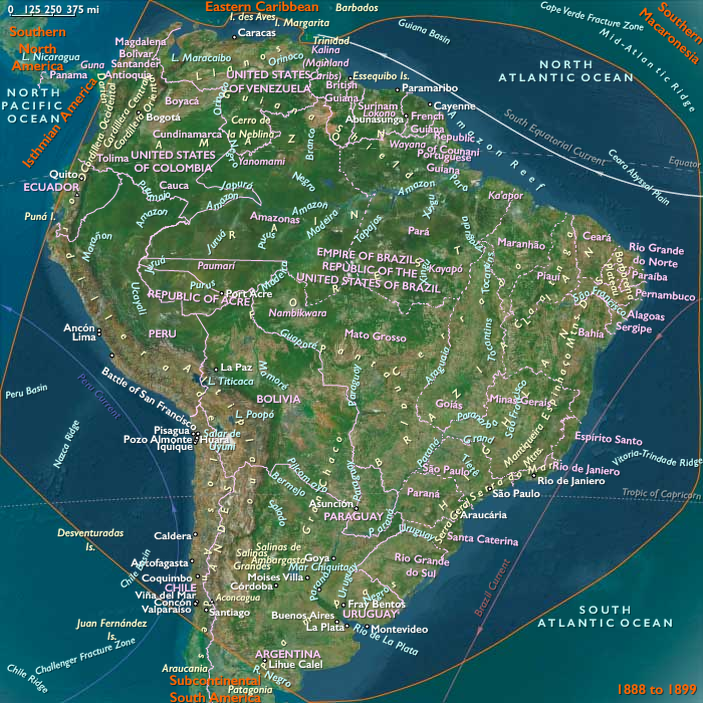
Bolivian president Aniceto Arce Ruiz (1888-92), although elected legally, is an autocrat who manages to stay in power only through repression.
His main economic accomplishment is to extend the Antofagasta-Calama Railroad to Oruro.
The extension of the railroad drastically reduces the cost of transporting minerals to the Pacific Coast.
Economic growth is skewed, however, as railroads that are built to export minerals started to bring imported wheat from Chile; in 1890 Chilean wheat had been cheaper in La Paz than wheat from Cochabamba.
The open economy also hurts local industry.
The expansion of the haciendas at the expense of the free indigenous communities had resulted in numerous uprisings and forced many indigenous people to work for their landlords or to migrate to the cities.
As a result of this migration, the census of 1900 will note an increase of the mestizo population, but Bolivia remains a predominantly indigenous and rural nation, in which the Spanish-speaking minority continues to exclude the majority.
Locations
Topics
Commodities
Regions

South America
View →Subregions