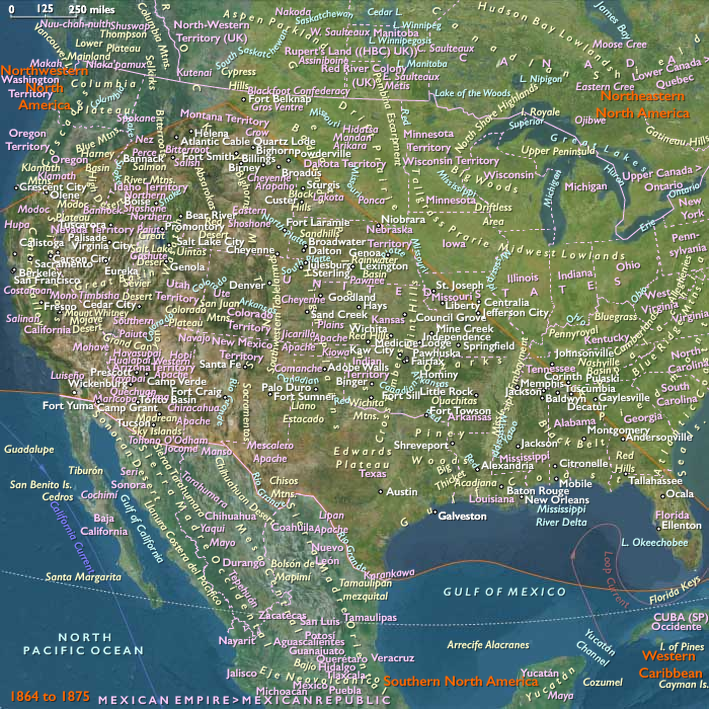
Union General William Tecumseh Sherman had long…
June 1864 CE
Union General William Tecumseh Sherman had long known that his fragile supply and communication lines through Tennessee are in serious jeopardy because of depredations by Forrest's cavalry raids.
To effect a halt to Forrest's activities, he has ordered General Samuel D. Sturgis to conduct a penetration into northern Mississippi and Alabama with a force of around eighty-five hundred troops to destroy Forrest and his command.
Sturgis, after some doubts and trepidation, had departed Memphis on June 1.
General Stephen D. Lee, alerted of Sturgis's movement, had warned Forrest.
Lee had also planned a rendezvous at Okolona, Mississippi, with Forrest and his own troops but told Forrest to do as he saw fit.
Already in transit to Tennessee, Forrest had moved his cavalry (less one division) toward Sturgis, but remained unsure of Union intentions.
Forrest had soon surmised, correctly, that the Union had actually targeted Tupelo, Mississippi, located in Lee County, about fifteen miles (twenty-four kilometers) south of Brice's Crossroads.
Although badly outnumbered, he decides to repulse Sturgis instead of waiting for Lee, and selects an area to attack ahead on Sturgis's projected path.
He chooses Brice's Crossroads, in what is now Lee County, which features four muddy roads, heavily wooded areas, and the natural boundary of Tishomingo Creek, which has only one bridge going east to west.
Seeing that the Union cavalry moves three hours ahead of its own infantry, Forrest devises a plan that calls for an attack on the Union cavalry first, with the idea of forcing the enemy infantry to hurry to assist them.
Their infantry will be too tired to offer real help and the Confederates plan to push the entire Union force against the creek to the west.
Forrest dispatches most of his men to two nearby towns to wait.
At 9:45 a.m. on June 10, a brigade of Benjamin H. Grierson's Union cavalry division reaches Brice's Crossroads and the battle startsat 10:30 a.m. when the Confederates perform a stalling operation with a brigade of their own.
Forrest then ordersthe rest of his cavalry to converge around the crossroads.
The remainder of the Union cavalry arrives in support, but a strong Confederate assault soon pushes them back at 11:30 a.m., when the balance of Forrest's cavalry arrives on the scene.
Grierson calls for infantry support and Sturgis obliges.
The line holds until 1:30 p.m. when the first regiments of Federal infantry arrive.
The Union line, initially bolstered by the infantry, briefly seizes the momentum and attackst he Confederate left flank, but Forrest launches an attack from his extreme right and left wings, before the rest of the federal infantry can take the field.
In this phase of the battle, Forrest commands his artillery to unlimber, unprotected, only yards from the Federal position, and to shell the Union line with grapeshot.
The massive damage causes Sturgis to reorder the line in a tighter semicircle around the crossroads, facing east.
At 3:30, the Confederates in the 2nd Tennessee Cavalry assault the bridge across the Tishomingo.
Although the attack fails, it causes severe confusion among the Federal troops and Sturgis orders a general retreat.
With the Tennesseans still pressing, the retreat bottlenecks at the bridge and a panicked rout develops instead.
The ensuing wild flight and pursuit back to Memphis carries across six counties before the exhausted Confederates retire.
Confederates suffer ninety-two casualties to the Union's twenty-one hundred and sixty-four (including fifteen hundred prisoners).
When the retreat had occurred, with food and supplies exhausted, many of the Union soldiers were unable to retreat with the rest because of fatigue.
This was much of the reason why so many Union soldiers were captured during the battle.
Forrest also captures huge supplies of arms, artillery, and ammunition as well as plenty of stores.
Sturgis suffers demotion and exile to the far West.
After the battle, the Union Army again accuses Forrest of massacring black soldiers.
Groups
Topics
Regions
Northern North America
View →Subregions