Guglielmo Marconi receives the first trans-Atlantic radio…
December 1901 CE
Guglielmo Marconi receives the first trans-Atlantic radio signal, sent from Poldhu, England, to St. John's, Newfoundland, on December 10, 1901; it is the letter "S" in Morse code.
At the turn of the twentieth century, Marconi had begun investigating a means to signal across the Atlantic to compete with the transatlantic telegraph cables.
Marconi had established a wireless transmitting station at Marconi House, Rosslare Strand, County Wexford, earlier in 1901 to act as a link between Poldhu in Cornwall, England, and Clifden in Connemara, County Galway, Ireland.
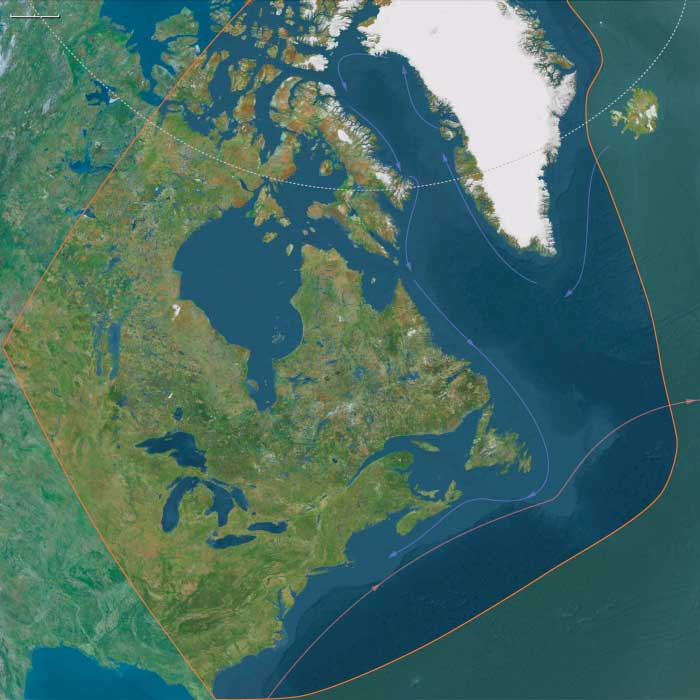
He soon made the announcement that the message had been received at Signal Hill in St. John's, Newfoundland (now part of Canada) using a 500-foot (150 m) kite-supported antenna for reception—signals transmitted by the company's new high-power station at Poldhu, Cornwall.
The distance between the two points is about twenty-two hundred miles (thirty-five hundred kilometers).
It is heralded as a great scientific advance, yet there also is—and will continue to be—considerable skepticism about this claim.
The exact wavelength used is not known, but it is fairly reliably determined to have been in the neighborhood of 350 meters (frequency ≈ 850 kHz).
The tests take place at a time of day during which the entire transatlantic path is in daylight.
It is now known (although Marconi did not know then) that this is the worst possible choice.
At this medium wavelength, long-distance transmission in the daytime is not possible because of heavy absorption of the skywave in the ionosphere.
It is not a blind test; Marconi had known in advance to listen for a repetitive signal of three clicks, signifying the Morse code letter S.
The clicks are reported to have been heard faintly and sporadically.
There is no independent confirmation of the reported reception, and the transmissions are difficult to distinguish from atmospheric noise.
The Poldhu transmitter is a two-stage circuit.
Groups
Commodities
Subjects
Regions
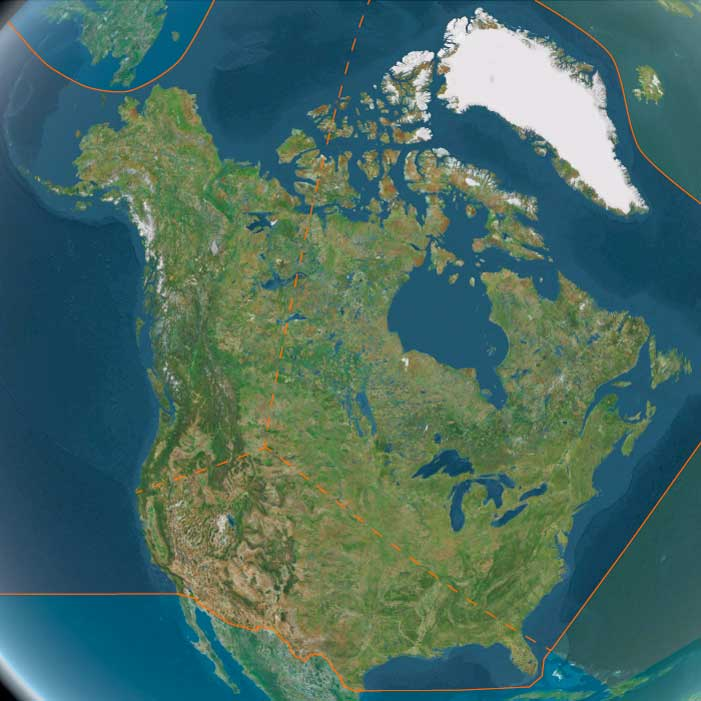
Northern North America
View →Subregions