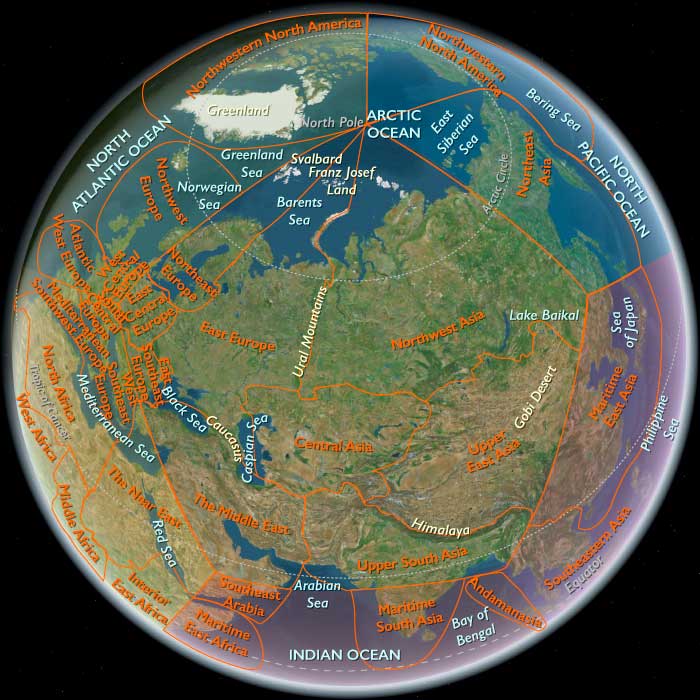
Event
Vedism is the sacrificial religion of the…
Vedism is the sacrificial religion of the early Indo-Aryans, speakers of early Old Indic dialects, ultimately deriving from the Proto-Indo-Iranian peoples of the Bronze Age.
Its liturgy is preserved in the three Vedic Samhitas: the Rig-Veda, Sama-Veda, and the Yajur-Veda.
Of these, the Rig-Veda the oldest, a collection of hymns dated to between 1500 and 1000 BCE.
The other two add ceremonial detail for the performance of the actual sacrifice.
The Atharva-Veda, which may also contain compositions dating to before 1000 BCE, contains material pertinent to domestic ritual and folk magic of the period.
These texts, as well as the voluminous commentary on orthopraxy collected in the Brahmanas compiled during the early first millennium BCE, will be transmitted by oral tradition alone until the advent of the Pallava and Gupta period and by a combination of written and oral tradition since then.
The gods in the Rig-Veda are mostly personified concepts, who fall into two categories: the devas—who are gods of nature—such as the weather deity Indra (who is also the King of the gods), Agni ("fire"), Usha ("dawn"), Surya ("sun") and Apas ("waters") on the one hand, and on the other hand the asuras—gods of moral concepts—such as Mitra ("contract"), Aryaman (guardian of guest, friendship and marriage), Bhaga ("share") or Varuna, the supreme Asura (or Aditya).
While Rigvedic deva is variously applied to most gods, including many of the Asuras, the Rig-veda characterizes the Devas as Younger Gods, while Asuras are the Older Gods.
In later Vedic texts, the Asuras become demons.
-
{# Image navigates to the detail page; the magnifying-glass chip is the only Fancybox lightbox trigger (kept a separate sibling — anchors can't nest). #}
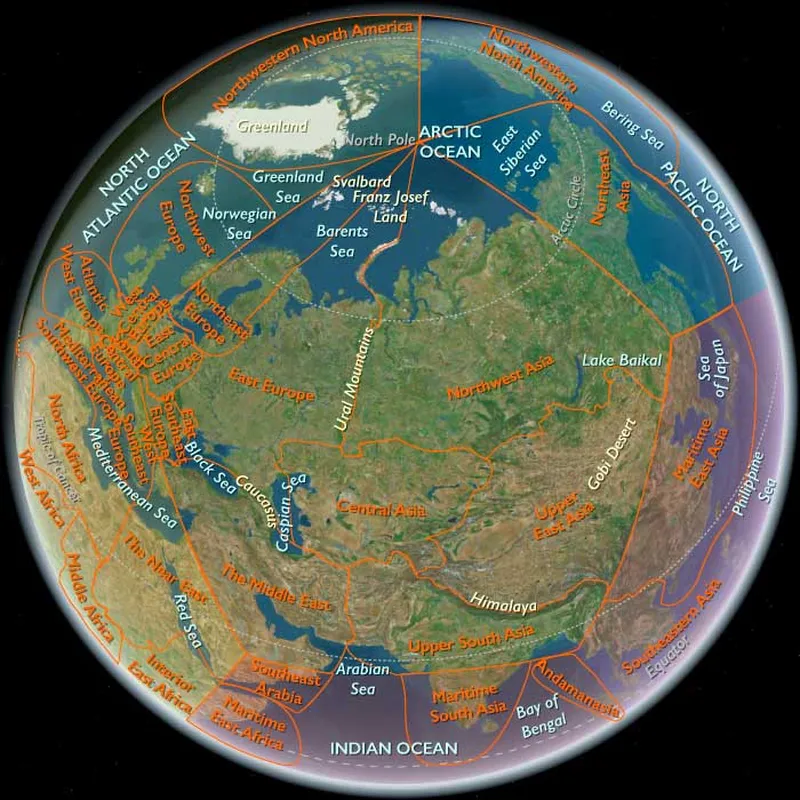 The Great Crossroads
World
-
{# Image navigates to the detail page; the magnifying-glass chip is the only Fancybox lightbox trigger (kept a separate sibling — anchors can't nest). #}
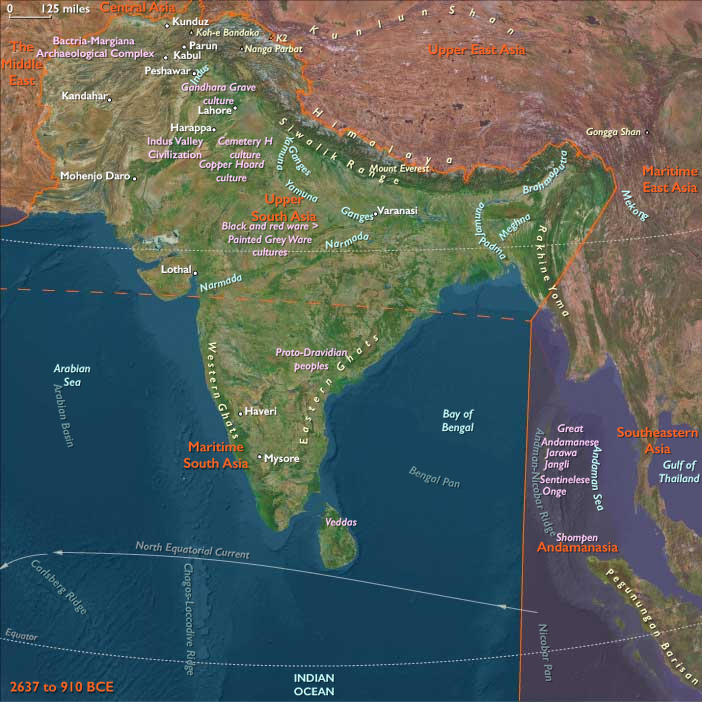 South Asia
Region
-
{# Image navigates to the detail page; the magnifying-glass chip is the only Fancybox lightbox trigger (kept a separate sibling — anchors can't nest). #}
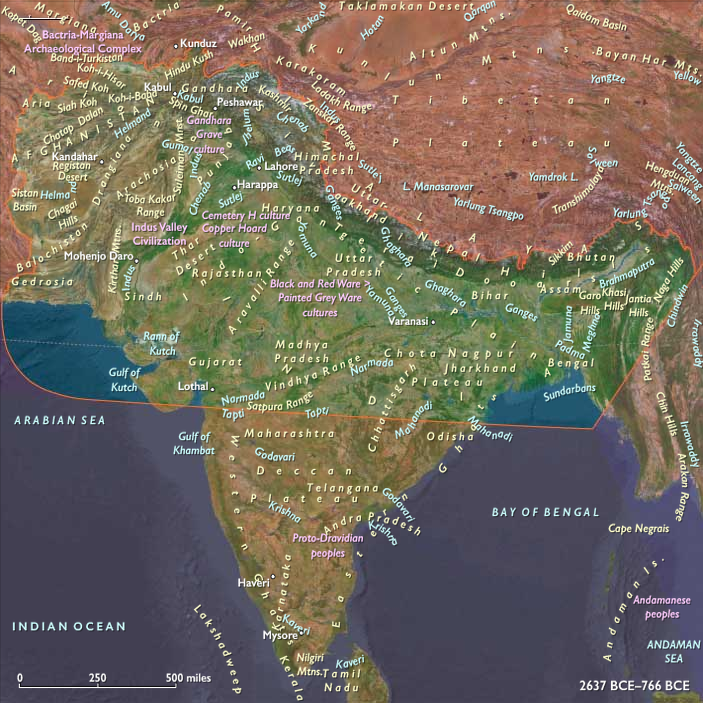 Upper South Asia
Subregion