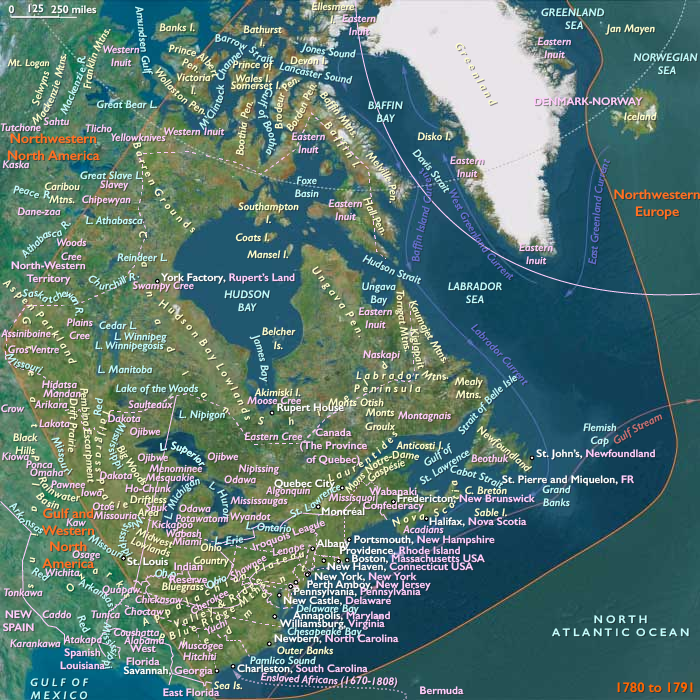
Vermont has continued to govern itself as…
March 1791 CE
Vermont has continued to govern itself as a sovereign entity based in the eastern town of Windsor for fourteen years.
The independent state of Vermont had issued its own coinage from 1785 to 1788 and operated a statewide postal service.
Thomas Chittenden, who served as governor from 1778–1789 and 1790–1791, had been one of the participants in a series of delicate negotiations with British authorities in Quebec over the possibility of establishing Vermont as a British province.
Because the state of New York had continued to assert a disputed claim that Vermont was a part of New York, Vermont could not be admitted to the Union under Article IV, Section 3 of the Constitution until the legislature of New York consented.On March 6, 1790, the legislature had made its consent contingent upon a negotiated agreement on the precise boundary between the two states.
When commissioners from New York and Vermont met to decide on the boundary, Vermont's negotiators had insisted on also settling the property ownership disputes with New Yorkers, rather than leaving that to be decided later in a federal court.
The negotiations had been successfully concluded in October 1790 with an agreement that Vermont would pay $30,000 to New York to be distributed among New Yorkers who claimed land in Vermont under New York land patents.
In January 1791, a convention in Vermont had voted 105–4 to petition Congress to become a state in the federal union.
Congress had acted on February 18, 1791 to admit Vermont to the Union as the fourteenth state as of March 4, 1791.
Vermont becomes the first to enter the Union after the original thirteen states.
Groups
Regions
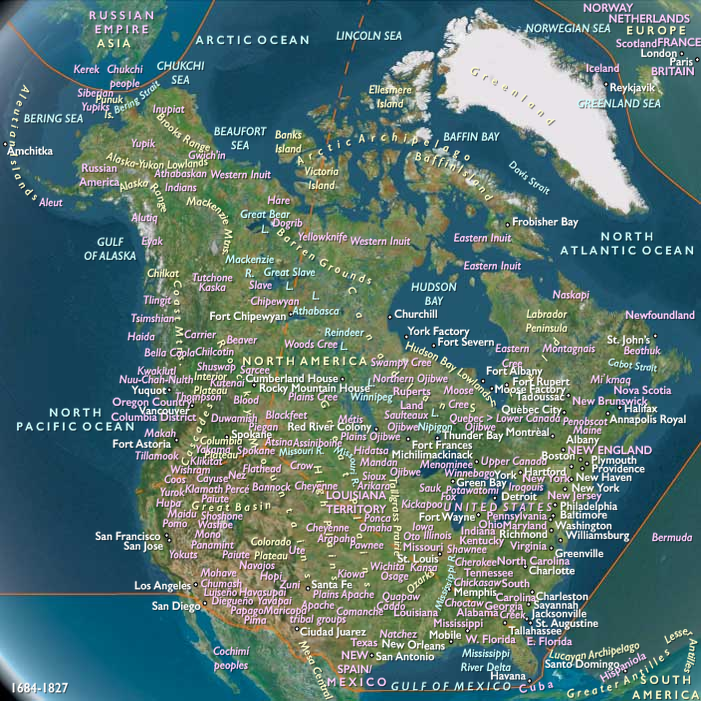
Northern North America
View →Subregions