Vincenzo Scamozzi, an Italian architect and theoretical …
Years: 1574 - 1574
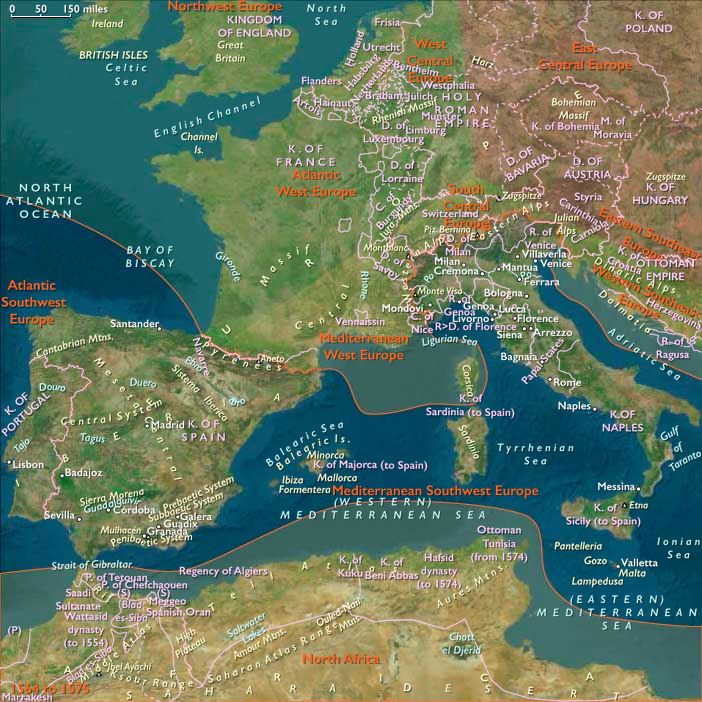
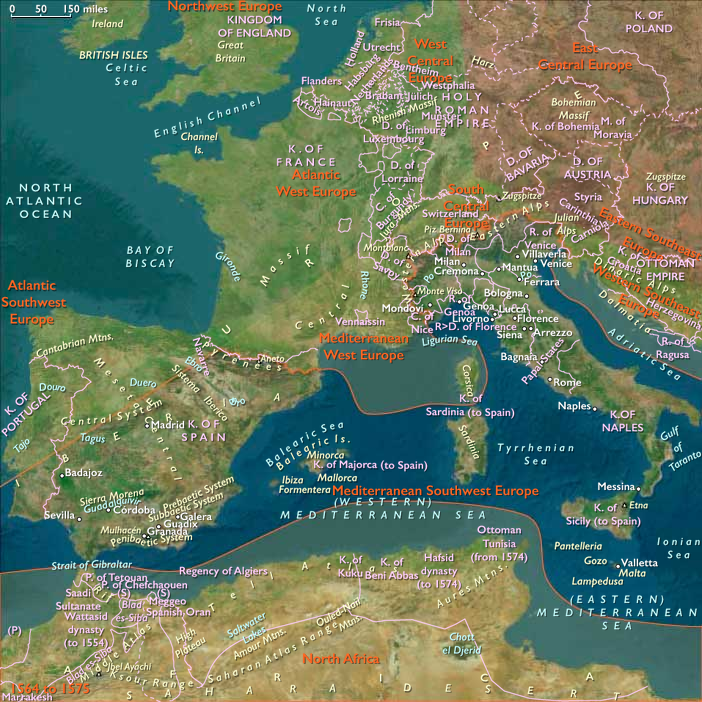
Vincenzo Scamozzi, an Italian architect and theoretical writer much influenced by his compatriot Andrea Palladio, designs the Palladianesque Villa of Leonardo Verlato, at Villaverla in 1574. (It will not be completed until 1615, the year before Scamozzi’s death at sixty-eight.)
Locations
People
Groups
Topics
Subjects
Regions
Subregions
Related Events
Filter results
Showing 10 events out of 52 total
George Calvert, 1st Lord Baltimore in the Irish House of Lords, fresh from his failure further north with Newfoundland's Avalon colony, had in 1629 applied to King Charles for a new royal charter for what is to become the Province of Maryland.
Calvert's interest in creating a colony derived from his Catholicism and his desire for the creation of a haven for Catholics in the new world.
In addition, he was familiar with the fortunes that had been made in tobacco in Virginia, and hoped to recoup some of the financial losses he had sustained in his earlier colonial venture in Newfoundland.
George Calvert dies in April 1632, but a charter for "Maryland Colony" (in Latin, "Terra Maria") is granted to his son, Cæcilius Calvert, 2nd Lord Baltimore, on June 20, 1632.
The new colony is named in honor of Henrietta Maria, Queen Consort of Charles.
The specific name given in the charter is phrased "Terra Mariae, anglice, Maryland".
The English name is preferred over the Latin due in part to the undesired association of "Mariae" with the Spanish Jesuit Juan de Mariana.
Leonard, Cæcilius' younger brother, is put in charge of the expedition because Cæcilius does not want to go.
The Yaocomico are one of the Algonquian-speaking groups that live mostly in the coastal tidewater areas of present-day Maryland.
The Piscataway are dominant to the north of the Potomac River, but there are many smaller tribes such as the Yaocomico.
Maryland also has Iroquoian-speaking tribes, particularly the Susquehannock along the Susquehanna River, who have been raiding into Algonquian territory.
There are also Siouan-speaking tribes to the west and southwest.
English explorer Captain John Smith had first visited the upper Potomac River in 1608, and referred to the Piscataway by the name Moyaons, after their "king's house", i.e., capital village or Tayac's residence, also spelled Moyaone.
Closely associated with them were the Nacotchtank people (Anacostans) who lived around present-day Washington, DC, and the Taux (Doeg) on the Virginia side of the river.
Rivals and reluctant subjects of the Tayac had hoped that the newcomers would alter the balance of power in the region.
In search of trading partners, the Virginia Company, and later, Virginia Colony, has consistently allied with Piscataway enemies.
Their entry into the dynamics had begun to shift regional power.
The Tayac's hold over some of his subordinate werowances had weakened considerably by the early 1630s.
When the group of English settlers led by Leonard Calvert, one of the Barons Baltimore and a Roman Catholic, arrive on March 25, 1634, to the eastern shore of the St. Mary's River, a tributary of the Potomac, in the ships Dove and Ark, the Tayac Kittamaquund, paramount chief of the Piscataway nation, manages to turn the newcomers into allies.
He had come to power earlier in the year year after killing his brother Wannas, the former Tayac.
A Yaocomico village occupies the location, but Kittamaquund orders the village cleared and gives it to the English newcomers, who he wants to develop as allies and trading partners.
European accounts claim the Yaocomico were ready to sell the land to the Maryland colonists because they were being threatened by Iroquoian-speaking tribes from the north, specifically the Susquehannock and Seneca, the latter a part of the Iroquois Confederacy.
Despite relations with the Piscataway and the larger Powhatan Confederacy to the south, the Yaocomico had apparently decided to abandon the area before the arrival of Europeans.
Both the Yaocomico and their neighbors have been raided repeatedly by groups of Susquehannock warriors based further up the Chesapeake, along what the settlers name the Susquehanna River.
Such raids have pushed most Alonquian-speaking tribes out of the lands along the upper Chesapeake Bay, concentrating them in the south, where they have encountered English settlers.
The Yaocomico seek to use the new settlers as buffers against the Susquehannock.
The settlers lay St. Mary’s City according to a Baroque town plan, but most residents of St. Mary's City will soon prefer to live on their tobacco plantations in the surrounding countryside.
The settlement is meant to be the capital of the new Maryland Colony.
For some time, the Piscataway, their tributary tribes, and the English will coexist peacefully.

Maryland, to try to gain settlers, uses what is known as the headright system, which had originated in Jamestown.
The government award land to people who transport colonists to Maryland.
Lord Baltimore on March 25, 1634, sends the first settlers into this area.
Although most of the settlers are Protestants, Maryland will soon become one of the few regions in the British Empire where Catholics hold the highest positions of political authority.
Maryland will also be one of the key destinations of tens of thousands of British convicts.
About half the Yaocomico had left the site of St. Mary's City immediately; the other half leaves in 1635, having had the past year to maintain and harvest their crops.
In the interim, the Yaocomico have proved an invaluable resource to the settlers, teaching them how to survive in the new world.
The Europeans, in return, write favorably of the Yaocomico.
The Jesuit priests Andrew White, John Altham Gravenor, and Thomas Gervase, who had arrived with the first colonists, attempt to convert the Natives to Catholicism, establishing an institution of higher learning at St. Mary's which is later to become known as Georgetown University, North America's oldest university.
The colonists also continue to trade or share some European goods with the natives.
William Claiborne, an English Puritan surveyor and an early settler in Virginia, had in 1631 established a trading post on Kent Island in the Chesapeake Bay.
He has become a wealthy planter, a trader, and a major figure in the politics of the colony.
Following the formation of the province of Maryland, Claiborne has continued to recognize the island as part of his home colony of Virginia while Maryland’s proprietor Cecilius Calvert, 2nd Baron Baltimore, recognizes it as part of the English Province of Maryland, founded in 1632 as a Catholic colony.
Claiborne is a central figure in the disputes between the colonists of Maryland and of Virginia, partly because of his refusal to vacate the trading post on Kent Island, which in 1635 had provoked the first naval battles in North American waters.
An attorney for Cloberry and Company, who are concerned that the revenues they are receiving from fur trading has not recouped their original investment, arrive on Kent Island in autumn 1637.
The attorney takes possession of the island and bids Claiborne return to England, where Cloberry and Company file suit against him.
The attorney now invites Maryland to take over the island by force, which it does in December 1637.
The Maryland Assembly had by March 1638 declared that all of Claiborne's property within the colony now belongs to the proprietor.
Maryland temporarily wins the legal battle for Kent Island as well when Claiborne's final appeal is rejected by the Privy Council in April 1638.
The English Province of Maryland declares war on the Susquehannock in 1642.
William Claiborne, fresh from his defeat over Kent Island, had in May 1638 received a commission from the Providence Land Company, who had been advised by his old friend Maurice Thomson to create a new colony on Roatan Island off the coast of Honduras in the Caribbean Sea.
At this time, Honduras itself is a part of Spain's Kingdom of Guatemala, and Spanish settlements dominate the mainland of Central America.
In contesting with the Spanish for colonization of the Caribbean, the English have occupied the Bay Islands on and off since 1550.
Claiborne had optimistically called his new colony Rich Island, but Spanish power in the area is too strong and the colony is destroyed in 1642.
Six hundred Swedes and Finns, the latter group mainly Forest Finns from central Sweden (and also a number of Dutchmen and Germans in Swedish service) have settled in New Sweden in the past six years.
The settlement constitutes an invasion of New Netherland, since the river and the land in question had previously been explored and claimed for that colony.
Under Johan Björnsson Printz (governor from 1643), the company expands along the river from Fort Christina, ...
....establishing Fort Nya Elfsborg on the east bank of the Delaware near present-day Salem, New Jersey and ...