
The princes of both Walachia and Moldavia …
Years: 1396 - 1539
The princes of both Walachia and Moldavia hold almost absolute power; only the prince has the power to grant land and confer noble rank.
Assemblies of nobles, or boyars, and higher clergy elect princes for life, and the absence of a succession law creates a fertile environment for intrigue.
From the fourteenth century to the seventeenth century, the principalities' histories are replete with overthrows of princes by rival factions often supported by foreigners.
The boyars are exempt from taxation except for levies on the main sources of agricultural wealth.
Although the peasants have to pay a portion of their output in kind to the local nobles, they are never, despite their inferior position, deprived of the right to own property or resettle.
Locations
Groups
- Transylvania, region of
- Hungarian people
- Christianity, Chalcedonian
- Romanians
- Christians, Eastern Orthodox
- Christians, Roman Catholic
- Saxons, Transylvanian
- Székelys
- Hungary, Kingdom of
- Wallachia, Hungarian province of
- Moldavia, Hungarian province of
- Wallachia, Hungarian province of
- Wallachia, Principality of
- Moldavia, Principality of
Topics
Subjects
Regions
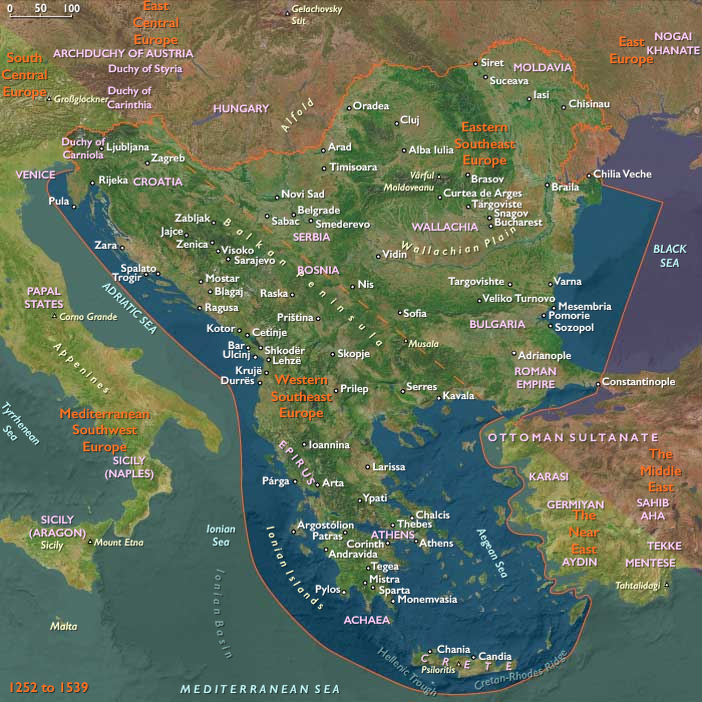
Subregions
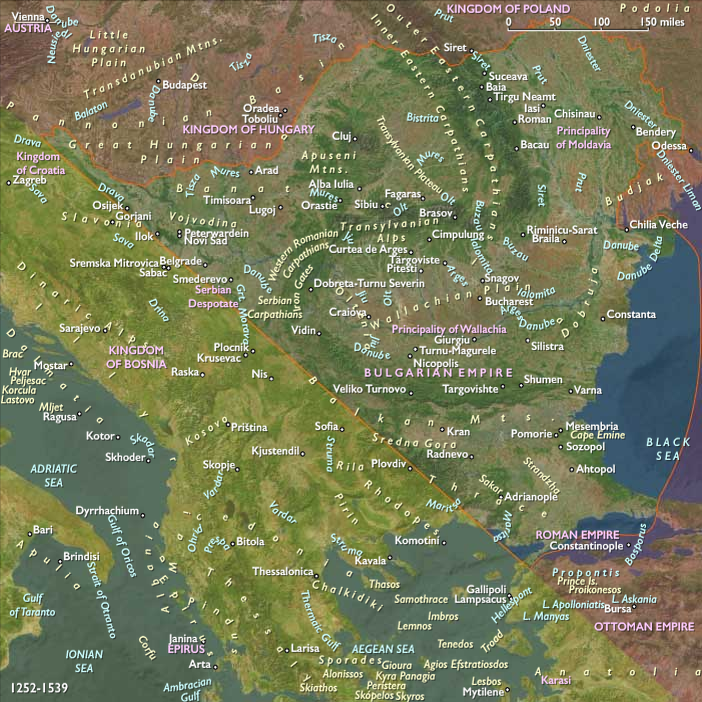
Years: 1396 - 1539
Locations
Groups
- Transylvania, region of
- Hungarian people
- Christianity, Chalcedonian
- Romanians
- Christians, Eastern Orthodox
- Christians, Roman Catholic
- Saxons, Transylvanian
- Székelys
- Hungary, Kingdom of
- Wallachia, Hungarian province of
- Moldavia, Hungarian province of
- Wallachia, Hungarian province of
- Wallachia, Principality of
- Moldavia, Principality of
Topics
Subjects
Regions
Subregions