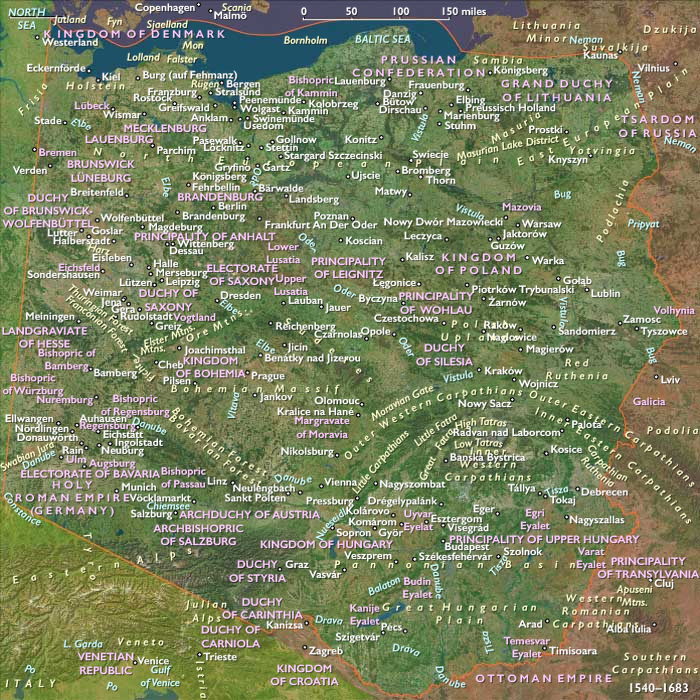
Wallenstein marches up to the south, threatening…
November 1632 CE
Wallenstein marches up to the south, threatening Gustavus Adolphus's supply chain.
Gustavus Adolphus knows that Wallenstein is waiting for the attack and is prepared, but finds no other option.
Wallenstein and Gustavus Adolphus clash in 1632 in the Battle of Lützen, where the Swedes prevail, but Gustavus Adolphus is killed when, at a crucial point in the battle, he becomes separated from his troops while leading a cavalry charge into a dense smog of mist and gunpowder smoke.
Strategically and tactically speaking, the Battle of Lützen is a Protestant victory.
Having been forced to assault an entrenched position, Sweden has lost about six thousand men including badly wounded and deserters, many of whom may drift back to the ranks in the coming weeks.
The Imperial army, again contrary to generations of Protestant propaganda, has probably lost slightly fewer men than the Swedes on the field, and certainly less than six thousand, but because of the loss of the battlefield and general theater of operations to the Swedes, fewer of the wounded and stragglers will be able to rejoin the ranks.
The Swedish army has achieved the main goals of its campaign.
The Imperial onslaught on Saxony had been halted, Wallenstein chooses to withdraw from Saxony into Bohemia for the winter and Saxony continues in its alliance with the Swedes.
A more long-lasting consequence of the battle is the death of the Swedish king.
Without Gustavus Adolphus to unify the German Protestants, their war effort loses direction.
As a result, the Catholic Habsburgs are able to restore their balance and will subsequently regain some of the losses Gustavus Adolphus had inflicted on them.
Locations
People
Topics
Commodities
Subjects
Regions
Central Europe
View →Subregions