Soult’s Retreat from Porto – A Desperate…
May 1809 CE
Soult’s Retreat from Porto – A Desperate Escape Through the Mountains (May 1809)
After his stunning defeat at the Second Battle of Porto (May 12, 1809), Marshal Nicolas Soult was forced to abandon his campaign in Portugal and retreat into Spain. However, with British and Portuguese forces closing in, his withdrawal became a desperate flight for survival.
The Retreat – Abandoning Equipment and Supplies
- With Sir Arthur Wellesley’s Anglo-Portuguese army recapturing Porto, Soult found his escape routes blocked.
- Panic spread through the French ranks, and Soult had no choice but to abandon his heavy artillery, baggage trains, and wounded soldiers.
- The French destroyed much of their equipment to prevent it from falling into British hands.
A Grueling March Through the Mountains
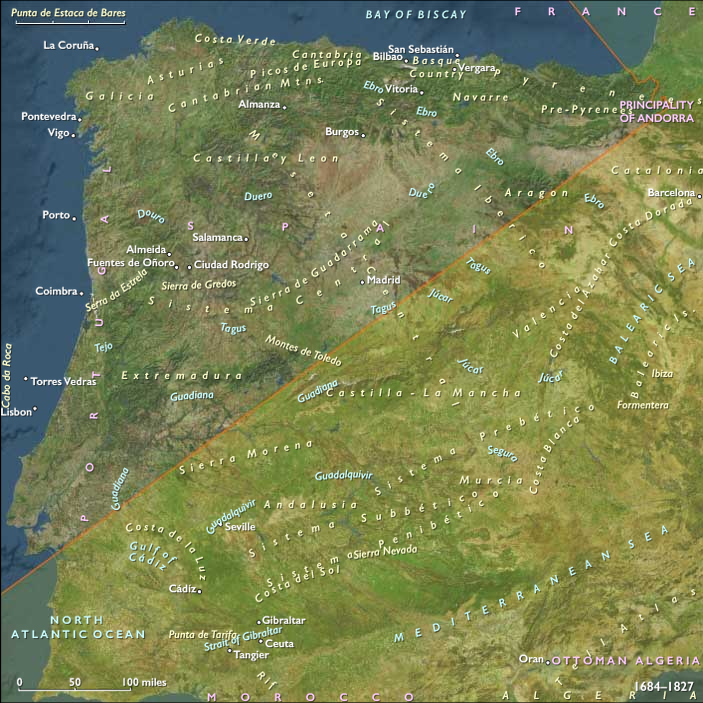
- Soult’s only escape route was through the mountainous terrain of northern Portugal and Galicia.
- His troops marched through rugged mountain passes, suffering from hunger, exhaustion, and continuous harassment by Portuguese militia.
- Despite these challenges, Soult’s disciplined veterans managed to avoid total destruction.
Reaching Orense – A Costly Survival
- After a brutal march, Soult’s surviving forces reached Orense in Galicia, where they rejoined other French units.
- Though he escaped encirclement, Soult lost most of his supplies, artillery, and nearly 4,000 men to combat, desertion, and exhaustion.
Conclusion – The End of the Second French Invasion of Portugal
- The retreat through the mountains marked the final failure of Soult’s 1809 campaign in Portugal.
- Though he escaped with his core force intact, the French had been decisively defeated in Portugal.
- The losses sustained during the retreat weakened French control in northern Spain, emboldening Spanish resistance in Galicia.
- With Portugal secured, Wellesley turned his attention to Spain, preparing to support the Spanish in their struggle against Napoleon.
The failure of Soult’s invasion ensured that Portugal would remain a secure base for the British-led coalition, setting the stage for further Allied operations in Spain during the Peninsular War.
Locations
Groups
Commodities
Subjects
Regions
Southwest Europe
View →Subregions