The Lines of Torres Vedras – The…
October 1810 CE
The Lines of Torres Vedras – The Defeat of Masséna’s Invasion (October 1810)
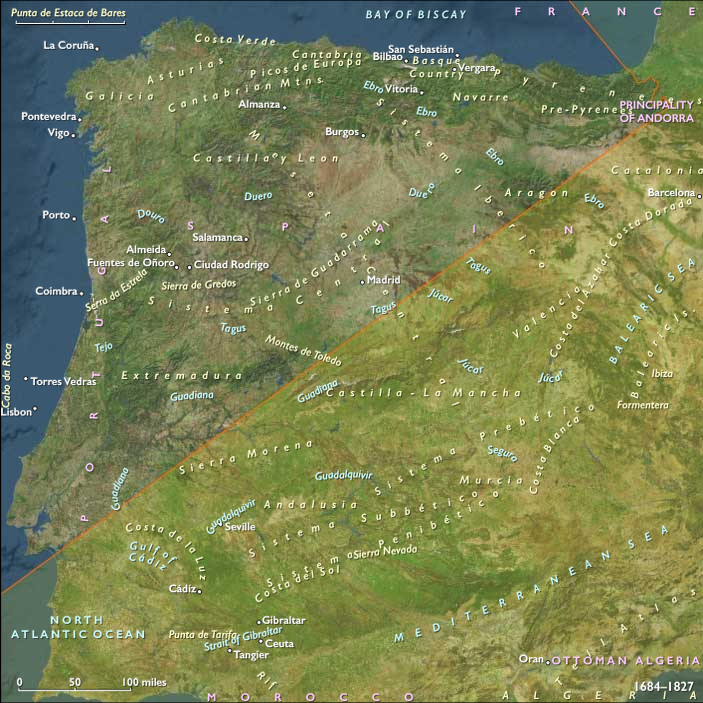
By October 1810, Marshal André Masséna’s French army, numbering 65,000 troops, had advanced deep into Portugal, attempting to capture Lisbon. However, Viscount Wellington’s Anglo-Portuguese army, instead of confronting the French directly, withdrew to a defensive position behind the Lines of Torres Vedras, a fortified network that proved impenetrable.
The Strategic Masterpiece – The Lines of Torres Vedras
- Constructed in total secrecy from 1809 to 1810, the Lines of Torres Vedras were three layers of defensive fortifications blocking all northern approaches to Lisbon.
- These earthworks, forts, and artillery emplacements stretched across the Lisbon Peninsula, ensuring that any invading army would be halted long before reaching the city.
- The Royal Navy secured the flanks, ensuring that Lisbon remained supplied from the sea while the French had no access to food or reinforcements.
Masséna’s Invasion Stalls (October 1810)
- When Masséna reached Torres Vedras, he found himself confronted by an impenetrable wall of defenses.
- Wellington had also implemented a scorched earth policy, ensuring that the land north of the lines was stripped of food, shelter, and supplies.
- French supply lines were stretched thin, and the army quickly began suffering from hunger and exhaustion.
Despite his reputation as one of Napoleon’s best marshals, Masséna was unable to break through the Anglo-Portuguese defenses.
Outcome – The Turning Point in the Peninsular War
- By late October 1810, Masséna realized that Lisbon was unreachable and his troops were starving.
- With no choice but to retreat, he held his position for several months, hoping for reinforcements.
- However, by March 1811, his army was forced to withdraw, marking the complete failure of the third French invasion of Portugal.
Conclusion – Wellington’s Defensive Masterpiece
- The Lines of Torres Vedras saved Portugal, proving to be one of the greatest defensive strategies in military history.
- The failure of Masséna’s campaign marked a turning point in the Peninsular War, as the French began losing their grip on Iberia.
- Wellington’s foresight, preparation, and logistical planning ensured that Napoleon’s forces could never take Lisbon, setting the stage for the Anglo-Portuguese counteroffensive that would eventually liberate Spain.
Locations
Groups
Commodities
Subjects
Regions
Southwest Europe
View →Subregions