Event
West Africa (477 BCE–243 CE) Classical Antiquity…
West Africa (477 BCE–243 CE)
Classical Antiquity
Mature Floodplain Communities and Regional Exchange
Geographic and Environmental Context
The Inland Niger Delta, Senegal Valley, Hausaland, Upper Volta Basin, and adjoining forest margins formed increasingly interconnected ecological provinces whose seasonal rhythms continued organizing settlement, agriculture, and movement.
Climate and Environmental Shifts
Seasonal flooding remained broadly reliable despite modest climatic oscillations. Floodplains, wetlands, and woodland margins continued supporting exceptionally productive agricultural and pastoral systems.
Subsistence and Settlement
Permanent farming communities became increasingly mature along major river corridors. Fishing, livestock management, flood-recession cultivation, woodland gathering, and regional craft production formed complementary economic systems. Larger market villages emerged naturally along river crossings and ecological transition zones.
Technology and Material Culture
Iron technology became widespread. Agricultural implements, fishing equipment, weaving, leatherworking, pottery, and canoe construction all became increasingly refined. Regional craft traditions expanded alongside growing exchange.
Movement and Interaction Corridors
River transport intensified throughout the Niger system while overland routes increasingly connected the Sahel, savanna, forest margins, and southern Sahara. Salt, grain, livestock, gold, iron, and forest products circulated across expanding regional networks.
Belief and Symbolism
Ancestor traditions, sacred groves, agricultural shrines, river ceremonies, and seasonal festivals became increasingly integrated into stable community life.
Environmental Adaptation and Resilience
Highly diversified floodplain economies continued buffering climatic variability through complementary use of multiple ecological zones.
Legacy of the Age
By 243 CE, West Africa possessed mature river-centered communities whose prosperity rested upon enduring ecological integration and expanding regional exchange.
-
{# Image navigates to the detail page; the magnifying-glass chip is the only Fancybox lightbox trigger (kept a separate sibling — anchors can't nest). #}
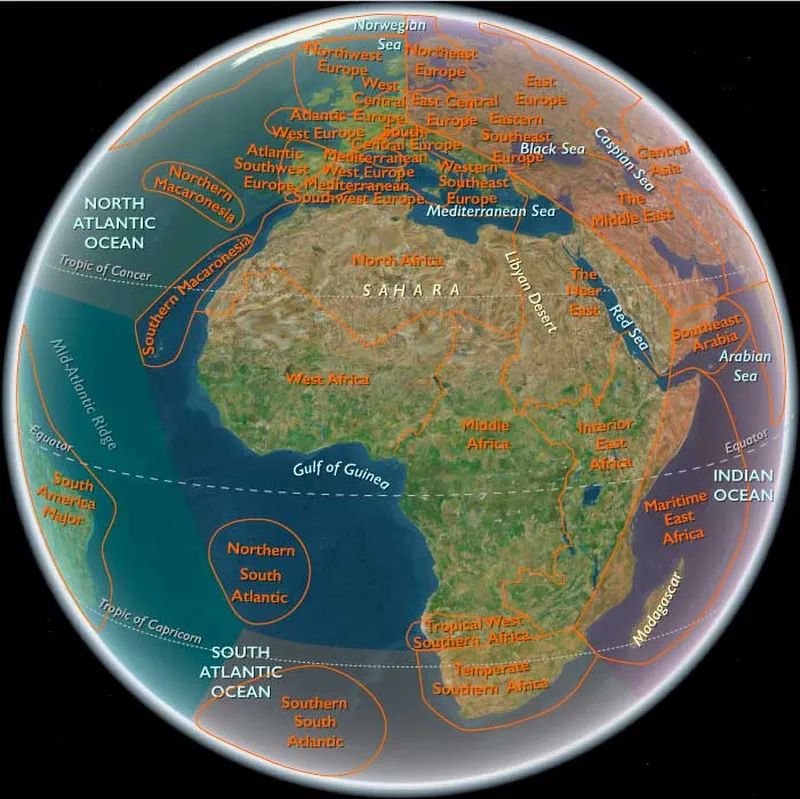 The Middle of The Earth
World
-
{# Image navigates to the detail page; the magnifying-glass chip is the only Fancybox lightbox trigger (kept a separate sibling — anchors can't nest). #}
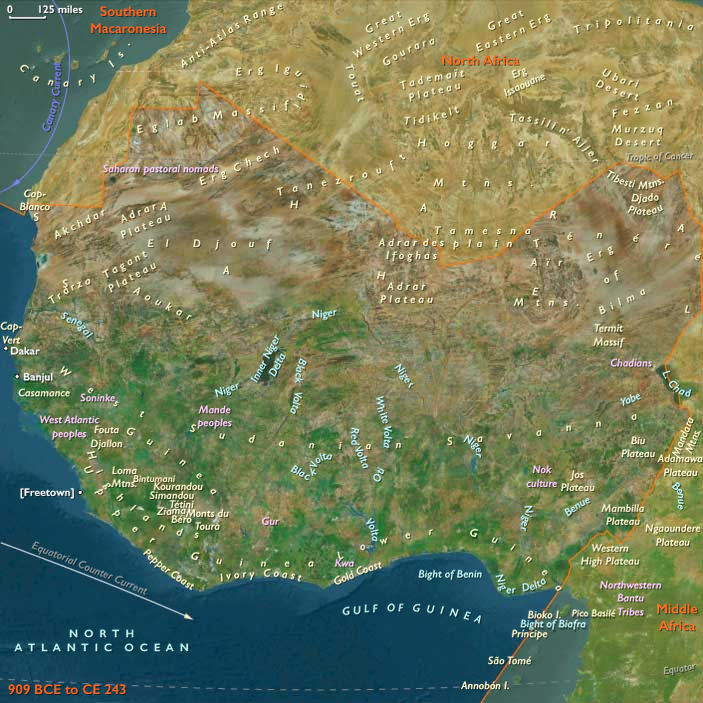 West Africa
Region
-
{# Image navigates to the detail page; the magnifying-glass chip is the only Fancybox lightbox trigger (kept a separate sibling — anchors can't nest). #}
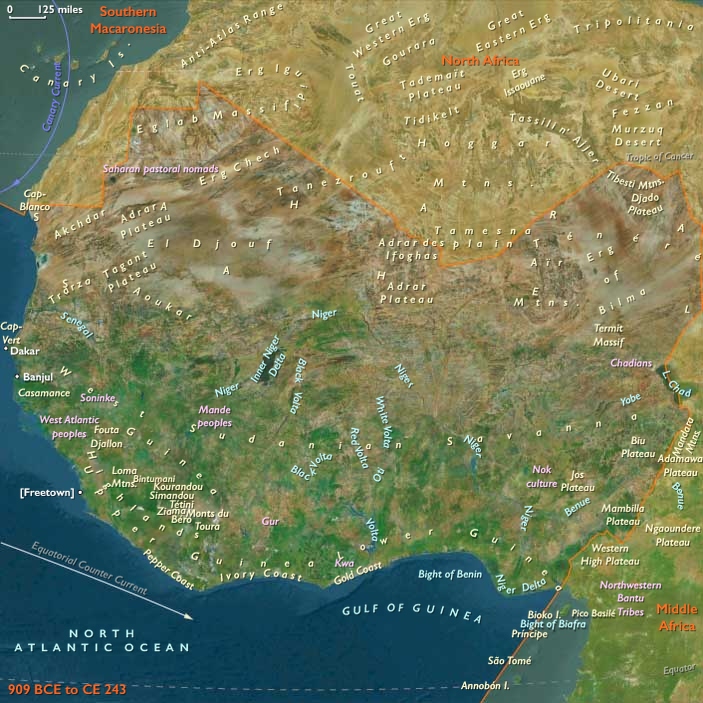 West Africa
Subregion