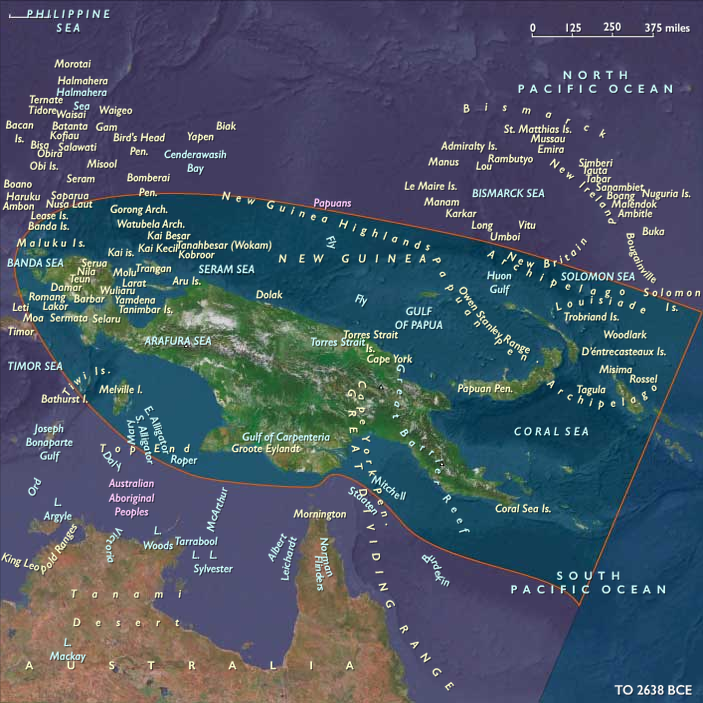
West Melanesia (7,821 – 6,094 BCE): Early…
7821 BCE to 6094 BCE
West Melanesia (7,821 – 6,094 BCE): Early Holocene — Kuk Swamp Cultivation and Coastal Abundance
Geographic & Environmental Context
West Melanesia includes New Guinea (main island), its adjacent islands (Bismarck Archipelago: New Britain, New Ireland, Manus; Admiralties), and the northern Solomons (Bougainville, Buka).
-
Anchors: the Central Highlands of New Guinea, the Sepik–Ramu basins, Papuan Gulf, Huon Peninsula, Bismarck chain (New Britain, New Ireland, Manus), and the northern Solomons (Bougainville).
-
Highland valleys (Wahgi, Tari) warmed, forests encroached on grasslands.
-
Coastal plains and mangroves expanded; Bismarcks remained fertile volcanic islands.
Climate & Environmental Shifts
-
Holocene warmth and rainfall favored forest growth and stable streams.
Subsistence & Settlement
-
Kuk Swamp in the Wahgi Valley: evidence of agriculture (taro, banana, yam) supported by ditch systems.
-
Coastal villages exploited shellfish, reef fish, tree crops, and marsupial/game hunting.
-
Bismarcks: nut harvesting, fruit cultivation, and fishing combined in mixed economies.
Technology & Material Culture
-
Ground stone adzes widespread; digging sticks; early pottery absent.
-
Obsidian exchange circuits flourished across the Bismarcks.
Movement & Interaction Corridors
-
Canoe voyaging routine in the Bismarcks; island chains fully occupied.
-
Highland–lowland exchange deepened: salt, shells, stone tools moved up; tubers and forest products moved down.
Cultural & Symbolic Expressions
-
Ritual use of swamp clearings; burials in drainage areas; rock art persisted in highlands and islands.
Environmental Adaptation & Resilience
-
Diversified economies (agriculture + foraging) ensured resilience.
-
Island voyagers buffered shocks through inter-island exchange of obsidian, shells, and food.
Transition
By 6,094 BCE, West Melanesia had pioneered horticulture and robust island voyaging, forming one of the world’s most ancient agricultural centers.
Groups
Topics
Subjects
Regions
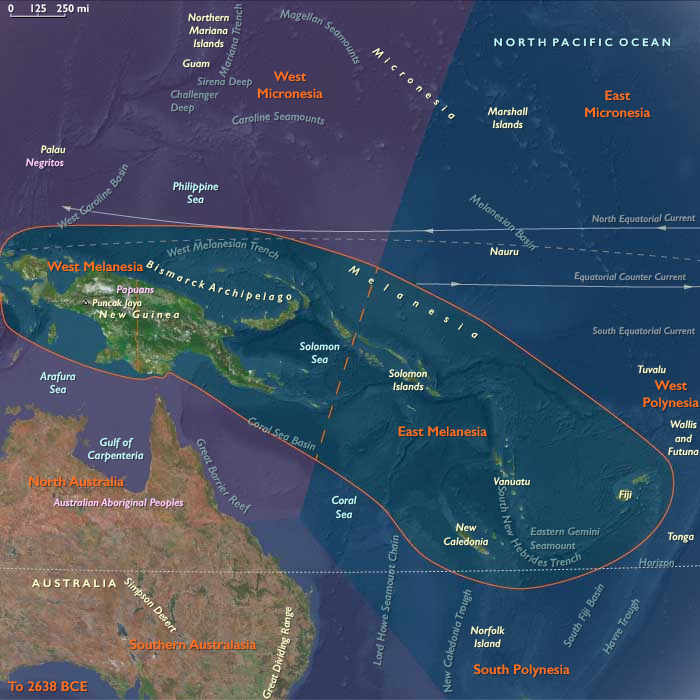
Melanesia
View →Subregions