Drogheda, by the time Cromwell lands in…
September 1649 CE
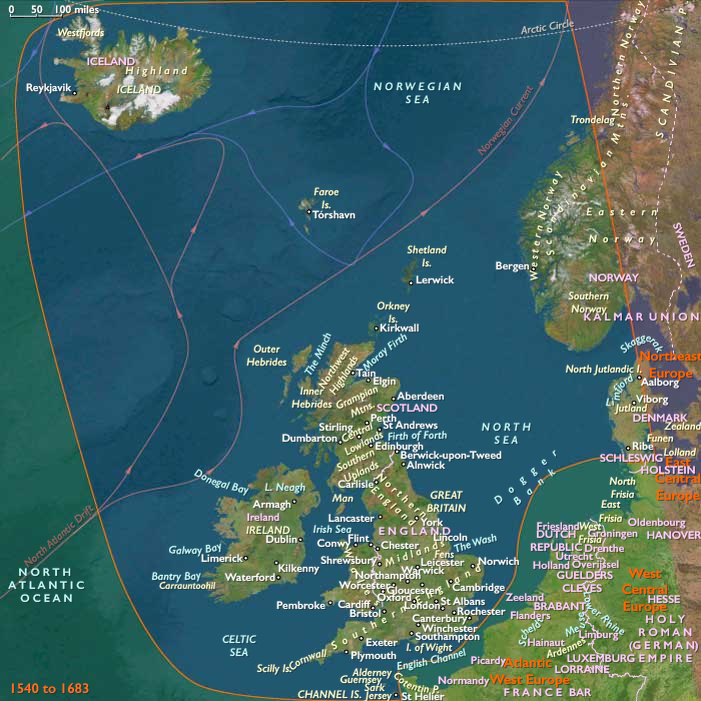
Drogheda, by the time Cromwell lands in August 1649 in Ireland to reconquer the country on behalf of the English Parliament, is garrisoned by an English Royalist regiment under Arthur Aston and Irish Confederate troops—a total strength of about thirty-one hundred (roughly half of them English; the other half Irish).
Cromwell has around eighteen thousand men, of whom twelve thousand are brought to Drogheda, and eleven heavy, forty-eight-pound siege artillery pieces.
Cromwell had become known in the English Civil War as an excellent soldier, particularly as a commander of cavalry, but he has little expertise in siege warfare.
Rather than go through the lengthy process of blockading a fortified place into surrender, which in any case is not an option because he cannot afford to get stuck at Drogheda, he prefers the more risky but quicker option of assault.
He positions his forces on the south side of the river Boyne, in order to concentrate them for the assault and because he is not worried about whether supplies would enter the town from the north.
In addition a squadron of Parliamentarian ships blockades the harbor of the town.
Upon Aston’s refusal to surrender, Cromwell opens the bombardment.
His cannon batter two large breaches in the town's medieval walls from long range and on September 11, 1649, Cromwell orders the assault.
Two Parliamentarian attacks are repulsed before Cromwell's men fight their way into the town.
The garrison is massacred as are any Catholic clergy found within the town.
The New Model soldiers after breaking into the town pursue the defenders through the streets, killing them as they run.
A group of defenders has barricaded themselves in Millmount Fort, overlooking the town's eastern gate and holding out while the rest of the town is being sacked.
They negotiate a surrender, but are then disarmed and killed.
Another group of soldiers in St. Peter's church (at the northern end of Drogheda) are burned to death when some Parliamentarian soldiers led by John Hewson set fire to the Church.
Aston is reportedly beaten to death with his own wooden leg, which the New Model Army soldiers thought had gold hidden in it.
Richard Talbot, the future Jacobite Duke of Tyrconnell, is one of the few members of the garrison to survive the sack.
Only one hundred and fifty Parliamentarians are killed in the attack.
The two hundred Royalists who survive are deported to Barbados.
Although Cromwell himself denies that his troops had killed civilians at Drogheda, this massacre becomes infamous in Ireland and, alongside Cromwell's subsequent Sack of Wexford, remains so today.
Locations
People
Groups
Topics
Commodities
Subjects
Regions

North Europe
View →Subregions