Wilhelm Wundt's Principles of Physiological Psychology the…
November 1875 CE
The Principles utilizes a system of psychology that seeks to investigate the immediate experiences of consciousness, including feelings, emotions, volitions and ideas, mainly explored through Wundt's system of "internal perception", or the self-examination of conscious experience by objective observation of one's consciousness.
Wilhelm Wundt was born at Neckarau, Baden (now part of Mannheim) on August 16th, 1832, the fourth child to parents Maximilian Wundt (a Lutheran minister), and his wife Marie Frederike.
When Wundt was about four years old, his family moved to Heidelsheim, a small town.
He had studied from 1851 to 1856 at the University of Tübingen, University of Heidelberg, and the University of Berlin, and after graduating in medicine from Heidelberg in 1856, had studied briefly with Johannes Peter Müller, before joining the University's staff, becoming an assistant to the physicist and physiologist Hermann von Helmholtz in 1858.
There he had written Contributions to the Theory of Sense Perception (1858–62)
He had married Sophie Mau while at Heidelberg
It was during this period that Wundt had offered the first course ever taught in scientific psychology, all the while stressing the use of experimental methods drawn from the natural sciences, emphasizing the physiological relationship of the human brain and the mind
His background in physiology had had a great effect on his approach to the new science of psychology.
His lectures on psychology had been published as Lectures on the Mind of Humans and Animals in 1863-1864
He had been promoted to Assistant Professor of Physiology at Heidelberg in 1864
Ernst Heinrich Weber and Gustav Fechner, who worked at Leipzig, had inspired Wundt's interest in neuropsychology.
He wrote a textbook about human physiology in 1865.
In 1867, he became a professor in acquainting medical students with the exact physical needs for medical investigation and became a professor of "Inductive Philosophy" in Zurich in 1874, before moving back to Leipzig.
Locations
People
Regions
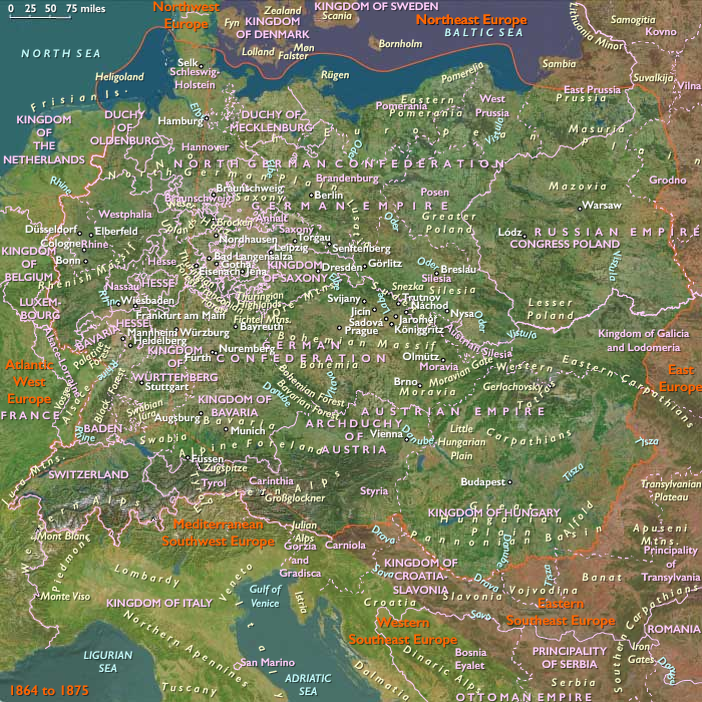
Central Europe
View →Subregions