William II and the Rise of Dutch…
1253 CE
William II and the Rise of Dutch Cities: The Foundations of The Hague
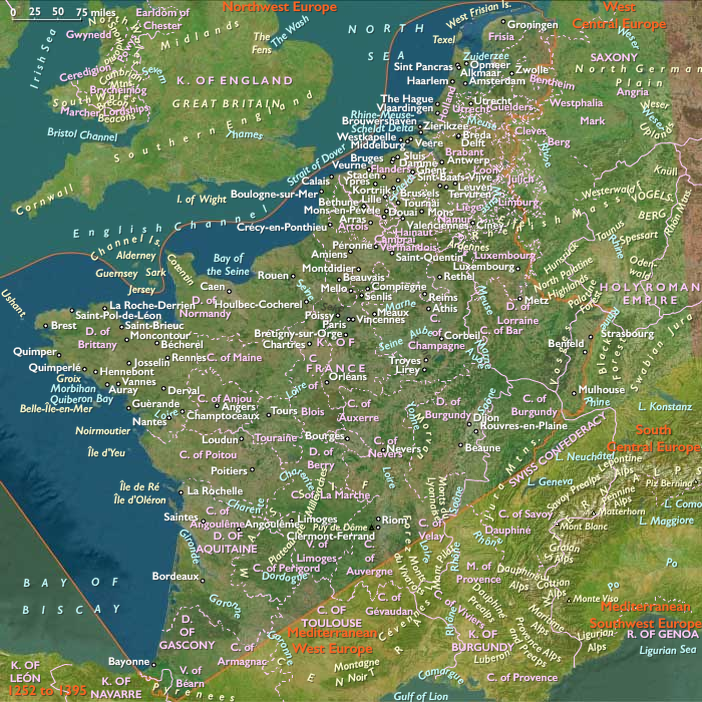
As King of Germany and Count of Holland, William II played a crucial role in the urban development of the Low Countries. During his reign, he bestowed city rights upon several important settlements, including Haarlem, Delft, Alkmaar, and
's-Gravenhage (The Hague), fostering their growth into key centers of commerce, governance, and administration.
In 1248, William commissioned the construction of a castle in 's-Gravenhage. This fortress—intended as a hunting lodge and administrative seat—became the nucleus of what would later develop into The Hague, the future political capital of the Netherlands. Over time, the site evolved into the Binnenhof, which remains the heart of Dutch government to this day.
William’s city grants and infrastructure projects contributed to the urbanization and economic development of Holland, reinforcing its position as a commercial and political hub in the region. His policies helped lay the groundwork for the later emergence of Dutch autonomy in the late medieval and early modern periods.
Locations
Commodities
Subjects
Regions
West Europe
View →Subregions