William Shakespeare's romantic comedy The Tempest, today…
November 1611 CE
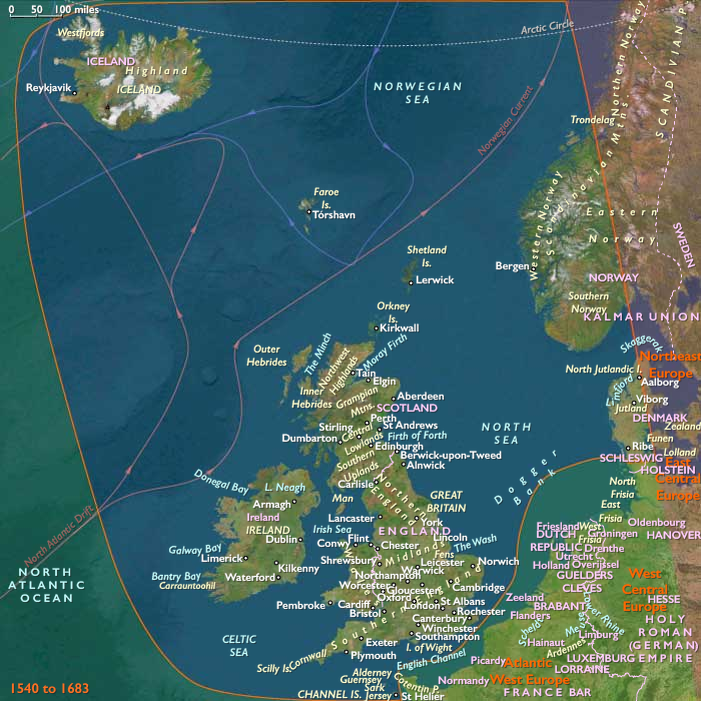
William Shakespeare's romantic comedy The Tempest, today considered to be one of Shakespeare's greatest works, is performed for the first time on November 1, 1611, at Whitehall Palace in London.
There is no obvious single source for the plot of The Tempest, which Shakespeare seems to have created out of an amalgamation of sources.
Since source scholarship began in the eighteenth century, researchers have suggested passages from Erasmus's Naufragium (1523), (translated into English 1606) and Richard Eden's 1555 translation of Peter Martyr's De orbo novo (1530).
In addition, William Strachey's A True Reportory of the Wracke and Redemption of Sir Thomas Gates, Knight, an eyewitness report of the real-life shipwreck of the Sea Venture in 1609 on the island of Bermuda while sailing towards Virginia, is considered by most critics to be one of Shakespeare's a primary sources because of certain verbal, plot and thematic similarities.
Although not published until 1625, Strachey's report, one of several describing the incident, is dated July 15, 1610, and critics say that Shakespeare must have seen it in manuscript sometime during that year.
Estimated to have been written in 1610–11, although some researchers have argued for an earlier dating, the play does seem to draw on several contemporary accounts of shipwrecks in the New World, as well as the works of Michel de Montaigne and Ovid's Metamorphoses.
The play's basic structure reflects that of the popular Italian commedia dell'arte.
It is one of two Shakespearean plays that follow the neoclassical three unities (the other is The Comedy of Errors).
Locations
People
Topics
Commodities
Subjects
Regions
North Europe
View →Subregions