
The Short but Turbulent Rule of William …
Years: 1058 - 1058
The Short but Turbulent Rule of William VII of Aquitaine (1039–1058)
William VII (Pierre-Guillaume) of Aquitaine, the third son of Duke William V and Agnes of Burgundy, ruled as Duke of Aquitaine and Count of Poitou from 1039 until his death in 1058. His reign was marked by dynastic struggles, territorial disputes, and ongoing conflicts with Geoffrey Martel of Anjou. Despite his military ambitions, he failed to secure control over Gascony and died during a siege at Saumur.
Family and Dynastic Background
- William VII was the half-brother of Odo of Gascony, whom he defeated and killed in battle at Mauzé to claim his Aquitanian inheritance.
- His sister, Agnes of Poitou, had married Emperor Henry III, making him a brother-in-law to the late Holy Roman Emperor.
- His mother, Agnes of Burgundy, had remarried Geoffrey Martel, Count of Anjou, creating tensions over territorial claims in western France.
Struggles Over Gascony and Conflict with Geoffrey Martel
- Though William VII had claimed Aquitaine, he failed to occupy Gascony, which had come under Aquitanian rule through the marriage of William V to Prisca (Brisce) of Gascony, the sister of Duke Sancho VI Guilhem of Gascony.
- His younger brother, Guy-Geoffroy, became Duke of Gascony in 1052, holding the duchy separately from Aquitaine during William VII’s rule.
- At the same time, Geoffrey Martel of Anjou refused to return lands seized from Aquitaine during his predecessors’ reigns, leading William VII to embark on a military campaign to reclaim his lost patrimony.
The Siege of Saumur and Death (1058)
- In 1058, William VII led a campaign against Geoffrey Martel, laying siege to Saumur, a strategic Angevin stronghold.
- While besieging Geoffrey Martel, he contracted dysentery, a common disease in medieval siege warfare due to unsanitary camp conditions.
- He died in the autumn of 1058, leaving his duchy to his younger brother, Guy-Geoffroy, who succeeded him as William VIII of Aquitaine.
Legacy and Impact
- William VII’s reign was dominated by internal conflicts, preventing him from consolidating full control over Gascony.
- His failure to reclaim lost lands from Anjou meant that his successor, William VIII, inherited a weakened position against Angevin expansion.
- The division of Gascony and Aquitaine during his rule set a precedent for continued fragmentation and power struggles within southwestern France.
Though militarily ambitious, William VII died before fully securing his patrimony, leaving his successor, William VIII, to continue the struggles against Anjou and Gascony in the late 11th century.
Locations
People
- Agnes of Poitou
- Geoffrey II, Count of Anjou
- William VII, Duke of Aquitaine
- William VIII,Duke of Aquitaine
Groups
- Islam
- Muslims, Sunni
- Papal States (Republic of St. Peter)
- German, or Ottonian (Roman) Empire
- Aquitaine, (Angevin) Duchy of
- Aragón, Kingdom of
- Christians, Roman Catholic
Subjects
Regions
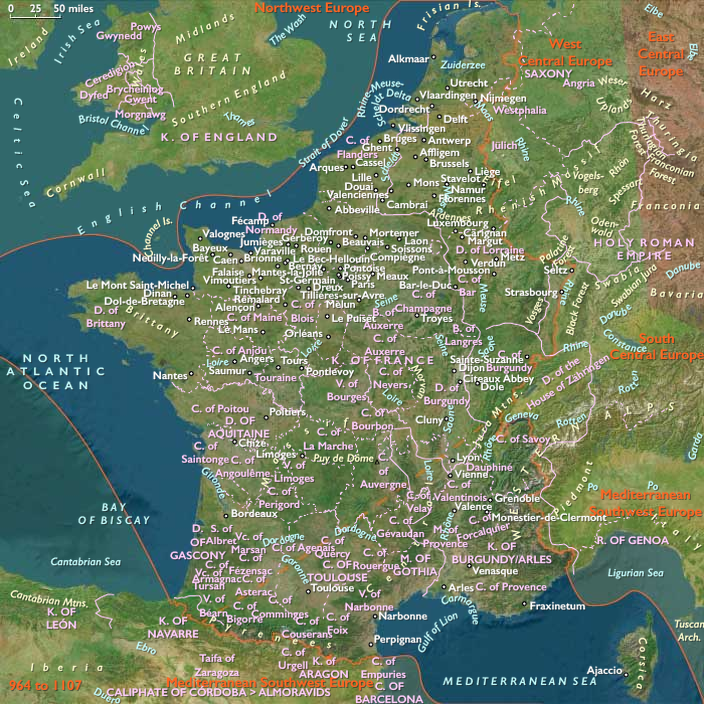
Subregions
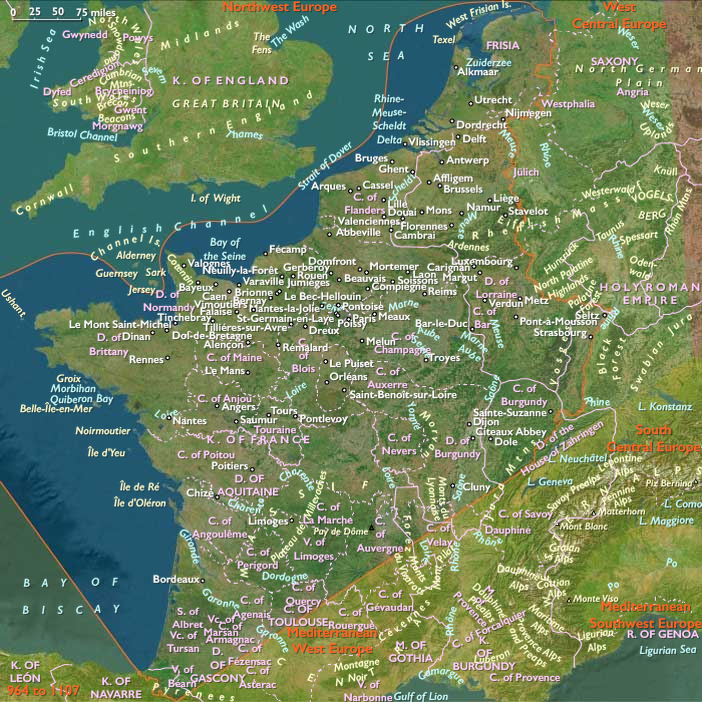
Related Events
Showing 10 events out of 51072 total
Years: 1058 - 1058
Locations
People
- Agnes of Poitou
- Geoffrey II, Count of Anjou
- William VII, Duke of Aquitaine
- William VIII,Duke of Aquitaine
Groups
- Islam
- Muslims, Sunni
- Papal States (Republic of St. Peter)
- German, or Ottonian (Roman) Empire
- Aquitaine, (Angevin) Duchy of
- Aragón, Kingdom of
- Christians, Roman Catholic
Subjects
Regions
Subregions