The first true pyramid is built by…
2637 BCE to 2494 BCE
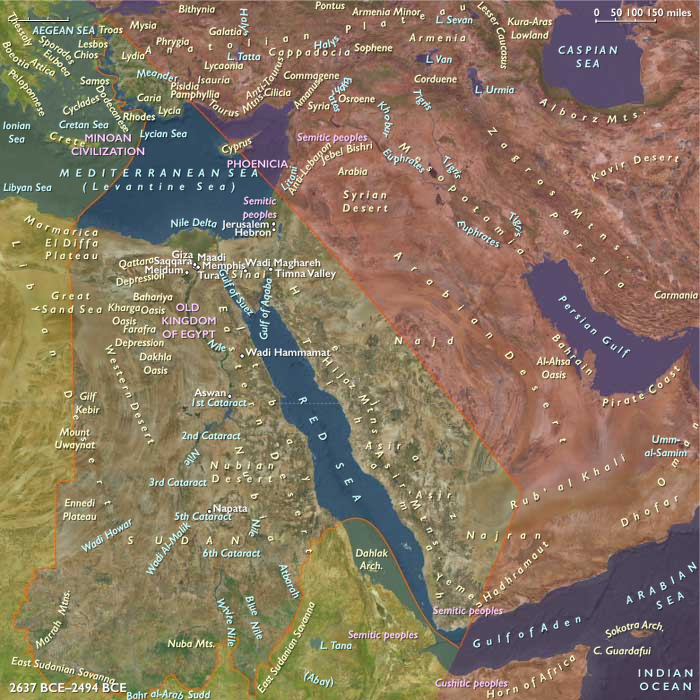
The first true pyramid is built by Sneferu, the first king of the Fourth Dynasty.
His son and successor, Khufu, builds the Great Pyramid at Giza (Al Jizah); this, with its two companions on the same site, is considered one of the wonders of the ancient world.
It contains well over two million blocks of limestone, some weighing fifteen tons apiece.
The casing stones of the Great Pyramid will be stripped off to build medieval Cairo (Al Qahirah).
The building and equipping of funerary monuments represents the single largest industry through the Old Kingdom and, after a break, the Middle Kingdom as well.
The channeling of so much of the country's resources into building and equipping funerary monuments may seem unproductive by modern standards, but pyramid building seems to have been essential for the growth of pharaonic civilization.
As Egyptologists have pointed out, in ancient societies innovations in technology arose not so much from deliberate research as from the consequences of developing lavish court projects.
Equally important, the continued consumption of so great a quantity of wealth and of the products of artisanship sustains the machinery that produces them by creating fresh demand as reign succeeds reign.
The pyramids of the pharaohs, the tombs of the elite, and the burial practices of the poorer classes are related to ancient Egyptian religious beliefs, particularly belief in the afterlife.
The Egyptian belief that life will continue after death in a form similar to that experienced on earth is an important element in the development of art and architecture that is not present in other cultures.
Thus, in Egypt, a dwelling place is provided for the dead in the form of a pyramid or a rock tomb.
Life is magically recreated in pictures on the walls of the tombs, and a substitute in stone is provided for the perishable body of the deceased.
Locations
People
Regions
The Near and Middle East
View →Subregions