Event
Work begins on vast wall frescoes at…
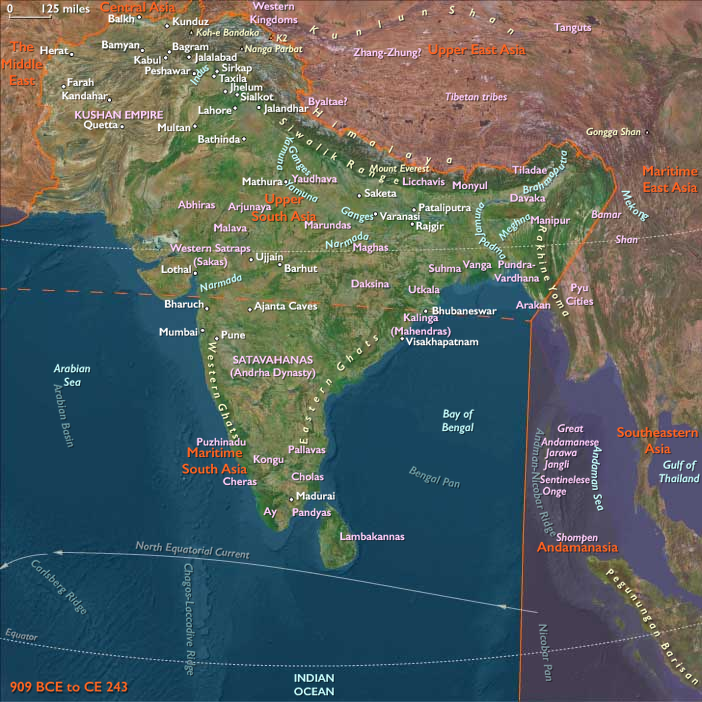
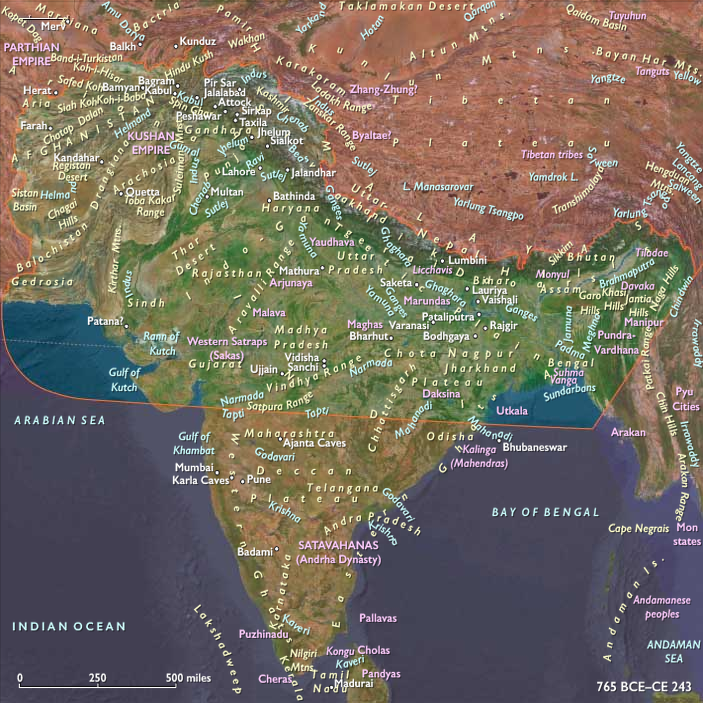
Work begins on vast wall frescoes at the rock-cut caves of Ajanta in South India.
The caves include paintings and sculptures considered to be masterpieces of Buddhist religious art (which depict the Jataka tales) as well as frescos which are reminiscent of the Sigiriya paintings in Sri Lanka.
According to Spink (2006), the first phase was the construction of sanctuaries (known as chaytia-grihas) built in the canyons of the Waghora Rive during the period 100 BCE to 100 CE, probably under the patronage of the Satavahana dynasty, which reigns from about 230 BCE to around 220 CE) .
The caves 9, 10, 12 and 15A are constructed during this period.
Murals preserved from this time belong to the oldest monuments of painted art in India.
-
{# Image navigates to the detail page; the magnifying-glass chip is the only Fancybox lightbox trigger (kept a separate sibling — anchors can't nest). #}
 The Great Crossroads
World
-
{# Image navigates to the detail page; the magnifying-glass chip is the only Fancybox lightbox trigger (kept a separate sibling — anchors can't nest). #}
 South Asia
Region
-
{# Image navigates to the detail page; the magnifying-glass chip is the only Fancybox lightbox trigger (kept a separate sibling — anchors can't nest). #}
 Upper South Asia
Subregion