Amalfi, Duchy of
State | Defunct
958 CE to 1073 CE
The city of Amalfi and its territory were originally part of the larger ducatus Neapolitanus, governed by a patrician, but it extracts itself from Byzantine vassalage and first elects a duke in 958.
Capital
Worlds
The Middle of The Earth
View →Related Events
Showing 10 events out of 43 total
Southwest Europe (820 – 963 CE): Umayyad Splendor, Carolingian Marches, and the Atlantic Pilgrim Frontier
Geographic and Environmental Context
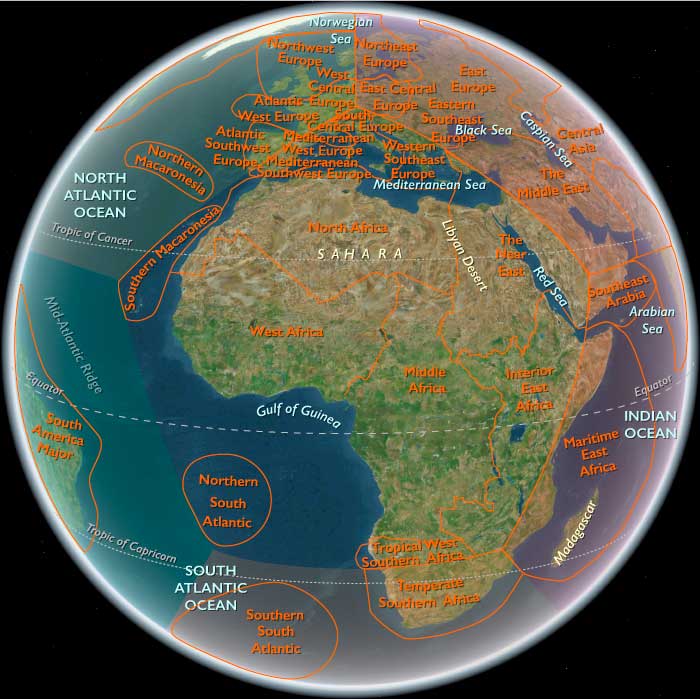
Southwest Europe extended from Iberia and the western Mediterranean islands to the Italian Peninsula, forming a continuum of Islamic, Latin, and maritime worlds.
-
Mediterranean Southwest Europe: from Andalusia and Murcia through Valencia, Aragon, Catalonia, the Balearics, and southern Portugal, across the Languedoc–Andorra corridor to Italy, Sicily, Sardinia, and Malta.
-
Atlantic Southwest Europe: the Cantabrian–Galician coasts, Duero–Minho valleys, and Atlantic marchesof Asturias, León, Castile, and Portucale, including Lisbon at the frontier of al-Andalus.
The Guadalquivir, Ebro, Tagus, Po, and Duero river basins formed the region’s agricultural arteries, while the Pyrenean passes and Mediterranean–Atlantic harbors tied Iberia and Italy to the broader Carolingian and Islamic worlds.
Climate and Environmental Shifts
The early Medieval Warm Period (c. 850–950) lengthened growing seasons and stabilized harvests across both coasts:
-
Andalusian plains flourished under irrigation; vine–olive–grain regimes prospered from Apulia to Andalusia.
-
Transhumance intensified across Aragon, Castile/La Mancha, and the Apennines, linking mountain pastures with lowland estates.
-
In the Atlantic northwest, high rainfall sustained chestnut–oak woodlands, vineyards, and pastures, while the mid-10th century brought slightly warmer vintages favorable to viticulture and pilgrimage traffic.
Societies and Political Developments
Iberia: Umayyad Córdoba and Christian Frontiers
-
Al-Andalus: The Emirate of Córdoba (756–929) reached its zenith under ʿAbd al-Raḥmān III, who proclaimed the Caliphate of Córdoba (929). Andalusia, Murcia, and Valencia thrived as centers of learning, irrigation, and commerce; Córdoba’s Great Mosque and palatial suburb at Madinat al-Zahra symbolized Islamic sophistication.
-
Northern Iberia:
-
The Kingdom of Asturias under Alfonso II–III expanded southward; in 910, the capital moved to León, marking the birth of the Kingdom of León.
-
The County of Castile, under Fernán González (930s–950s), gained autonomy as a marcher lordship.
-
Galicia integrated into León, energized by the cult of Santiago de Compostela (discovered c. 820), which turned the northwest into a sacred and economic magnet.
-
Portucale (Porto) and Coimbra formed a dynamic Christian frontier under León’s protection, while Lisbon, within al-Andalus, remained a Muslim entrepôt controlling the Tagus estuary.
-
-
Navarre, Aragon, and Catalonia: mountain kingdoms and Carolingian marches negotiated between Córdoba, León, and Frankish Burgundy, maintaining vital Pyrenean diplomacy.
Italy and the Central Mediterranean
-
Post-Carolingian Italy fragmented into regional powers—Lombard duchies, papal lands, and emerging maritime communes.
-
Venice, Amalfi, Genoa, and Pisa rose as commercial ports, trading grain, timber, salt, and slaves in exchange for silks, spices, and ceramics from the Levant and al-Andalus.
-
Sicily, conquered by the Aghlabids (827–902), became a Muslim emirate integrating African, Arab, and Byzantine influences in irrigation and architecture.
-
Sardinia evolved toward judicati autonomy under Byzantine and later Italian influence; Malta oscillated under Muslim and Latin control.
Economy and Trade
-
Andalusi agriculture: advanced qanat and acequia irrigation supported citrus, sugarcane, rice, and cotton; granaries and silos (al-finaʿ) sustained urban markets.
-
Northern Iberia: mixed cereal and vine cultivation; oak–chestnut forests supplied wood and mast; monastic and royal estates organized transhumant herding.
-
Pilgrim commerce: after Santiago’s discovery, pilgrims and artisans crossed from Aquitaine, fueling regional markets and urban growth along the Camino de Santiago.
-
Italian maritime economy: Venetian and Ligurian merchants exported Adriatic grain, timber, and salt; imported Byzantine and Islamic luxuries.
-
Interregional exchange:
-
Mediterranean cabotage linked Valencia–Barcelona–Genoa–Venice–Palermo–Cagliari–Malta, forming the skeleton of medieval seaborne commerce.
-
Atlantic trade connected Porto and Lisbon with Bordeaux, Bayonne, and Rouen, transmitting wine, salt, wool, and pilgrims between Iberia and the Frankish north.
-
Subsistence and Technology
-
Irrigation and farming: Andalusi and Sicilian engineers refined waterwheels, norias, and qanats; Carolingian and Leonese estates deployed heavy plows on loess soils.
-
Shipbuilding: clinker-built Atlantic coasters and Mediterranean galleys (with lateen sails) expanded both cabotage and cross-sea trade.
-
Fortifications: castillos on the Duero frontier and urban walls in Córdoba, Zaragoza, and Palermo defined a dual landscape of Christian marches and Islamic cities.
-
Urban growth: Córdoba exceeded 100,000 inhabitants; Venice and Naples grew as mercantile hubs; Burgos, León, and Porto emerged as inland market nodes.
Movement and Interaction Corridors
-
Ebro–Pyrenees passes connected the Catalan and Aragonese marches to Andorra and Languedoc.
-
Tagus–Guadalquivir–Duero river corridors structured Iberia’s military and commercial movement.
-
Po Valley and Adriatic formed Italy’s main inland–maritime axis centered on Venice.
-
Tyrrhenian sea routes linked Sardinia–Sicily–Malta with Rome and Iberia, while Atlantic sea lanes carried pilgrims and merchants from Galicia–Portugal to Aquitaine and Brittany.
Belief and Symbolism
-
Islamic Córdoba fused theology, science, and art—its Great Mosque, libraries, and translation movement diffused knowledge into Christian Europe.
-
Christian Iberia: the cult of Santiago de Compostela anchored the spiritual geography of León, fostering international pilgrimage and monastic expansion.
-
Latin monastic revival: centers like Ripoll in Catalonia and Monte Cassino in Italy preserved learning and manuscripts.
-
Sicily and al-Andalus: became conduits of Greek–Arab science, transmitting astronomy, medicine, and philosophy across the Mediterranean.
-
Religious coexistence: Jews, Christians, and Muslims interacted in Andalusian cities, creating hybrid forms of law, poetry, and architecture.
Adaptation and Resilience
-
Cultural symbiosis: Islamic, Latin, and Byzantine influences intertwined in architecture, law, and trade.
-
Agrarian diversification: irrigated Andalusi estates, Carolingian vineyards, and Alpine–Apennine transhumance balanced climatic shifts.
-
Frontier flexibility: fortified marches, pilgrimage roads, and monastic estates ensured recovery from raids and war.
-
Maritime continuity: when inland warfare disrupted Iberia, Italian and Provençal routes sustained trade.
-
Urban resilience: Córdoba, Venice, and León anchored regional economies, buffering crises through stored surpluses and long-distance exchange.
Long-Term Significance
By 963 CE, Southwest Europe stood at a tri-continental crossroads:
-
Córdoba embodied the zenith of Islamic Iberia, radiating science, architecture, and governance.
-
Asturias–León, Castile, and Portucale defined the Christian frontier, inspired by the Santiago cult and fortified along the Duero line.
-
Sicily, Sardinia, and Malta bridged North Africa, Byzantium, and Latin Christendom.
-
Venice, Amalfi, Genoa, and Pisa were emerging as the architects of Mediterranean commerce.
Southwest Europe thus united the Latin, Islamic, and maritime worlds into a dynamic frontier of innovation—its Andalusi irrigation, Carolingian pilgrimage, and Italian seamanship laying the groundwork for the Mediterranean ascendancy of the High Middle Ages.
Mediterranean Southwest Europe (820 – 963 CE): Umayyad Córdoba, Carolingian Marches, and Italian Maritime Beginnings
Geographic and Environmental Context
Mediterranean Southwest Europe includes Portugal’s Algarve and Alentejo; Spain’s Extremadura, Andalusia, Murcia, Valencia, Castile/La Mancha, southeastern Castile and León, Madrid, southeastern Rioja, southeastern Navarra, Aragon, Catalonia, and the Balearic Islands; Andorra; all of Italy including Venice, Sicily, and Sardinia; and Malta.
-
Anchors: the Guadalquivir Valley (Córdoba, Seville), Tagus/Guadiana frontiers (Alentejo, Extremadura), Ebro–Pyrenees corridor (Barcelona, Zaragoza, Andorra), Valencia/Murcia huertas, the Balearics, the Po Valley and Venetian lagoon, Rome–Naples axis, Sicily, Sardinia, and Malta.
Climate and Environmental Shifts
-
The early Medieval Warm Period lengthened growing seasons; vine–olive–grain regimes thrived from Andalusia to Apulia.
-
Transhumance intensified in Aragon, Castile/La Mancha, and the Apennines.
Societies and Political Developments
-
Al-Andalus under the Emirate of Córdoba (Caliphate from 929 under ʿAbd al-Raḥmān III) dominated Andalusia, Murcia, Valencia, and Extremadura.
-
Northern Iberia: Asturias/León, Navarre, Aragon, and Catalonia formed the Carolingian and Pyrenean march polities pushing a slow Reconquista.
-
Italy: post-Carolingian fragmentation; Venice, Amalfi, Genoa, Pisa (rising communes) cultivated Mediterranean trade; Sicily fell to the Aghlabids (from 827), forming an Islamic emirate.
-
Sardinia moved toward judicati autonomy; Malta oscillated under Muslim control.
Economy and Trade
-
Andalusian irrigation (qanats, acequias) sustained citrus, sugar, and rice; Venice, Amalfi, Genoa, Pisa shipped grain, salt, timber, and slaves; imported silks, spices, and ceramics.
-
Mediterranean cabotage linked Valencia, Barcelona, Genoa, Venice, Bari, Palermo, Cagliari, and the Balearics.
Subsistence and Technology
-
Andalusi water-management, Carolingian ploughlands north of the Ebro–Duero, and Italian communal port works (breakwaters, arsenali).
Movement and Interaction Corridors
-
Ebro–Pyrenees passes tied Aragon/Catalonia to Andorra and Languedoc; Po–Adriatic axis centered on Venice; Tyrrhenian routes knit Sardinia–Sicily–Malta to Italy and Iberia.
Belief and Symbolism
-
Islamic Córdoba (Great Mosque) embodied court culture; Latin monastic revival in Catalonia (Ripoll) and central Italy; Greek–Arab science circulated via Sicily and al-Andalus.
Long-Term Significance
By 963, a Latin–Islamic frontier spanned Iberia and Sicily, while Venice and Italian communes forged the maritime tools that would dominate later centuries.
Near East (964 – 1107 CE): Fatimid Cairo, Tyre’s Fatimid Haven, Nubian Kingdoms, and the Ionian–Seljuk Frontier
Geographic and Environmental Context
The Near East includes Israel, Egypt, Sudan, western Saudi Arabia, western Yemen, most of Jordan, southwestern Cyprus, and western Turkey (Aeolia, Ionia, Doria, Lydia, Caria, Lycia, and the Troad), plus Tyre in extreme southwest Lebanon.
-
Anchors: the Nile Valley (Egypt–Sudan), the southern Levant (with Tyre as the Near East’s only Levantine polity), the Hejaz and western Yemen along Red Sea corridors, southwestern Cyprus, and the western Anatolian littoral (Aegean coast).
Climate and Environmental Shifts
-
The Medieval Warm Period (c. 950–1250) modestly lengthened growing seasons in the Nile Delta and western Anatolian valleys.
-
Nile flood variability climaxed in the 1060s crisis, stressing Egyptian agriculture until canal repairs and policy reforms restored stability.
-
Red Sea monsoon windows underpinned regular sailing between Yemen and Egypt.
Societies and Political Developments
-
Egypt (Ikhshidids → Fatimids):
-
Semi-autonomous Ikhshidid rule ended when the Fatimids conquered Egypt in 969, founding Cairo and the mosque–university of al-Azhar (970).
-
Fatimid viziers (notably Badr al-Jamālī in the 1070s) restructured army and finance after mid-11th-century turmoil and the flood-famine crisis.
-
-
Sudan (Nubia):
-
Christian Makuria and Alodia remained independent; the Baqt treaty with Egypt regulated peace and trade across the frontier.
-
-
Southern Levant (Tyre):
-
Tyre prospered as a Fatimid-aligned port and glass/textile center. After the First Crusade (1099) seized Jerusalem and coastal towns, Tyre remained Fatimid through 1107, serving as Egypt’s last reliable Levantine outlet in this age.
-
-
Western Arabia (Hejaz):
-
Mecca and Medina recognized caliphal prestige; practical control fluctuated, but Hajj caravans and Red Sea traffic tied the Hejaz to Cairo.
-
-
Western Yemen:
-
Dynasties cycled along the Tihāma and highlands: Ziyadids (819–1018), Yufirids (847–997), Najahids (1022–1158) in Zabid, and the Fatimid-aligned Sulayhids (1047–1138).
-
Queen Arwa al-Sulayḥī (from 1067) governed from Jibla, extending administrative reach and facilitating Red Sea commerce under Fatimid daʿwa.
-
-
Southwestern Cyprus:
-
Reconquered and held by Byzantium from 965, operating as a naval and provisioning theme.
-
-
Western Anatolia (Aegean littoral):
-
A Byzantine coastal heartland until the Seljuk victory at Manzikert (1071). Turkish emirates penetrated the interior; the Smyrna-based naval strongman Tzachas (1080s) challenged Byzantine control at sea.
-
Alexios I Komnenos (r. 1081–1118) launched coastal recovery; by 1107, Ionian and Carian cities remained contested but largely within the Byzantine maritime system.
-
Economy and Trade
-
Egypt: Nile agrarian surpluses (grain, flax, sugar) fed Cairo, a clearinghouse linking Maghreb, Levant, Yemen, and India.
-
Red Sea–Indian Ocean: western Yemen’s ports (Zabid, Aden) funneled spices, aromatics, textiles, and Indian goods north to Aydhab and Qūṣ for Cairo.
-
Tyre: exported fine glassware, dyed textiles, and acted as a brokerage point between Fatimid Egypt, Byzantium, and, after 1099, nearby Crusader markets.
-
Western Anatolia: shipped timber, wine, oil, and manufactures through Ionian harbors; war intermittently disrupted inland routes, not the coastal arteries.
-
Nubia: exchanged ivory, gold, and slaves for Egyptian textiles and grain.
-
Monetary flows: Fatimid dīnārs dominated eastern Mediterranean gold circuits; Byzantine nomismata and copper issues circulated in Anatolia and Cyprus.
Subsistence and Technology
-
Irrigation: Fatimid administrators dredged canals and repaired barrages after the 1060s failures; in Yemen, terrace farming and sāqiya wheels sustained highland fields.
-
Education & law: Cairo’s al-Azhar matured into a major institution; madrasas proliferated under Seljuks in Iraq/Iran and influenced Syria.
-
Military–fiscal: Fatimids balanced mercenary corps with land grants; Seljuks institutionalized iqṭāʿ to fund cavalry.
-
Shipbuilding: Red Sea and eastern Mediterranean fleets used lateen-rigged merchantmen and galleys for convoy and patrol.
Movement and Interaction Corridors
-
Nile corridor: moved grain and people between Upper Egypt, Fustat–Cairo, and Alexandria.
-
Red Sea lanes: Aden/Zabid ⇄ Aydhab/Qūṣ ⇄ Cairo, integrating Yemen–India traffic with the Nile economy.
-
Aegean coast: Byzantine and, episodically, Turkish squadrons contested Smyrna–Ephesus approaches; southwestern Cyprus supported patrols.
-
Pilgrimage routes: Hajj caravans crossed the Hejaz; Coptic and Nubian pilgrimages linked Upper Egypt and Nubia.
-
Tyre’s roadstead: remained Egypt’s Levantine lifeline after 1099.
Belief and Symbolism
-
Fatimid Ismaʿilism: Cairo’s court ceremonial and missionary daʿwa articulated caliphal legitimacy.
-
Sunni revival: in the Seljuk sphere, Nizām al-Mulk’s network of madrasas bolstered Sunni jurisprudence.
-
Christianity: Nubian kingdoms maintained church networks; Byzantine Orthodoxy thrived in western Anatolia and Cyprus.
-
Judaism: Egyptian and Tyrian Jewish communities animated long-distance trade and scholarship.
Adaptation and Resilience
-
Hydraulic recovery in Egypt after the 1060s famine restored food security and state revenue.
-
Maritime redundancy: when inland Levant fell to Crusaders (1099), Tyre’s continued Fatimid allegiance preserved a critical outlet for Egyptian trade to the Aegean.
-
Frontier flexibility: Byzantium shifted from interior defense to coastal control; Seljuk iqṭāʿ financed cavalry in a volatile interior.
-
Hejaz–Yemen nexus: pilgrimage and monsoon schedules stabilized Red Sea commerce despite political flux.
Long-Term Significance
By 1107 CE, the Near East was a polycentric network:
-
Fatimid Cairo dominated Nile–Red Sea exchange and Islamic learning.
-
Tyre—still Fatimid—served as Egypt’s last Levantine hinge after the First Crusade.
-
Nubia endured as a Christian buffer south of Egypt.
-
Western Anatolia stood as a militarized shore between Byzantine recovery and Seljuk advance, with southwestern Cyprus securing sea-lanes.
-
Western Yemen under Sulayhid guidance (and Queen Arwa) kept the incense-and-India trade flowing to Egypt.
These strands bound Nile, Levant, Hejaz–Yemen, Cyprus, and Ionian Anatolia into a resilient system—one that would frame 12th-century struggles among Fatimids, Crusaders, and Seljuks, even as commerce and learning continued to knit the region together.
The Fatimids foster both agriculture and industry and develop an important export trade.
Realizing the importance of trade both for the prosperity of Egypt and for the extension of Fatimid influence, the Fatimids develop a wide network of commercial relations, notably with Europe and India, two areas with which Egypt had previously had almost no contact.
Egyptian ships sail to Sicily and Spain.
Egyptian fleets control the eastern Mediterranean, and the Fatimids establish close relations with the Italian city states, particularly Amalfi and Pisa.
The two great harbors of Alexandria in Egypt and Tripoli in present-day Lebanon became centers of world trade.
In the east, the Fatimids gradually extend their sovereignty over the ports and outlets of the Red Sea for trade with India and Southeast Asia and try to win influence on the shores of the Indian Ocean.
In lands far beyond the reach of Fatimid arms, the Ismaili missionary and the Egyptian merchant go side by side.
The Fatimid bid for world power fails in the end, however.
A weakened and shrunken empire is unable to resist the crusaders, who in July 1099 capture Jerusalem from the Fatimid garrison after a siege of five weeks.
Mediterranean Southwest Europe (964 – 1107 CE): Taifa Spain, Norman Sicily, and the Italian Communes
Geographic and Environmental Context
Mediterranean Southwest Europe includes Portugal’s Algarve and Alentejo; Spain’s Extremadura, Andalusia, Murcia, Valencia, Castile/La Mancha, southeastern Castile and León, Madrid, southeastern Rioja, southeastern Navarra, Aragon, Catalonia, and the Balearic Islands; Andorra; all of Italy including Venice, Sicily, and Sardinia; and Malta.
-
Anchors: the Andalusian taifas (Seville, Zaragoza, Valencia), the Ebro corridor and Catalan march, Lisbon/Algarve–Alentejo as frontier, the Castile/La Mancha–Madrid plateau edge, the Balearics under Muslim control, Venice and the Adriatic, Pisa/Genoa on the Ligurian coast, Apulia–Naples, and Sicily–Malta shifting to Norman hands, with Sardinia under Pisan–Genoese influence.
Climate and Environmental Shifts
-
Warm, stable conditions continued; vine and olive belts from Andalusia to Tuscany prospered.
Societies and Political Developments
-
Al-Andalus fragmented into taifas (after 1031); Seville, Valencia, Zaragoza competed until Almoravid intervention (1086).
-
León–Castile, Aragon, Navarre, Catalonia advanced the Reconquista; Toledo fell to Alfonso VI (1085).
-
Norman conquest of Sicily (1061–1091) created a tri-lingual kingdom (Latin–Greek–Arabic); Malta joined the Norman sphere.
-
Italy: Venice, Genoa, Pisa matured as communes; Venice led Adriatic commerce and crusade logistics on the eve of 1096.
-
Sardinia: Pisa and Genoa contested the judicati.
Economy and Trade
-
Taifa luxury crafts (textiles, carved stucco), Valencian irrigation; Venetian, Genoese, Pisan fleets dominated Levant and western Med routes; Sicilian sugar/citrus expanded under Norman irrigation.
Subsistence and Technology
-
Andalusi waterworks; Italian shipyards (lateen rigs, standardized hulls); urban notarial systems in Venice and Genoa.
Movement and Interaction Corridors
-
Ebro–Tagus–Guadalquivir trunks; Pyrenean passes (Somport) linking Aragon–Catalonia to Andorra; Adriatic lanes radiating from Venice; Tyrrhenian circuits Sardinia–Sicily–Naples–Rome.
Belief and Symbolism
-
Islamic, Mozarabic, and Latin cultures intertwined in Iberia; Norman Sicily’s royal chapel (Palatine prototypes) symbolized syncretism; crusading ethos rose in Italian ports.
Long-Term Significance
By 1107, Venice and sister communes dominated sea-lanes; Norman Sicily was a Mediterranean hinge; Iberian monarchies pressed south against taifas and Almoravids.
Southwest Europe (964 – 1107 CE): Taifa Courts, Norman Kings, and the Pilgrim Atlantic
Geographic and Environmental Context
Southwest Europe extended from the Atlantic coasts of Portugal and northern Spain to the Mediterranean heartlands of al-Andalus, Italy, and the islands of the western sea.
It encompassed the Andalusian taifas, the Castilian and Leonese uplands, the Ebro corridor and Catalan march, the Balearic Islands, Sicily, Sardinia, Malta, and the Italian peninsula from Venice to Apulia.
Mountain chains—the Cantabrian range, Sierra Morena, and Apennines—divided temperate valleys and coastal plains.
Key nodes included Seville, Toledo, Valencia, Lisbon, León, Santiago de Compostela, Venice, Pisa, Genoa, Palermo, and Naples, each connected by maritime and overland arteries binding the Atlantic, Mediterranean, and Adriatic.
Climate and Environmental Shifts
The Medieval Warm Period (c. 950–1250) sustained stable warmth and generous rainfall.
-
Vineyards and olive groves thrived from Andalusia to Tuscany.
-
Andalusian irrigation and Italian terraces increased yields, supporting large urban populations.
-
In Atlantic Iberia, fertile valleys of the Minho, Douro, and Tagus produced wheat, vines, and chestnuts.
-
Seasonal winds—the monsoon-like summer westerlies and Mediterranean sea breezes—facilitated shipping from the Straits of Gibraltar to the Levant.
Societies and Political Developments
Al-Andalus and the Christian Frontier
After the collapse of the Umayyad Caliphate (1031), al-Andalus fragmented into taifa kingdoms—Seville, Zaragoza, Valencia, and Granada—each vying for tribute and prestige.
These cities flourished as centers of learning, architecture, and luxury production, until threatened by the northern Christian monarchies.
In 1086, the Almoravids, invited from North Africa, restored unity briefly, defeating Castile at Sagrajas.
To the north, León, Castile, Aragon, Navarre, and Catalonia advanced the Reconquista, seizing Toledo (1085) and pressing southward.
Lisbon, under the taifa of Badajoz, remained a major Muslim entrepôt linking the Atlantic and the caliphal interior.
The Leónese and Atlantic Heartlands
In the west, the Kingdom of León dominated the 10th–11th centuries.
-
Under Ordoño III, Ferdinand I, and Alfonso VI, León extended from Galicia to the Tagus.
-
Castile, born as a marcher county, evolved into a frontier kingdom famed for its castles and independent spirit.
-
Galicia, integrated under León, revolved around Santiago de Compostela, where the pilgrimage cult of St. James transformed the region into a magnet for European devotion.
-
In Portugal, the marches of Portucale and Coimbra revived after 1064, with Porto and Braga emerging as Atlantic trade ports.
Italy and the Central Mediterranean
While Iberia was a land of religious frontier, Italy was a sea of republics.
-
In the north, Venice, Genoa, and Pisa matured into maritime communes, pioneering republican institutions, notarial law, and crusade logistics.
-
In the south, Normans, led by Robert Guiscard and Roger I, conquered Sicily (1061–1091) and Malta, creating a tri-lingual kingdom blending Latin, Greek, and Arabic.
-
Sardinia’s judicati balanced Pisan and Genoese influence, while Naples and Apulia formed the Norman–papal frontier.
-
Venice, ruling the Adriatic, became the central broker between Byzantine, Levantine, and western markets.
Economy and Trade
Southwest Europe’s prosperity rested on an intricate web of agriculture, craftsmanship, and maritime exchange.
-
Andalusian taifas exported textiles, ceramics, sugar, citrus, and leather, while importing Christian slaves, timber, and metals.
-
León and Castile traded grain, wine, wool, and hides through Burgos, Porto, and Santiago’s ports.
-
Lisbon re-exported Andalusi goods northward to Aquitaine and Brittany.
-
Venice, Genoa, and Pisa dominated shipping lanes to the Levant and Egypt, pioneering lateen-rigged galleysand merchant convoys.
-
Sicilian plantations under the Normans expanded sugar and citrus exports.
-
Italian banking and credit instruments emerged in urban markets by the century’s end.
Together, these routes transformed the western Mediterranean and Atlantic into a continuous commercial zone.
Subsistence and Technology
-
Andalusian irrigation systems (qanāts, norias, and acequias) sustained dense farming and gardens.
-
Romanesque architecture and Moorish stucco carving flourished side by side across Iberia.
-
Italian shipyards standardized hulls and rigging; urban notaries codified contracts and loans.
-
Water-mills and terraced vineyards multiplied in Galicia, León, and northern Portugal, improving rural productivity.
-
Artisanal specialization in glass, metalwork, and ceramics distinguished Córdoba, Valencia, Venice, and Amalfi.
Movement and Interaction Corridors
-
Ebro–Tagus–Guadalquivir trunks tied the interior taifas to Mediterranean ports.
-
Camino de Santiago, the great pilgrim road, linked Aquitaine and Navarre to Compostela, stimulating monasteries, inns, and markets.
-
Pyrenean passes (Somport, Roncesvalles) joined Aragon and Catalonia to France and Andorra.
-
Adriatic sea-lanes radiated from Venice; Tyrrhenian circuits connected Sardinia, Sicily, Naples, and Rome.
-
Atlantic sea routes bound Porto, Braga, and Lisbon to Bordeaux, Bayonne, and Brittany, forming a “pilgrim sea” complementing the overland Camino.
Belief and Symbolism
Religious diversity defined the region’s identity.
-
Iberia blended Islamic, Mozarabic, and Latin traditions—mosques and Romanesque churches coexisted in frontier towns.
-
Cluniac reform reached León, Castile, and Catalonia, renewing monastic discipline and pilgrimage infrastructure.
-
Santiago de Compostela became Europe’s third great shrine, after Rome and Jerusalem, symbolizing Christendom’s advance into the western frontier.
-
In Norman Sicily, Arabic artisans, Greek clerics, and Latin knights cooperated under royal patronage; the Palatine Chapel embodied this syncretic trilingual culture.
-
Venetian crusading ideology merged faith and commerce, anticipating the maritime crusades of the 12th century.
Adaptation and Resilience
-
Frontier colonization repopulated Duero and Tagus valleys with mixed Mozarabic, Basque, and Frankish settlers.
-
Pilgrimage economies stabilized infrastructure through shared spiritual and material investment.
-
Norman administration in Sicily integrated Arabic fiscal systems and Greek bureaucracy with Latin law.
-
Italian communes institutionalized civic cooperation, fortifying autonomy amid imperial–papal conflict.
-
Maritime republics diversified routes, ensuring continuity of trade even through warfare or piracy.
Long-Term Significance
By 1107 CE, Southwest Europe had become one of the most dynamic crossroads of the medieval world:
-
Venice, Genoa, and Pisa commanded the seas, laying foundations for Europe’s commercial expansion.
-
Norman Sicily stood as a Mediterranean hinge, fusing Christian, Muslim, and Byzantine traditions.
-
Taifa Spain dazzled with artistry even as it faced Almoravid unification.
-
León, Castile, and Portugal pushed southward in a Reconquista that paralleled pilgrimage prosperity and frontier growth.
-
The Camino de Santiago and pilgrim Atlantic bound Christendom together in faith and movement, while Islamic, Christian, and Jewish exchanges enriched its culture.
This was an age of urban rebirth, seaborne power, and spiritual mobility—a world where ports, palaces, and pilgrim roads alike radiated the vitality of a newly interconnected Southwest Europe.
When Gisulf is deposed and removed from office in 973 by Pandulf's cousin, Landulf of Conza, in alliance with Marinus II of Naples and Manso of Amalfi, Pandulf restores Gisulf as his vassal.
Duke Manso I of Amalfi finally deposes Pandulf II of his rule in Salerno in 982.
By 982, the entire area once ruled by Pandulf has collapsed, weakening Otto II's position against Constantinople, which still claims sovereignty over the Lombard principalities.
The lack of singular leader to prevent their advances into Lombard territory allows the Eastern Romans to make inroads further north.
Otto II has attempted on several occasions to reunified the Lombard principalities politically and ecclesiastically into his Empire after Pandulf's death.
Though he unsuccessfully besieged Manso I in Salerno, Otto II ultimately obtains the recognition of his authority from all the Lombard principalities.
With his authority reestablished over the Lombard princes, Otto II turns his attention towards the threat from Muslim Sicily.
Since the 960s, the island had been under Muslim rule as the Emirate of Sicily, a state of the Fatimid Caliphate.
The ruling Kalbid dynasty had conducted raids against Imperial territories in southern Italy.
The death of Pandulf in 981 had allowed the Sicilian Emir Abu al-Qasim to increase his raids, hitting targets in Apulia and Calabria.
As early as 980, Otto II had demanded a fleet from the city of Pisa to help him carry out his war in southern Italy, and in September 981, he had marched into southern Italy.
Needing allies in his campaign against the Muslims and the Empire, Otto II reconciles with Manso I, granting imperial recognition of his rule over Salerno.
Otto II's troops had marched on Constantinople-controlled Apulia in January 982 with the purpose of annexing the territory into his Empire.
Otto II's march causes the Empire to seek an alliance with Muslim Sicily in order to hold onto their southern Italian possessions.
The Emperor's army besieges and captures the city of Taranto, the administrative center of Apulia, in March 982.
Otto II moves his army westward after celebrating Easter in Taranto, defeating a Muslim army in early July.
Emir Abu al-Qasim, who has declared a Holy War (jihad) against the Empire, retreats when he notices the unexpected strength of Otto II's troops when the Emperor is not far from Rossano Calabro.
Informed of the Muslim retreat, Otto II leaves his wife Theophanu and young son Otto III (along with the Imperial treasury) in the city and marches his army to pursue the Muslim force.