
Tuscia, (Lombard) Duchy of
Substate | Defunct
568 CE to 774 CE
After the Fall of the Western Roman Empire, Tuscia from 568 is part of the Italian Kingdom of the Lombards (Langobardia Major) until in 754 the Frankish kings intervene in the conflict with Pope Stephen II.
By the Donation of Pepin, the southern part of Tuscia around Viterbo becomes part of the newly established Papal States, while the northern part develops to the Imperial March of Tuscany after Charlemagne has finally conquered the Lombard kingdom in 773/74.
Lombardy proper becomes the nucleus of the Imperial kingdom of Italy, together with the marches of Tuscany and Verona.
Capital
Worlds
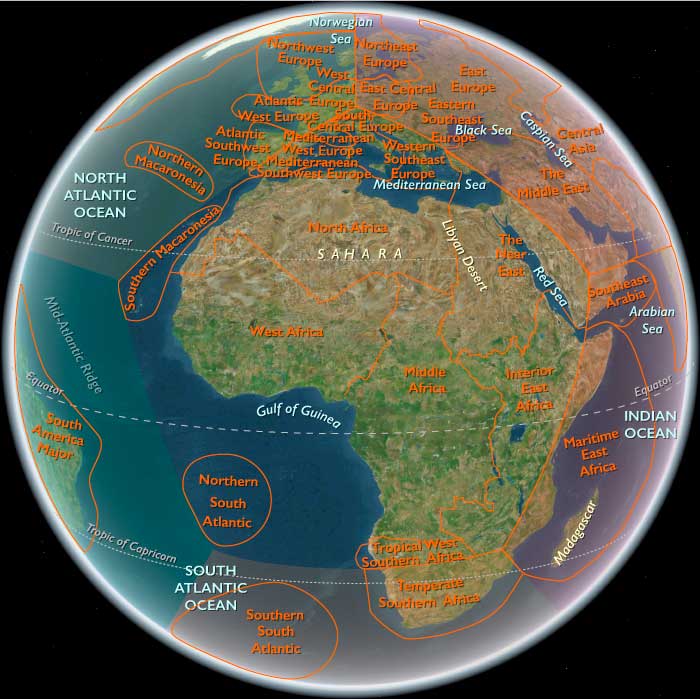
The Middle of The Earth
View →Related Events
Showing 3 events out of 3 total
The Lombards, one of the Germanic tribes that formed the Suebi, had migrated in 568 into Italy, which had been left almost defenseless after the Empire's armies had overthrown the Ostrogothic kingdom there.
By the time of Agilulf (reigned 590-615), the Lombards were well established in the Italian peninsula with a capital in the north at Pavia and strong duchies in Spoleto, Tuscany, and Beneventum.
Pavia, where the royal palace is located, has become the center of administrative organization.
King Rothari had died in 652 after a sixteen-year reign and had been succeeded by his son Rodoald as king of the Lombards.
Rodoald, said to be lecherous, is assassinated after a reign of just six months in 653 by the husband of one of his lovers.
Paul the Deacon writes that Rodoald "had reigned five years and seven days," although historians note that this length of reign is suspect.
Aripert, a rival claimant, is elected with the support of the Catholic Church, which opposes the Arian monarchy.
Aripert is the first Roman Catholic king of the Lombards.
Mediterranean Southwest Europe (676–819 CE): Lombard Decline, Islamic Iberia, and Carolingian Consolidation
The age 675–819 CE in Mediterranean Southwest Europe is marked by dramatic geopolitical shifts, including the decline and eventual fall of the Lombard kingdom, the establishment of the Papal States, and the rise and flourishing of Al-Andalus under Islamic rule.
Lombard Decline and Carolingian Conquest
In the late eighth century, Lombard power in Italy wanes significantly, culminating in its complete absorption by Charlemagne and the expanding Frankish Empire. Charlemagne's conquest in 774 CE ends the Lombard Kingdom, integrating northern and central Italy into his empire and solidifying Frankish dominance.
Formation of the Papal States
The Franks, under Pepin the Short and later Charlemagne, play a critical role in establishing and reinforcing the temporal power of the papacy. Pepin’s historic "Donation" in 756 CE grants central Italian territories to the pope, founding the Papal States—a significant political entity governed directly by the papacy, which endures for centuries.
Al-Andalus under Umayyad Rule
Following the Islamic conquest of Visigothic Spain beginning in 711 CE, the Iberian Peninsula, now called Al-Andalus, initially comes under the religious and political authority of the Umayyad caliphs in Damascus. Governors, typically of Syrian origin, bring Byzantine-influenced administrative practices, establishing a sophisticated, urban-based aristocracy that includes many converted Visigothic nobles.
Berber Influence and Societal Transformation
Despite Arab political dominance, North African Berbers constitute the largest population group among the Islamic settlers, making up roughly twenty percent of the occupied territory. Berbers, known for their religious fervor and fundamentalism, significantly shape the religious and social character of Iberian Islam. Many settle widely throughout Spain, profoundly influencing its rural and urban communities.
Cultural Integration and Religious Pluralism
In Al-Andalus, widespread conversion to Islam occurs among both Visigothic elites and peasants, though pockets of Hispano-Roman Christianity persist, notably the Mozarab communities. These Christians, alongside a sizable Jewish minority—over five percent of the population—play significant roles in commerce, scholarship, and professional life, particularly in cities like Córdoba, Seville, and Toledo.
Independent Emirate of Córdoba
In 756 CE, the Umayyad dynasty in Damascus falls to the Abbasids, prompting Umayyad prince Abd al-Rahman I to flee to Spain, establishing an independent emirate in Córdoba. His rule (756–788 CE) marks the beginning of a vibrant political entity that thrives culturally, intellectually, and economically, unmatched in contemporary Europe.
Muslim Colonization and Agricultural Development
In Lusitania, Muslim settlement initially takes root but is hindered by unsuitable agricultural conditions north of the Tagus River, especially along the Rio Douro. Preference emerges for the drier, familiar regions southward, particularly the Algarve, where Muslim agricultural practices and settlements leave lasting imprints. The Muslim aristocracy revitalizes urban life, while rural landscapes see a mix of small Muslim farmers and converted Visigothic peasants.
Technological Advances in Metallurgy
Technological innovations, notably the development of the Catalan forge in Iberia around this time, significantly enhance iron production capabilities, transforming medieval economic and military capacities throughout Europe. This advancement facilitates greater agricultural productivity and improved military strength, underpinning regional prosperity.
Legacy of the Age
The era 676–819 CE reshapes Mediterranean Southwest Europe through profound geopolitical, religious, and cultural transformations. The fall of Lombard Italy and rise of the Papal States alter the region’s political structures, while the flourishing of Al-Andalus establishes a vibrant, multicultural Islamic society. These developments set enduring patterns for medieval European history, influencing cultural and political trajectories for centuries to come.
Mediterranean Southwest Europe (772–783 CE): Charlemagne's Conquest and the End of Lombard Rule
The era 772–783 CE in Mediterranean Southwest Europe is dominated by Charlemagne’s decisive conquest of the Lombard Kingdom, fundamentally altering Italy's political landscape and setting the stage for a new imperial epoch under Frankish rule.
Charlemagne's Lombard Campaign
In 774 CE, Charlemagne, King of the Franks, successfully completes his campaign against the Lombards by capturing their capital, Pavia. His victory results in the deposition of Lombard King Desiderius and marks the definitive end of independent Lombard power in Italy. Charlemagne assumes the title King of the Lombards, integrating the Lombard territories into his expanding Frankish empire.
End of Lombard Autonomy and Regional Realignment
With Charlemagne’s conquest, the political autonomy the Lombards had enjoyed for over two centuries effectively ceases. The integration of the Lombard kingdom into Charlemagne’s dominion reshapes Italy’s political structure, reducing the influence of local Lombard elites and enhancing Frankish administrative control.
Strengthened Papal-Frankish Alliance
The conquest further consolidates the historic alliance between the papacy and the Frankish monarchy, initiated by Pepin the Short. Charlemagne reaffirms papal territorial claims, reinforcing the temporal authority of the Papal States and solidifying a powerful political and religious partnership central to medieval European politics.
Continued Mozarab Cultural Evolution in Iberia
In Iberia, Mozarab communities persist under stable Islamic governance, particularly in cultural hubs like Córdoba, Seville, and Toledo. These communities continue adapting culturally, blending their Latin-Christian traditions with the Arabic and Islamic influences of their Moorish rulers, further enriching the Iberian cultural landscape.
Technological and Economic Development
Technological advancements, particularly in metallurgy following the introduction of the Catalan forge, continue to enhance regional economic productivity. Increased iron production supports broader economic prosperity, facilitating improvements in agriculture, military technology, and craftsmanship throughout the region.
Legacy of the Era
The era 772–783 CE marks a transformative moment in Mediterranean Southwest Europe. Charlemagne’s conquest ends Lombard rule, reshapes Italy’s political map, and fortifies the papal-Frankish alliance. These developments lay the groundwork for the emergence of the Carolingian Empire, profoundly influencing the region’s medieval trajectory.