Naples, Kingdom of
State | Defunct
1501 CE to 1504 CE
The Kingdom of Naples, comprising the southern part of the Italian Peninsula, is the remainder of the old Kingdom of Sicily after the secession of the island of Sicily as a result of the Vespers of 1282.
It continues to be officially known as the Kingdom of Sicily, although it no longer includes the island of Sicily.
For much of its existence, the realm is contested between French and Spanish dynasties.
From 1501–1504, the kingdom is in a personal union of the Kingdom of France.
Worlds
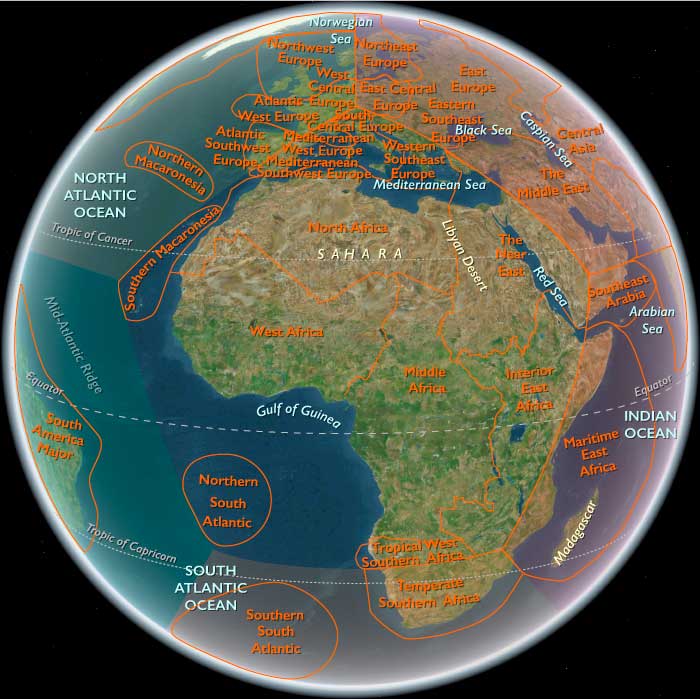
The Middle of The Earth
View →Related Events
Active Filters
Refine Results
Showing 3 events out of 3 total
Southern Italy has developed through a complex series of events as a unified kingdom, first under the House of Hohenstaufen, then under the Capetian House of Anjou and, from the fifteenth century, the House of Aragon.
Northern-central Italy in the fourteenth and fifteenth centuries is divided into a number of warring city-states, the rest of the peninsula being occupied by the larger Papal States and the Kingdom of Sicily, referred to here as Naples.
Though many of these city-states are often formally subordinate to foreign rulers, as in the case of the Duchy of Milan, which is officially a constituent state of the mainly Germanic Holy Roman Empire, the city-states generally manage to maintain de facto independence from the foreign sovereigns that had seized Italian lands following the collapse of the Western Roman Empire.
The strongest among these city-states gradually absorbs the surrounding territories, giving birth to the Signorie, regional states often led by merchant families that found local dynasties.
War between the city-states is endemic, and primarily fought by armies of mercenaries known as condottieri, bands of soldiers drawn from around Europe, especially Germany and Switzerland, led largely by Italian captains.
Decades of fighting eventually see Florence, Milan and Venice emerge as the dominant players who agree to the Peace of Lodi in 1454, which sees relative calm brought to the region for the first time in centuries.
This peace will hold for the next forty years.
Though many of these city-states are often formally subordinate to foreign rulers, as in the case of the Duchy of Milan, which is officially a constituent state of the mainly Germanic Holy Roman Empire, the city-states generally manage to maintain de facto independence from the foreign sovereigns that had seized Italian lands following the collapse of the Western Roman Empire.
The strongest among these city-states gradually absorbs the surrounding territories, giving birth to the Signorie, regional states often led by merchant families that found local dynasties.
War between the city-states is endemic, and primarily fought by armies of mercenaries known as condottieri, bands of soldiers drawn from around Europe, especially Germany and Switzerland, led largely by Italian captains.
Decades of fighting eventually see Florence, Milan and Venice emerge as the dominant players who agree to the Peace of Lodi in 1454, which sees relative calm brought to the region for the first time in centuries.
This peace will hold for the next forty years.
The Renaissance, a period of vigorous revival of the arts and culture, originates in Italy thanks to a number of factors, as the great wealth accumulated by merchant cities, the patronage of its dominant families, and the migration of Greek scholars and texts to Italy following the Conquest of Constantinople at the hands of the Ottoman Turks.
The Italian Renaissance peaks in the mid-sixteenth century as foreign invasions plunge the region into the turmoil of the Italian Wars.
