Russian Federation
State | Active
1991 CE to 2057 CE
Worlds
The Great Crossroads
View →Related Events
Showing 10 events out of 36 total
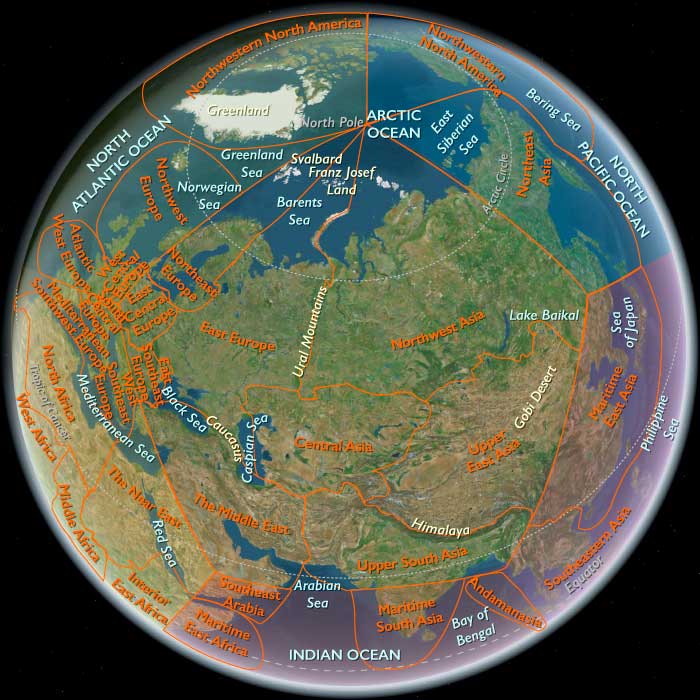
Northeast Asia (1984–1995 CE)
Shifts in Geopolitics, Economic Transition, and Environmental Challenges
Between 1984 and 1995, Northeast Asia—encompassing eastern Siberia (east of 130°E), northeastern China's Heilongjiang province, northern Primorsky Krai, and most of Hokkaido excluding its southwestern portion—experienced significant geopolitical shifts, economic transitions, and deepening environmental challenges.
The later stages of the Cold War saw considerable change in regional geopolitics. Under the leadership of Mikhail Gorbachev, the Soviet Union introduced policies of glasnost (openness) and perestroika (restructuring), aiming to reform and revitalize the Soviet economy and society. These changes resulted in decreased military tension and a shift toward diplomatic engagement, notably with Japan over the disputed Kuril Islands. However, despite improved diplomatic dialogue, resolution of this territorial conflict remained elusive, continuing to influence regional security dynamics.
With the collapse of the Soviet Union in 1991, Northeast Asia entered a period of profound economic transformation. The newly formed Russian Federation faced substantial economic challenges, including sharp declines in industrial output, resource extraction disruptions, and deteriorating infrastructure. Economic hardship was widespread, affecting both urban populations and indigenous communities such as the Evenki, Chukchi, Koryaks, and Itelmen, whose traditional lifestyles had already been severely disrupted by decades of industrialization and militarization.
The establishment of the Sakha Republic and the Chukotka Autonomous Okrug in 1992 marked significant administrative and political shifts. These new regional entities aimed to provide greater autonomy and self-determination for indigenous peoples, enhancing local governance and cultural preservation.
The economic restructuring process opened Northeast Asia to increased foreign investment, especially from neighboring China, Japan, and South Korea. Investment primarily targeted resource extraction industries, fisheries, and infrastructure projects, leading to intensified exploitation of regional resources. China's northeastern province of Heilongjiang expanded its industrial capacity and cross-border trade, becoming an economic focal point for Sino-Russian cooperation.
Environmental degradation continued to pose significant challenges. Persistent industrial activity, including mining and large-scale fishing, exacerbated ecological damage, resulting in severe water pollution, habitat destruction, and declining fish stocks. Increased deforestation and air pollution further threatened regional biodiversity and public health. The recognition of these environmental crises grew steadily, prompting local and international calls for more stringent conservation and sustainability measures.
Indigenous communities increasingly advocated for the protection of their traditional lands and rights, joining broader international movements supporting indigenous cultural preservation and environmental justice. These advocacy efforts gradually influenced governmental policies, leading to modest improvements in the recognition and support for indigenous peoples in Siberia and the Russian Far East.
By 1995, Northeast Asia had become a region shaped by geopolitical realignment following the Soviet collapse, economic transition and integration into global markets, and intensifying environmental and indigenous rights concerns. These interconnected dynamics continued to shape the region’s development into the subsequent era.
Marirtime East Asia (1984–1995 CE): Economic Miracles, Political Realignments, and Regional Integration
Between 1984 and 1995 CE, Maritime East Asia—covering lower Primorsky Krai, the Korean Peninsula, the Japanese Archipelago south of northern Hokkaido, Taiwan, and southern, central, and northeastern China—experiences a critical decade of robust economic growth, political liberalization, and intensified regional integration. This period witnesses the maturation of Asia’s economic "tigers," dramatic democratic transformations, and realignment of geopolitical relations that reshape regional and global dynamics.
China: Accelerated Economic Liberalization and Tiananmen Square
China's transformative era, launched under Deng Xiaoping’s economic reforms, accelerates dramatically from 1984 onward. Policies such as the "Socialist Market Economy" allow rapid privatization, foreign investment, and export-oriented industrialization, establishing China as an emerging global economic power. The flourishing coastal Special Economic Zones (SEZs), including Shenzhen and Shanghai’s Pudong District (opened 1993), symbolize China's modern economic revival.
However, rapid economic change outpaces political reform, fueling social tensions. In 1989, mass demonstrations led by students and workers demanding democracy and transparency culminate in the Tiananmen Square Protests, violently suppressed by military force. The government's subsequent political tightening contrasts sharply with continued economic liberalization under Deng’s renewed reform push in 1992. Despite Western sanctions following Tiananmen, China's economic growth remains resilient, laying foundations for its future rise.
Japan: Bubble Economy, Recession, and International Influence
Japan’s economy reaches unprecedented heights in the late 1980s, driven by soaring real estate prices, stock market values, and easy credit—culminating in the infamous Japanese asset price "bubble." The Japanese government and corporate conglomerates (keiretsu) enjoy global prominence, leading international investment and acquiring overseas assets aggressively. However, this period of rapid economic expansion abruptly ends with the bubble’s burst in 1990–1991, initiating a prolonged economic stagnation known as the "Lost Decade."
Politically, the long-dominant Liberal Democratic Party (LDP) experiences increased turbulence, resulting in political instability and short-lived opposition governments in 1993–1994. Despite economic setbacks, Japan remains influential internationally, continuing its extensive aid programs and diplomatic engagement throughout East and Southeast Asia.
Korea: Democratic Breakthrough and Divergent Paths
In South Korea, the era of military dictatorship finally yields to democratic pressures. The 1987 June Democracy Movement, marked by mass protests against the authoritarian regime of Chun Doo-hwan, leads to the establishment of democratic elections and constitutional reforms. Roh Tae-woo, elected in 1987, institutes substantial political liberalization, although full democratization and political reconciliation occur gradually.
Economically, South Korea emerges as an advanced industrial power, hosting the highly successful 1988 Seoul Olympics, showcasing its remarkable modernization and vibrant culture to the world. The nation’s semiconductor, automotive, electronics, and shipbuilding industries achieve global prominence, further cementing South Korea’s role as an economic leader.
Conversely, North Korea under Kim Il-sung (died 1994, succeeded by son Kim Jong-il) continues its isolationist and authoritarian policies. Economic hardships deepen following the collapse of its main patron, the Soviet Union (1991), leading to severe food shortages and economic stagnation. Despite these setbacks, North Korea intensifies its nuclear ambitions, culminating in the first nuclear crisis with the United States in 1994, resolved temporarily by the Agreed Framework.
Taiwan: Democratization, Economic Expansion, and Cross-Strait Tensions
Taiwan experiences rapid economic growth driven by its booming electronics industry, particularly semiconductor manufacturing, becoming a critical node in global technology supply chains. Politically, the administration of Chiang Ching-kuo initiates liberalization in the late 1980s, lifting martial law (1987) after 38 years, allowing new political parties to emerge, notably the opposition Democratic Progressive Party (DPP).
In 1988, Lee Teng-hui becomes the first Taiwan-born president, accelerating democratic reforms, culminating in Taiwan’s first direct presidential elections planned for 1996. These democratic advances occur amid heightened cross-strait tensions, as the People's Republic of China (PRC) continues asserting claims over Taiwan, opposing Taiwanese independence aspirations vigorously.
Primorsky Krai: Post-Soviet Uncertainty and Strategic Reorientation
With the disintegration of the Soviet Union (1991), Primorsky Krai transitions from a militarized Soviet frontier into part of the Russian Federation’s far eastern territory. This transition brings severe economic dislocation due to reduced military spending and withdrawal of state subsidies, prompting regional instability and economic hardship. Vladivostok and the broader region experience population decline and increased economic vulnerability, prompting efforts at cross-border economic cooperation with China, Japan, and South Korea to stimulate trade and investment.
Regional Integration and Globalization
Throughout the era, regional integration intensifies significantly. Economic interdependence grows dramatically, notably through expanding trade, investment, and manufacturing networks linking China, Japan, South Korea, and Taiwan. These connections form the economic backbone of modern East Asia, enhancing mutual prosperity while intensifying competition and political complexities.
New diplomatic initiatives emerge, including increased multilateral forums like the Asia-Pacific Economic Cooperation (APEC, established 1989), fostering dialogue and economic collaboration. The ASEAN Regional Forum (ARF), formed in 1994, also strengthens dialogue, incorporating East Asian countries into broader regional discussions on security and trade.
Legacy of the Era: Economic Realignment, Democratic Transformation, and Persistent Tensions
The years 1984 to 1995 represent a pivotal era in Maritime East Asia, characterized by extraordinary economic growth, democratic breakthroughs, and profound geopolitical realignments. China accelerates its global economic integration while resisting democratic reform. Japan faces significant economic challenges, marking the end of its rapid postwar expansion. South Korea embraces democratic reform while solidifying its economic powerhouse status. Taiwan achieves substantial democratic gains amid rising cross-strait tensions, while North Korea remains isolated yet increasingly provocative. Primorsky Krai grapples with its post-Soviet identity and economy, turning to regional partnerships to mitigate instability.
These transformative events profoundly shape contemporary East Asia, laying the groundwork for future interactions, prosperity, and challenges that will define the region into the 21st century.
Central Asia (1984–1995 CE): Soviet Collapse, National Independence, and Early Nation-Building
From 1984 to 1995 CE, Central Asia—covering modern-day Kazakhstan, Kyrgyzstan, Uzbekistan, Tajikistan, and Turkmenistan—underwent dramatic historical shifts marked by the decline and collapse of the Soviet Union, emergence of independent nation-states, and significant political, economic, and cultural transformations. This era decisively reshaped Central Asia’s contemporary landscape.
Political Developments
Decline and Collapse of Soviet Authority
From 1985, Soviet leader Mikhail Gorbachev introduced perestroika (restructuring) and glasnost (openness), inadvertently accelerating nationalist movements in Central Asia. By 1991, the Soviet Union collapsed, allowing the five Central Asian republics to declare independence, rapidly transitioning from Soviet republics to sovereign nations.
Emergence of Independent Nation-States
In 1991, Kazakhstan, Kyrgyzstan, Uzbekistan, Tajikistan, and Turkmenistan became independent nations. Early nation-building efforts began immediately, with former Communist Party leaders—such as Islam Karimov in Uzbekistan, Saparmurat Niyazov in Turkmenistan, and Nursultan Nazarbayev in Kazakhstan—assuming presidency and consolidating power.
Tajikistan’s Civil War
Between 1992 and 1997, Tajikistan descended into a devastating civil war involving regional, ideological, and clan-based factions. The conflict destabilized the country profoundly, leading to significant loss of life, economic collapse, and regional instability.
Economic Developments
Economic Transition and Crisis
Central Asian states faced severe economic crises after independence, as Soviet-era subsidies and centralized economic structures collapsed. Rapid transition to market economies caused unemployment, inflation, shortages, and socio-economic hardships, severely impacting the living standards of millions.
Foreign Investment and Resource Development
Despite early economic turmoil, Central Asian countries attracted international interest due to vast natural resources. Kazakhstan and Turkmenistan, particularly, attracted significant foreign investment in their oil and gas sectors, laying the foundations for later economic recovery and development.
Cultural and Religious Developments
Revival of National Identities and Culture
With independence, Central Asian nations revitalized their cultural heritage, promoting national languages, history, traditions, and cultural symbols. Statues, museums, national holidays, and educational curricula emphasized unique ethnic identities, distancing newly independent states from Soviet legacies.
Islamic Resurgence and Religious Freedom
Islam experienced a substantial revival as state-imposed atheism disappeared. Mosques reopened, religious education expanded, and Islamic traditions regained visibility in public life. However, governments maintained cautious oversight, balancing religious revival with fears of political Islamism.
Social Developments and Urbanization
Rapid Social Change and Migration
Post-independence economic crises prompted mass emigration of ethnic Russians and other minorities from Central Asia, significantly altering regional demographics. Simultaneously, rural populations migrated increasingly to urban areas seeking employment, exacerbating urban infrastructure pressures.
Educational and Social Challenges
Economic hardships severely impacted education and healthcare, previously supported by Soviet subsidies. Despite retaining high literacy rates, educational quality and access declined markedly, reflecting broader social challenges during the transition.
Long-Term Consequences and Historical Significance
The era from 1984 to 1995 CE was transformative for Central Asia, witnessing the end of Soviet dominance and birth of sovereign nation-states. Politically, this period laid the foundations for Central Asia’s contemporary authoritarian and semi-authoritarian political systems. Economically, the early hardships established enduring patterns of resource-dependent economies and external investment reliance. Culturally and socially, independence reshaped national identities and religious practices, significantly influencing the region’s modern identity and trajectory.
East Europe (1984–1995 CE): Collapse of Communism and Post-Cold War Transitions
Political and Military Developments
End of Communist Rule
This era marked the dramatic collapse of communist regimes throughout Eastern Europe. The mid-to-late 1980s saw increased pressure from dissident movements, economic hardships, and changing geopolitical circumstances, notably influenced by Soviet leader Mikhail Gorbachev's policies of perestroika and glasnost.
Revolutions of 1989
The pivotal Revolutions of 1989 peacefully dismantled communist governments across the region, symbolized by the fall of the Berlin Wall. Nations such as Poland, Hungary, Czechoslovakia, East Germany, Bulgaria, and Romania transitioned to democratic governance, significantly altering regional political landscapes.
Dissolution of the Soviet Union
The political and economic reforms culminated in the dissolution of the Soviet Union in 1991, profoundly reshaping geopolitical alignments. Newly independent states emerged, notably Russia, Ukraine, Belarus, and the Baltic nations, dramatically transforming Eastern Europe's political structure.
Economic and Technological Developments
Transition to Market Economies
Eastern European countries underwent challenging transitions from centrally planned economies to market-driven systems. These transformations involved extensive economic restructuring, privatization efforts, and integration into global markets, accompanied by significant social and economic disruptions.
Technological Integration
Rapid integration of Western technologies occurred as Eastern Europe opened its economies to foreign investment and innovation. Technological modernization became crucial for economic recovery and competitive positioning within the global economy.
Cultural and Artistic Developments
Cultural Liberation and Diversification
The collapse of communism led to significant cultural liberalization, enabling diverse artistic expression and intellectual freedom. Cultural institutions flourished as censorship lifted, revitalizing literature, media, and the arts throughout the region.
Educational Reforms and Internationalization
Educational reforms focused on democratization, decentralization, and internationalization, significantly reshaping academic institutions. Higher education institutions increasingly collaborated internationally, fostering exchanges of knowledge and innovation.
Settlement Patterns and Urban Development
Urban Revitalization and Development
Urban areas underwent significant revitalization and redevelopment, addressing decades of infrastructural neglect. Investments focused on upgrading transportation networks, improving housing, and modernizing public services, transforming urban environments.
Strategic Reorientation
Military and strategic infrastructures realigned significantly, reflecting the new geopolitical realities. Border fortifications and military installations were reconfigured or dismantled as countries redefined their defense policies and security alliances.
Social and Religious Developments
Democratization and Social Change
Democratic reforms profoundly reshaped social structures, expanding political freedoms and civil liberties. Societies experienced rapid change and openness, addressing historical grievances and exploring new social models.
Revival of Religious Life
The post-communist era experienced a notable revival of religious expression and activity across Eastern Europe. Religious institutions regained autonomy and influence, playing active roles in societal rebuilding and reconciliation processes.
Long-Term Consequences and Historical Significance
The period from 1984 to 1995 CE was transformative, fundamentally reshaping Eastern Europe's political, economic, and social landscapes. The collapse of communism and transition toward democracy and market economies significantly altered regional dynamics and global geopolitics, setting a new course for Eastern Europe’s development in the post-Cold War era.
After the dissolution of the Soviet Union, Russia assumes responsibility for settling the latter's external debts.
In 1992, most consumer price controls are eliminated, causing extreme inflation and significantly devaluing the ruble.
Economic and political turmoil begins to boil over in 1991 as the Baltic states choose to secede from the Soviet Union.
On March 17, a referendum is held, in which the vast majority of participating citizens vote in favor of changing the Soviet Union into a renewed federation.
In June 1991, Boris Yeltsin becomes the first directly elected president in Russian history when he is elected president of the Russian SFSR.
In August 1991, a coup d'état attempt by members of Gorbachev's government, directed against Gorbachev and aimed at preserving the Soviet Union, instead leads to the end of the Communist Party of the Soviet Union.
On December 25, 1991, following the dissolution of the Soviet Union, along with contemporary Russia, fourteen other post-Soviet states emerge.
The economic and political collapse of the Soviet Union leads Russia into a deep and prolonged depression.
During and after the disintegration of the Soviet Union, wide-ranging reforms including privatization and market and trade liberalization are undertaken, including radical changes along the lines of "shock therapy".
The privatization largely shifts control of enterprises from state agencies to individuals with inside connections in the government, which leads to the rise of the infamous Russian oligarchs.
Many of the newly rich move billions in cash and assets outside of the country in an enormous capital flight.
The depression of the economy leads to the collapse of social services—the birth rate plummets while the death rate skyrockets, and millions plunge into poverty; while extreme corruption, as well as criminal gangs and organized crime, rises significantly.
East Central Europe (1984–1995 CE): Collapse of Communism, Democratic Transition, and New National Realities
Between 1984 and 1995, East Central Europe—encompassing modern-day Poland, Czechia, Slovakia, Hungary, and the eastern parts of Germany and Austria east of 10°E and northeast of the defined boundary—underwent monumental transformations marked by the collapse of Communist regimes, rapid democratization, economic liberalization, and profound geopolitical realignment. The fall of the Berlin Wall, the reunification of Germany, and the peaceful dissolution of Czechoslovakia reshaped the political and cultural landscape, decisively ending the Cold War division of Europe.
Political and Military Developments
Dissolution of Communist Regimes (1989–1990)
-
East Germany (1989):
-
Mass demonstrations, notably in Leipzig and East Berlin, culminated in the opening of the Berlin Wall on November 9, 1989. This pivotal event symbolized the collapse of Eastern Bloc authority.
-
East Germany dissolved swiftly, paving the way for formal German reunification on October 3, 1990.
-
-
Czechoslovakia (Velvet Revolution, 1989):
-
Peaceful demonstrations in Prague and Bratislava led by figures such as Václav Havel dismantled the Communist regime in a nonviolent revolution.
-
Democratic governance quickly restored civil liberties and initiated extensive political reforms.
-
-
Poland (1989):
-
Following prolonged negotiations between the Communist government and Solidarity, semi-free elections in June 1989 produced a landslide victory for the opposition. Tadeusz Mazowiecki became the region's first non-Communist prime minister in over 40 years, setting a precedent for democratic transitions across Eastern Europe.
-
-
Hungary (1989–1990):
-
Hungary peacefully transitioned from Communist rule to democracy, holding free parliamentary elections in 1990. It became a regional model for economic liberalization and stable democratic reform.
-
Dissolution and Emergence of New States
-
German Reunification (1990):
-
The absorption of the German Democratic Republic (East Germany) into the Federal Republic of Germany (West Germany) in October 1990 decisively ended Cold War-era divisions, reshaping geopolitical realities.
-
-
Dissolution of Czechoslovakia (1993):
-
Peacefully splitting into the Czech Republic and Slovakia on January 1, 1993 ("Velvet Divorce"), these states quickly stabilized and established democratic political structures and market economies.
-
Military and Strategic Realignments
-
The withdrawal of Soviet military forces from East Germany, Poland, Hungary, and Czechoslovakia significantly altered regional security structures.
-
These nations subsequently sought closer integration with Western institutions, including NATO and the European Union.
Economic and Technological Developments
Economic Liberalization and Transition to Market Economies
-
East Central Europe experienced a challenging shift from centrally planned economies to market-oriented systems, marked by rapid privatization, deregulation, and influxes of Western investment, particularly noticeable in Hungary, Poland, and Czechia.
-
While economic reforms initially caused significant hardship, rising unemployment, and social dislocation, they laid crucial foundations for future economic growth.
Technological Integration and Modernization
-
Rapid adoption of Western technologies significantly improved communication infrastructure, transportation networks, and consumer markets, facilitating deeper economic integration with Western Europe.
-
Advances in information technology and telecommunications significantly increased connectivity and productivity, underpinning economic and social modernization.
Cultural and Artistic Developments
Flourishing of Cultural Expression and Media Freedom
-
Following decades of censorship, the media, literature, and arts flourished, embracing previously banned themes such as political critique, historical memory, and social reflection.
-
Cultural revival, particularly in literature and cinema (for example, Czech filmmaker Miloš Forman’s international acclaim), symbolized renewed creativity and freedom of expression.
Reassertion of National and Regional Identities
-
Cultural revival reinforced national identity, notably in Slovakia and the Czech Republic, emphasizing distinct historical, linguistic, and cultural traditions, ultimately supporting their peaceful separation.
Settlement and Urban Development
Post-Communist Urban Renewal
-
Major cities such as Berlin, Prague, Warsaw, Budapest, and Bratislava underwent significant transformations, including restoration of historical architecture, removal or repurposing of Communist-era monuments, and revitalization of public spaces.
-
Urban redevelopment combined historic preservation with modern infrastructure investment, significantly reshaping cityscapes.
Social and Religious Developments
Religious and Social Liberalization
-
Churches regained substantial influence, particularly the Roman Catholic Church in Poland, actively shaping national identity and policy.
-
Increased freedoms spurred rapid social changes, including more open discussions on civil liberties, social equity, and historical reconciliation.
Social Challenges and Population Movements
-
Socioeconomic transition caused significant population mobility, with migrations both within and beyond the region, as people pursued better economic opportunities or fled instability.
-
Urban areas, especially national capitals, expanded considerably, becoming vibrant hubs of economic and social innovation.
Long-Term Consequences and Historical Significance
The era 1984–1995 marked a decisive turning point for East Central Europe, characterized by the rapid and mostly peaceful collapse of Communist regimes, the triumph of democratic movements, and the reorientation of political, economic, and cultural life towards integration with Western Europe. These dramatic changes ended the Cold War division of the continent, permanently transforming the region’s political geography, economic structures, and cultural landscapes, and laying robust foundations for future European integration and stability into the 21st century.
Eastern Southeast Europe (1984–1995 CE): Collapse of Socialism, National Fragmentation, and Post-Cold War Transitions
Political and Geopolitical Developments
The period from 1984 to 1995 marked a dramatic shift in Eastern Southeast Europe as decades of socialist rule unraveled. The death of Yugoslav leader Josip Broz Tito in 1980 had already weakened Yugoslavia's fragile unity, but tensions intensified sharply after 1984. By the late 1980s, Yugoslavia's federal structure struggled to contain rising nationalism among its constituent republics, notably Serbia, Croatia, Slovenia, and Bosnia-Herzegovina.
In Romania, Nicolae Ceaușescu’s regime became increasingly isolated due to severe austerity policies and human rights abuses. His harsh rule culminated in the Romanian Revolution of December 1989, sparked by protests in Timișoara and leading to Ceaușescu's dramatic overthrow and execution. Romania subsequently struggled through political instability as it transitioned toward democratic governance.
In Bulgaria, longstanding leader Todor Zhivkov was forced out in 1989, ending decades of loyal alignment with the Soviet Union. The fall of Zhivkov led to multiparty elections, constitutional reforms, and a gradual but turbulent transition toward parliamentary democracy and market economy.
Yugoslavia's disintegration, however, became the dominant regional crisis. Slovenia and Croatia declared independence in June 1991, quickly triggering military conflicts. In Bosnia-Herzegovina, the declaration of independence in 1992 sparked intense ethnic warfare, leading to prolonged atrocities and sieges, notably the brutal siege of Sarajevo. The international community struggled to mediate, with United Nations peacekeepers unable to prevent mass human rights violations.
Economic and Social Developments
Economic transitions in the region were tumultuous. In Romania, the post-Ceaușescu era revealed severe economic deterioration and shortages, leading to rapid liberalization and privatization programs that initially exacerbated unemployment and social inequality.
Bulgaria faced economic hardship due to the collapse of Comecon markets. Rapid privatization policies aimed at establishing market mechanisms triggered inflation, unemployment, and declining living standards, prompting significant emigration westward.
Yugoslavia's breakup destroyed its integrated economy. Warfare devastated industries, infrastructure, and agriculture across Croatia and Bosnia-Herzegovina. Economic sanctions imposed on Serbia and Montenegro in response to their military actions worsened poverty and social distress. Massive displacement due to ethnic conflict created refugee crises across and beyond the region.
Cultural and National Identities
The collapse of socialism allowed suppressed national identities to resurface strongly, often fueling conflict. In Yugoslavia, historical ethnic and religious tensions were manipulated by nationalist leaders, notably Serbian President Slobodan Milošević, whose promotion of Serb nationalism played a key role in the wars that followed. Nationalist rhetoric intensified, emphasizing distinct cultural and historical narratives that justified territorial claims and violent conflict.
In Bulgaria and Romania, transitions allowed freer cultural expression, prompting debates over national histories and identities that had been censored under communist rule. The Bulgarian Turks, for example, reclaimed cultural rights lost during the 1980s "Revival Process," when Zhivkov’s regime forced assimilation.
International Involvement and Influence
With the end of the Cold War and the Soviet Union’s collapse in 1991, Eastern Southeast Europe found itself at a geopolitical crossroads. The European Union, the United States, and NATO emerged as influential actors, shaping regional stability and integration processes. EU involvement grew significantly, offering economic aid, diplomatic mediation, and prospects of integration, seen as crucial to stabilizing the region.
In Yugoslavia, international involvement intensified following widespread atrocities. NATO’s 1995 bombing campaign against Bosnian Serb positions, combined with U.S.-led diplomacy, culminated in the Dayton Accords, ending the Bosnian War and establishing a complex power-sharing arrangement among ethnic groups in Bosnia-Herzegovina.
Key Developments (1984–1995)
-
1989: Overthrow of Nicolae Ceaușescu in Romania; removal of Todor Zhivkov in Bulgaria, marking end of communist regimes.
-
1991: Slovenia and Croatia declare independence, igniting conflicts.
-
1992: Outbreak of war in Bosnia-Herzegovina, leading to prolonged ethnic violence and international intervention.
-
1995: NATO intervention and the Dayton Accords establish peace and power-sharing in Bosnia-Herzegovina.
Long-Term Consequences and Historical Significance
The period 1984–1995 profoundly reshaped Eastern Southeast Europe, dismantling socialist structures and redefining national identities. The violent breakup of Yugoslavia left deep social and economic scars and established patterns of political fragmentation that continue to impact regional stability. Romania and Bulgaria began challenging transitions toward democracy and market economies, setting paths toward eventual EU integration. Overall, this era decisively ended Cold War alignments and opened new, though troubled, chapters of national self-determination and European integration in the region.
The Middle East (1984–1995): Shifting Alliances and New Confrontations
Between 1984 and 1995, the Middle East undergoes significant geopolitical shifts shaped by regional rivalries, superpower retrenchment following the Cold War, and changing internal dynamics within states. The era is defined by protracted conflict, evolving alliances, and critical peace initiatives.
The End of the Iran-Iraq War
The devastating Iran-Iraq War continues until 1988, concluding only after inflicting enormous human, economic, and environmental destruction on both sides. In August 1988, Ayatollah Ruhollah Khomeini reluctantly accepts UN Resolution 598, which mandates an immediate ceasefire. Neither country achieves its strategic objectives, leaving unresolved territorial disputes and lingering bitterness.
The conflict leaves Iraq heavily indebted, particularly to its Gulf Arab neighbors who had financed its war effort, creating tensions that quickly erupt into open hostility. Meanwhile, Iran remains politically isolated yet more resolutely committed to exporting its revolutionary ideals.
The Gulf War and its Aftermath
In August 1990, Iraqi President Saddam Hussein, seeking relief from economic pressures and claiming historical rights, invades and occupies Kuwait, prompting global condemnation. The United Nations swiftly imposes sanctions, and a U.S.-led international coalition assembles to reverse the occupation.
The Gulf War (Operation Desert Storm) begins in January 1991, resulting in the swift liberation of Kuwait and the decisive defeat of Iraqi forces. Iraq retreats, leaving catastrophic destruction behind, including widespread oil fires and environmental damage in Kuwait.
Despite Iraq's defeat, Saddam Hussein retains power, brutally suppressing Kurdish and Shi’a rebellions encouraged by the international community yet receiving limited external support. Subsequently, Iraq remains isolated, crippled by stringent international sanctions enforced under UN resolutions.
Rise of American Influence and the New Middle East Order
Following the collapse of the Soviet Union in 1991, American influence in the Middle East reaches unprecedented levels. The United States strengthens military alliances with Gulf Cooperation Council (GCC) countries, notably Saudi Arabia, Kuwait, Qatar, and the UAE, establishing permanent military bases to maintain regional stability and secure oil supplies.
However, the presence of American troops, especially in Saudi Arabia—home to Islam's holiest sites—provokes increasing resentment among local populations, fueling Islamist extremism that will later emerge violently in global politics.
Lebanon: The Taif Accord and a Fragile Peace
The protracted Lebanese Civil War, ongoing since 1975, reaches a negotiated resolution with the Taif Accord in 1989. Brokered with Saudi support, the accord redistributes political power, reducing Christian dominance, and increasing the political representation of Lebanon’s Muslim communities, especially Sunnis and Shi’as.
The accord, while ending major hostilities, institutionalizes Syrian influence, permitting a large Syrian military presence in Lebanon. Despite nominal peace, Lebanon remains politically fragmented, with Hezbollah consolidating influence in the Shi’a south and central government authority remaining weak.
Israeli-Palestinian Peace Efforts: Madrid and Oslo
In 1991, the United States and the Soviet Union convene the Madrid Conference, initiating direct negotiations between Israel and its Arab neighbors, including Palestinians. Although immediate results are limited, Madrid sets the stage for the historic breakthrough in 1993.
In 1993, Israel and the Palestine Liberation Organization (PLO) sign the Oslo Accords, leading to mutual recognition and the establishment of the Palestinian Authority in parts of the West Bank and Gaza. Yasser Arafat returns to Palestinian territory in 1994 as the head of the Palestinian Authority, symbolizing a historic step toward self-governance. However, unresolved issues—including the status of Jerusalem, refugees, and settlements—quickly stall momentum.
Jordan also formally ends its state of war with Israel, signing a peace treaty in October 1994, thereby significantly reshaping regional dynamics.
Iran after Khomeini: Pragmatism and Continued Revolution
Following the death of Ayatollah Khomeini in 1989, Iran undergoes a subtle internal realignment. Ayatollah Ali Khamenei succeeds Khomeini as Supreme Leader, while Akbar Hashemi Rafsanjani becomes president, advocating pragmatic economic policies and cautious international engagement. Despite Rafsanjani’s moderation, Iran remains ideologically committed to revolutionary Shi’a Islam, supporting Hezbollah in Lebanon, Palestinian militants, and various Shi’a factions throughout the Gulf.
Syria: Assad’s Grip Tightens
In Syria, President Hafez al-Assad remains a key regional player, especially in Lebanon and Palestinian affairs. Assad maintains stability through a ruthless security apparatus and continues to balance relationships with the West and Russia, skillfully navigating the post-Cold War diplomatic landscape.
Turkey’s Continued Evolution and Kurdish Conflict
In Turkey, political instability accompanies economic liberalization and rapid urbanization. Throughout the 1980s and early 1990s, Turkey grapples with the Kurdistan Workers' Party (PKK) insurgency, a conflict rooted in long-standing ethnic tensions and grievances. Despite harsh military responses, Kurdish demands for cultural and political rights intensify, influencing Turkish domestic politics and regional relations profoundly.
Caucasus: Georgia, Armenia, and Azerbaijan Post-Soviet Independence
With the collapse of the Soviet Union in 1991, Georgia, Armenia, and Azerbaijan achieve independence, facing significant internal and external challenges.
-
Georgia struggles with separatist conflicts in Abkhazia and South Ossetia, resulting in civil unrest and weak governance throughout the 1990s.
-
Armenia and Azerbaijan engage in a bitter conflict over Nagorno-Karabakh, an ethnic Armenian enclave inside Azerbaijan. A full-scale war erupts in 1988 and intensifies dramatically after independence. A ceasefire agreement in 1994 leaves Armenian forces in control of Nagorno-Karabakh and surrounding Azerbaijani territory, creating unresolved territorial disputes and animosity lasting decades.
These conflicts profoundly influence regional geopolitics, drawing in neighboring countries and global powers, complicating diplomatic efforts.
Legacy of Conflict, Diplomacy, and Transition (1984–1995)
The period from 1984 to 1995 significantly reshapes the Middle Eastern geopolitical landscape. The Gulf War realigns regional and global alliances, placing the United States as a preeminent external power with deepening involvement in Gulf security, a role bringing both stability and unintended consequences.
Peace efforts like the Oslo Accords raise hopes for an enduring Israeli-Palestinian settlement, yet unresolved core issues leave lasting uncertainty and frustration. Similarly, Lebanon’s Taif Accord achieves peace on paper but institutionalizes internal divisions and external influence.
Finally, the emergence of newly independent states in the Caucasus introduces fresh instability into the Middle East periphery, highlighting ethnic nationalism and territorial disputes that remain unresolved. Collectively, these events establish lasting dynamics that shape regional politics well into the 21st century.