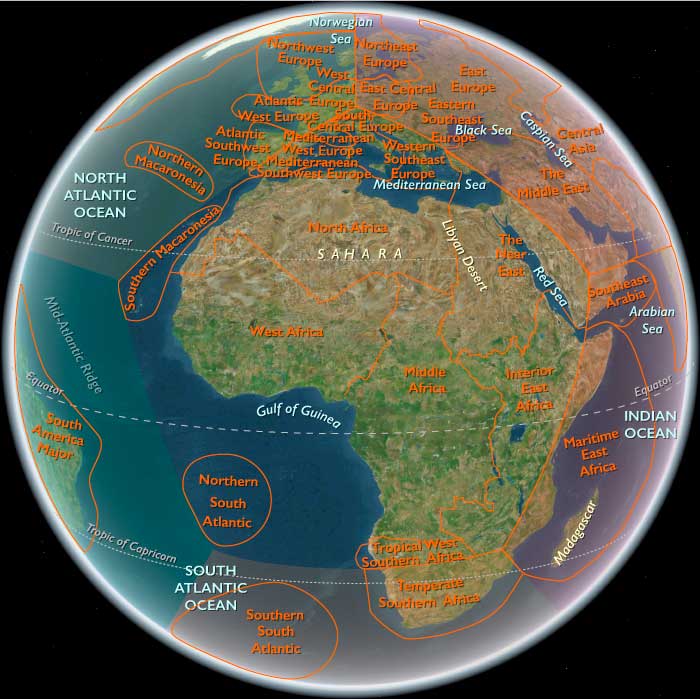
Kríti (Crete) Island Greece
1917 BCE to 1774 BCE
Worlds
The Middle of The Earth
View →Related Events
Showing 6 events out of 6 total
Crete’s seagoing civilization, known to archaeologists as Minoan, begins from about 2500 to emerge as the leading culture in the Aegean.
Named after its legendary founder, King Minos, the Minoan civilization is marked by the extensive use of sealstones and the development of writing.
The Cretans establish centers of metalworking and extensive trade routes into central Europe in order to obtain copper and tin for bronze manufacture.
Minoan potters employ a creamy white glaze over a dark ground.
Minoan art, after about 2500, evolves from primitive but varied pottery styles—including the characteristic high-spouted jar-to stone vases, seals made of stone, bone and ivory, and jewelry of gold and silver distantly related in style to jewelry later unearthed in the Mesopotamian Royal Cemetery of Ur.
The art of goldsmithing has thus probably reached Crete from western Asia.
Marble statuettes of goddesses (Cycladic idols) and vases are carved from Cretan and imported stone.
Minoans worship gods with human and animal characteristics, including a fertility goddess associated with snake worship, and possibly a bull-god; bulls possess religious significance to the Minoans.
Crete’s palace-building protopalatial (middle Minoan) period (which is to last until about 1450 BCE) includes flourishing economic, political, and social organization and active trade in the eastern Mediterranean, as well as the first appearance of writing in the Greek world.
The Minoan script called Linear A is in use on Crete from the nineteenth century BCE. (Some modern linguists assign the enigmatic Linear A script to either the Anatolian or Semitic group language, although convincing proof is lacking.)
Seal usage and possibly even writing are known also in the Cyclades and on the Greek mainland.