Andrew Jackson
seventh President of the United States
Years: 1767 - 1845
Andrew Jackson (March 15, 1767 – June 8, 1845) is the seventh President of the United States (1829–1837).
Based in frontier Tennessee, Jackson is a politician and army general who defeats the Creek Indians at the Battle of Horseshoe Bend (1814), and the British at the Battle of New Orleans (1815).
A polarizing figure who dominates the Second Party System in the 1820s and 1830s, as president he destroys the national bank and relocates most Indian tribes from the Southeast to west of the Mississippi River.
His enthusiastic followers create the modern Democratic Party.
The 1830–1850 period later becomes known as the era of Jacksonian democracy.
Jackson is nicknamed "Old Hickory" because of his toughness and aggressive personality; he fights in duels, some fatal to his opponents.
He is a rich slaveholder, who appeals to the common men of the United States, and fights politically against what he denounces as a closed, undemocratic aristocracy.
He expands the spoils system during his presidency to strengthen his political base.
Elected president in 1828, Jackson supports a small and limited federal government.
He strengthens the power of the presidency, which he sees as a spokesman for the entire population, as opposed to Congressmen from a specific small district.
He is supportive of states' rights, but during the Nullification Crisis, declares that states do not have the right to nullify federal laws.
Strongly against the national bank, he vetoes the renewal of its charter and ensures its collapse.
Whigs and moralists denounce his aggressive enforcement of the Indian Removal Act, which results in the forced relocation of thousands of Native Americans to Indian Territory (now Oklahoma).
Historians acknowledge his protection of popular democracy and individual liberty for United States citizens, and criticize him for his support for slavery and for his role in Indian removal.
Related Events
Filter results
Showing 10 events out of 153 total
In 1802, while serving on the Tennessee Supreme Court, he had declared his candidacy for major general, or commander, of the Tennessee militia, a position voted on by the officers.
At this time, most free men are members of the militia.
The organizations, intended to be called up in case of conflict with Europeans or Indians, resemble large social clubs.
Jackson sees it as a way to advance his stature.
With strong support from western Tennessee, he had tied with John Sevier with seventeen votes.
Sevier is a popular Revolutionary War veteran and former governor, the recognized leader of politics in eastern Tennessee.
On February 5, Governor Archibald Roane had broken the tie in Jackson's favor.
Jackson had also presented Roane with evidence of land fraud against Sevier.
Subsequently, in 1803, when Sevier announces his intention to regain the governorship, Roane releases the evidence.
Sevier insults Jackson in public, and the two nearly fight a duel over the matter.
Despite the charges leveled against Sevier, he defeats Roane, and will continue to serve as governor until 1809.
In 1802, while serving on the Tennessee Supreme Court, he had declared his candidacy for major general, or commander, of the Tennessee militia, a position voted on by the officers.
At this time, most free men are members of the militia.
The organizations, intended to be called up in case of conflict with Europeans or natives, resemble large social clubs.
Jackson sees it as a way to advance his stature.
With strong support from western Tennessee, he had tied with John Sevier with seventeen votes.
Sevier is a popular Revolutionary War veteran and former governor, the recognized leader of politics in eastern Tennessee.
On February 5, Governor Archibald Roane had broken the tie in Jackson's favor.
Jackson had also presented Roane with evidence of land fraud against Sevier.
Subsequently, in 1803, when Sevier announces his intention to regain the governorship, Roane releases the evidence.
Sevier insults Jackson in public, and the two nearly fight a duel over the matter.
Despite the charges leveled against Sevier, he defeats Roane, and will continue to serve as governor until 1809.
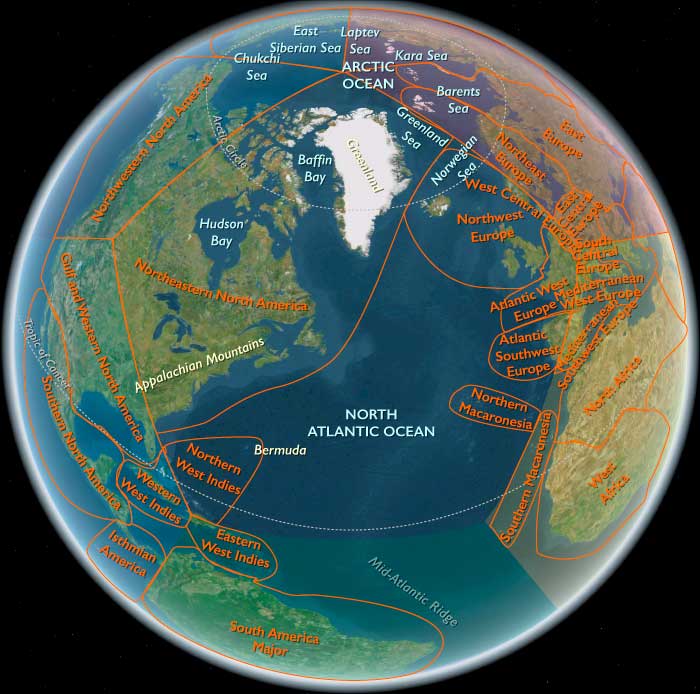
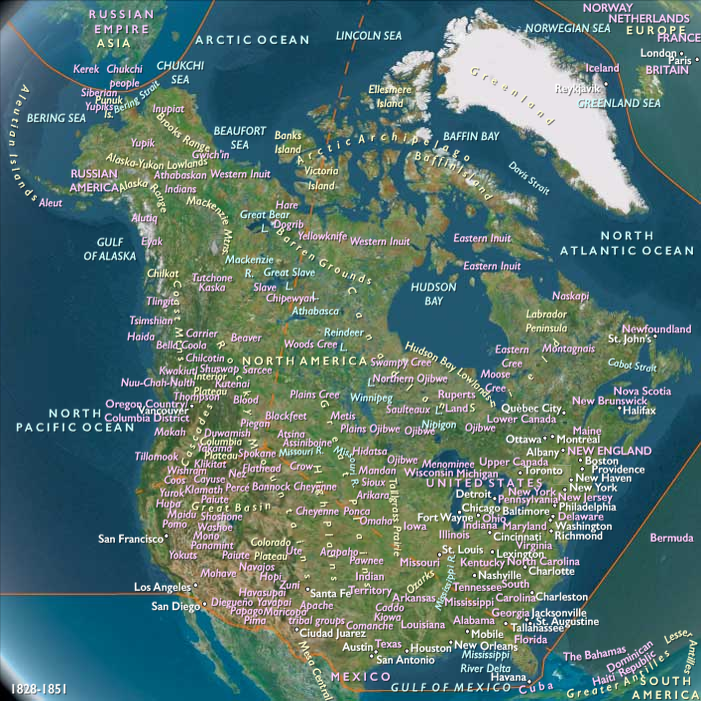
Northeastern North America
(1804 to 1815 CE): Exploration, Conflict, and Emerging National Identity
The years 1804 to 1815 in Northeastern North America marked an era of pivotal exploration, territorial expansion, intense conflicts, and significant developments shaping American national identity. During this period, Americans eagerly pursued westward expansion, leading to prolonged conflicts known as the American Indian Wars, while the Louisiana Purchase of 1803 nearly doubled the nation's size. Intensified slavery, frontier settlement, and evolving political landscapes also characterized this era, culminating in the War of 1812, a conflict that strengthened American nationalism despite its ambiguous conclusion.
Landmark Western Exploration
Lewis and Clark Expedition (1804–1806)
Following the Louisiana Purchase (1803), championed by the third U.S. president, Thomas Jefferson, the historic expedition led by Meriwether Lewis and William Clark, known as the Corps of Discovery, explored territories west of the Mississippi River. Their journey to the Pacific Ocean and back significantly expanded geographic and scientific understanding of the continent.
Zebulon Pike’s Explorations (1805–1807)
Explorer Zebulon Pike simultaneously conducted extensive explorations, mapping the Upper Mississippi River region and the southern parts of the newly acquired Louisiana Territory, enhancing U.S. knowledge of its expanding frontier.
Frontier Settlement and Westward Expansion
The Louisiana Purchase encouraged a vast wave of American settlers to push westward beyond the Appalachians. The frontier reached the Mississippi River by 1800, and new states such as Ohio (1803) were rapidly admitted into the Union. Settlements expanded into the Ohio Country, the Indiana Territory, and the lands of the lower Mississippi valley, particularly around St. Louis, which, after 1803, became a major gateway to the West. Americans enthusiastically pursued opportunities in new territories, sparking tensions and conflict with indigenous peoples.
In South Carolina, the antebellum economy flourished, particularly through cotton cultivation after Eli Whitney's invention of the cotton gin in 1793. Though nominally democratic, South Carolina remained tightly controlled by a powerful planter elite, with strict property and slaveholding requirements limiting political participation to wealthy landowners.
War of 1812 and Its Impacts
Causes and Conflicts
The U.S. declared war against Great Britain in 1812, motivated by grievances such as impressment of American sailors, trade restrictions, and Britain's support for Native American resistance. Prominent Federalist leaders, including Boston-based politician Harrison Gray Otis, strongly opposed the war, advocating states' rights at the Hartford Convention (1814).
Combat and Indigenous Alliances
Intense battles occurred along the Canadian-American frontier. Native leaders like Tecumseh allied with Britain, resisting American westward expansion until Tecumseh's defeat and death at the Battle of the Thames (1813). The war saw notable events such as the British burning of Washington D.C. (1814) and the failed British assault on Baltimore, immortalized by Francis Scott Key's poem "The Star-Spangled Banner."
Conclusion and National Identity
Ending in stalemate with the Treaty of Ghent (1814), the war nonetheless bolstered U.S. nationalism and confirmed the nation's resilience. The final American victory at the Battle of New Orleans (January 1815) elevated Andrew Jackson as a national hero.
Social, Economic, and Cultural Developments
Expansion of Slavery and Southern Economy
Despite the ideals of liberty proclaimed in the American Revolution, slavery expanded dramatically in the Deep South. Following the failed Gabriel’s Rebellion (1800) in Virginia, Southern planters imposed even harsher controls on enslaved people. By 1810, South Carolina had a large enslaved population—nearly half of its residents—essential for its thriving cotton economy. Powerful merchant families, such as the Boston-based Cabots and Perkins, continued amassing wealth through shipping and involvement in slave-related trade, exemplifying the complex intersections of commerce, slavery, and politics.
Religious Revival and Frontier Culture
The Second Great Awakening profoundly influenced frontier society, encouraging evangelical Protestant revivals, camp meetings, and increased participation in denominations like Baptists and Methodists. Large camp meetings, including the famous gathering at Cane Ridge, Kentucky (1801), energized religious life and social reform movements.
Jeffersonian Democracy and Early Political Developments
Thomas Jefferson, a leading advocate for individual liberty and separation of church and state, profoundly shaped U.S. politics in the early 1800s. Serving as president from 1801 to 1809, he oversaw the Louisiana Purchase, which significantly expanded the nation's territory. Despite advocating democratic ideals, Jefferson himself exemplified contradictions: he was an eloquent champion of freedom who remained economically reliant on enslaved labor at his plantation home, Monticello, and was likely father to several children with Sally Hemings, an enslaved African-American woman.
Jefferson and his successor, James Madison (1809–1817)—both clean-shaven like their predecessors, Washington and Adams—oversaw the complex diplomatic tensions and conflicts culminating in the War of 1812.
Domestic Turmoil and Conspiracy
During this era, internal U.S. affairs were unsettled. The Spanish withdrawal of the American “right of deposit” at New Orleans (1802) escalated tensions, fueling discussions of war. The controversial third vice-president, Aaron Burr, became embroiled in scandal, allegedly conspiring in 1805–1807 to foment secession in the western territories alongside General James Wilkinson. Although his conspiracy remains debated among historians, it highlighted the fragility of national unity during this period.
International Commerce and Opium Trade
Prominent American merchant families such as the Cabots of Boston continued to build fortunes through shipping, privateering, and participation in the Triangular Trade involving enslaved Africans. Samuel Cabot Jr., through marriage to Eliza Perkins, daughter of merchant king Colonel Thomas Perkins, expanded family wealth by engaging in controversial opium trade with China via British smugglers, highlighting the far-reaching commercial interests of prominent American families during this period.
Additionally, major institutions like Brown University began confronting the economic legacy of slavery, addressing their involvement in slave trading as well as their complex roles in the nation’s commercial and academic development.
Native American Realignment and the American Indian Wars
American eagerness for westward expansion led to escalating violence and displacement of indigenous peoples. During the War of 1812, some Native tribes allied with the British as a strategy against American expansion. However, the defeat of Native coalitions severely weakened resistance, enabling accelerated settler encroachment on indigenous territories. Tribes like the Mandan, Assiniboine, and Crow faced ongoing conflicts, devastating epidemics, and the pressures of expanding American settlements.
Legacy of the Era (1804–1815 CE)
From 1804 to 1815, Northeastern North America witnessed transformative developments shaping national identities, geopolitical alignments, and social structures. The era was defined by dramatic territorial growth through the Louisiana Purchase, intense frontier conflict, expanded slavery, profound religious awakenings, and political controversies. While the War of 1812 tested American resilience, it ultimately strengthened the nation's identity. Simultaneously, the persistence and expansion of slavery deepened social divisions that would have profound consequences for decades to follow.
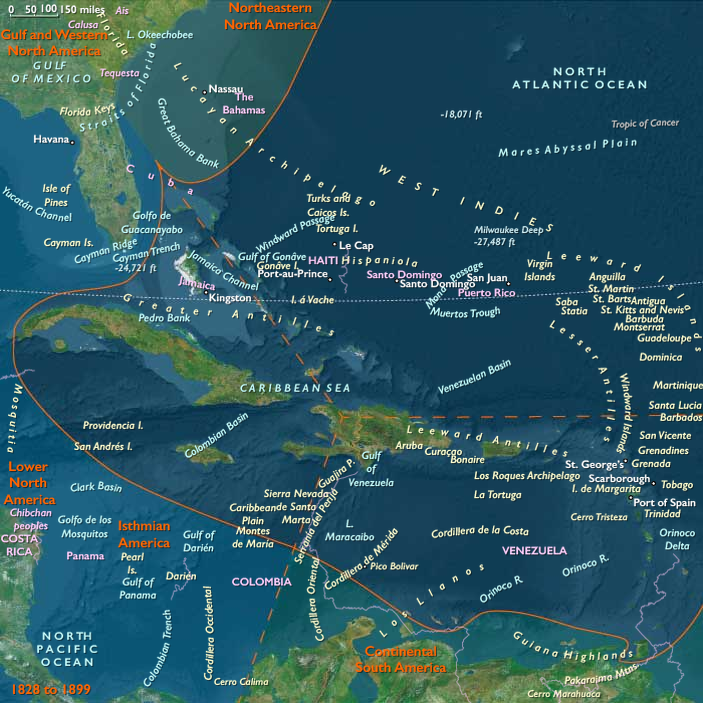
Gulf and Western North America (1804–1815 CE): Territorial Expansion and Indigenous Transformations
American Territorial Expansion and Indigenous Alliances
Following the Louisiana Purchase of 1803, the United States government seeks alliances with local indigenous peoples to solidify its new territorial claims. Among these, the Caddo tribes maintain neutrality, providing vital information and acting as intermediaries. Their strategic non-alignment spares them from the brutal reprisals seen by other indigenous nations during the War of 1812, such as the Creeks, who suffer significantly under generals like William Henry Harrison, William Clark, and Andrew Jackson.
Exploration and Documentation of the West
This period sees intensified exploration of the newly acquired western territories. In 1805–1806, Army Lieutenant Zebulon Pike leads expeditions to the headwaters of the Mississippi River and explores the Red and Arkansas Rivers, venturing deep into Spanish-held territories and sighting the peak in Colorado now bearing his name. Naturalists such as Thomas Nuttall and John Bradbury accompany expeditions, documenting flora and fauna extensively. Nuttall's later work, including his influential book "A Journal of Travels into the Arkansas Territory," significantly contributes to early American natural history, despite the eventual loss of many of his specimens and records.
Comanche Power and Plains Warfare
The Comanche experience substantial demographic growth during this period, bolstered by plentiful buffalo herds, continuous Shoshone migrations, and the integration of large numbers of captives from various groups. Their skill in capturing and training wild horses further enhances their military and economic strength. With an estimated population of thirty to forty thousand people, the Comanche manage herds exceeding one hundred thousand horses, making them one of the most formidable equestrian powers on the Plains. Their strategic use of the full moon—known as the "Comanche Moon"—to conduct raids into Mexican territories, particularly the state of Chihuahua, underscores their military effectiveness.
Spanish Territorial and Administrative Changes
Spain adjusts administrative structures to reinforce its hold on the region. In 1804, the Spanish crown divides Las Californias into Baja California in the south and Alta California in the north. This administrative reorganization, combined with extensive land grants, encourages increased Spanish settlement and ranching activities, laying the foundations for California's distinct ranchero culture.
Key Historical Developments
-
The U.S. government establishes alliances with neutral indigenous nations such as the Caddo, leveraging their strategic neutrality.
-
Exploration led by figures like Zebulon Pike and Thomas Nuttall significantly expands American knowledge of the western territories.
-
The Comanche solidify their position as a dominant force on the southern Plains, utilizing their immense equestrian resources and strategic warfare practices.
-
Spanish administrative restructuring of California enhances settlement and development, reinforcing Spanish influence in the region.
Long-Term Consequences and Historical Significance
The years from 1804–1815 mark a critical era of territorial exploration, indigenous adaptation, and strategic alignments in Gulf and Western North America. The United States' westward expansion, coupled with the resilient adaptations of indigenous groups such as the Comanche, sets the stage for future conflicts and alliances, profoundly shaping the demographic and geopolitical landscape of the American West.
After the 1803 Louisiana Purchase, by which the United States has taken over the former French colonial territory west of the Mississippi River, the U.S government seeks to ally with the Caddo peoples.
During the War of 1812, American generals such as William Henry Harrison, William Clark, and Andrew Jackson crush pro-British uprisings among other Southeast Indians, in particular the Creeks.
Due to the Caddo's neutrality and their importance as a source of information for the Louisiana Territory government, they are left alone.
Jackson had resigned the judgeship in 1804.
His official reason for resigning was ill health.
He had been suffering financially from poor land ventures, and so it is also possible that he wanted to return full-time to his business interests.
In addition to his legal and political career, Jackson prospers as planter, slave owner, and merchant.
He had built a home and the first general store in Gallatin, Tennessee, in 1803.
The next year, he had acquired the Hermitage, a six hundred and forty-acre (two hundred and fifty-nine hectares) plantation in Davidson County, near Nashville.
He will later add three hundred and sixty acres (one hundred and forty-six hectares) to the plantation, which will eventually totaled 1,050 acres (425 ha). The primary crop is cotton, grown by slaves—Jackson begins with nine, will own as many as forty-four by 1820, and later up to one hundred and fifty, placing him among the planter elite.
Jackson also co-owns with his son Andrew Jackson Jr. the Halcyon plantation in Coahoma County, Mississippi, which will house fifty-one slaves at the time of his death.
Throughout his lifetime Jackson may have owned as many as three hundred slaves.
Men, women, and child slaves are owned by Jackson on three sections of the Hermitage plantation.
Slaves live in extended family units of between five and ten persons and are quartered in twenty square feet (one point nine square meters) cabins made either of brick or logs.
The size and quality of the Hermitage slave quarters exceed the standards of his times.
To help slaves acquire food, Jackson supplies them with guns, knives, and fishing equipment.
At times he will pay his slaves with monies and coins to trade in local markets.
The Hermitage plantation is a profit-making enterprise.
Jackson permits slaves to be whipped to increase productivity or if he believes his slaves' offenses are severe enough.
At various times he will post advertisements for fugitive slaves who had escaped from his plantation.
For the standards of his times, Jackson is considered a humane slave owner who furnishes his slaves food and housing, and he does not prohibit his female slaves from having children.
Jackson had resigned the judgeship in 1804.
His official reason for resigning was ill health.
He had been suffering financially from poor land ventures, and so it is also possible that he wanted to return full-time to his business interests.
In addition to his legal and political career, Jackson prospers as planter, slave owner, and merchant.
He had built a home and the first general store in Gallatin, Tennessee, in 1803.
The next year, he had acquired the Hermitage, a six hundred and forty-acre (two hundred and fifty-nine hectares) plantation in Davidson County, near Nashville.
He will later add three hundred and sixty acres (one hundred and forty-six hectares) to the plantation, which will eventually totaled 1,050 acres (425 ha). The primary crop is cotton, grown by slaves—Jackson begins with nine, will own as many as forty-four by 1820, and later up to one hundred and fifty, placing him among the planter elite.
Jackson also co-owns with his son Andrew Jackson Jr. the Halcyon plantation in Coahoma County, Mississippi, which will house fifty-one slaves at the time of his death.
Throughout his lifetime Jackson may have owned as many as three hundred slaves.
Men, women, and child slaves are owned by Jackson on three sections of the Hermitage plantation.
Slaves live in extended family units of between five and ten persons and are quartered in twenty square feet (one point nine square meters) cabins made either of brick or logs.
The size and quality of the Hermitage slave quarters exceed the standards of his times.
To help slaves acquire food, Jackson supplies them with guns, knives, and fishing equipment.
At times he will pay his slaves with monies and coins to trade in local markets.
The Hermitage plantation is a profit-making enterprise.
Jackson permits slaves to be whipped to increase productivity or if he believes his slaves' offenses are severe enough.
At various times he will post advertisements for fugitive slaves who had escaped from his plantation.
For the standards of his times, Jackson is considered a humane slave owner who furnishes his slaves food and housing, and he does not prohibit his female slaves from having children.
By May 1806, Charles Dickinson, who, like Jackson, races horses, had published an attack on Jackson in the local newspaper, and it results in a written challenge from Jackson to a duel.
Since Dickinson is considered an expert shot, Jackson determines it will be best to let Dickinson turn and fire first, hoping that his aim might be spoiled in his quickness; Jackson will wait and take careful aim at Dickinson.
Dickinson does fire first, hitting Jackson in the chest.
The bullet that strikes Jackson is so close to his heart that it cannot be removed.
Under the rules of dueling, Dickinson has to remain still as Jackson takes aim and shoots and killed him.
Jackson's behavior in the duel outrages men in Tennessee, who call it a brutal, cold-blooded killing and saddle Jackson with a reputation as a violent, vengeful man.
He becomes a social outcast.
He chooses to align himself with former Vice President Aaron Burr, who after leaving office in 1805 had gone on a tour of the western United States.
Burr is extremely well received by the people of Tennessee, and stays for five days at the Hermitage.
Burr's true intentions are not known with certainty.
He seems to have been planning a military operation to conquer Spanish Florida and drive the Spanish from Texas.
To many westerners like Jackson, the promise seems enticing.
Western American settlers have long held bitter feelings towards the Spanish due to territorial disputes and the persistent failure of the Spanish to keep natives living on their lands from raiding American settlements.
On October 4, 1806, Jackson addresses the Tennessee militia, declaring that the men should be "at a moment's warning ready to march."
On the same day, he writes to James Winchester, proclaiming that the United States "can conquer not only the Floridas [At this time there is an East Florida and a West Florida.], but all Spanish North America."
He continues:
I have a hope (Should their be a call) that at least, two thousand Volunteers can be lead into the field at a short notice—That number commanded by firm officers and men of enterprise—I think could look into Santafee and Maxico—give freedom and commerce to those provinces and establish peace, and a permanent barier against the inroads and attacks of forreign powers on our interior—which will be the case so long as Spain holds that large country on our borders.
However, on November 10, he learns from a military captain that Burr's plans apparently include seizure of New Orleans, at this time part of the Louisiana Territory of the United States, and incorporating it, along with lands won from the Spanish, into a new empire.
He is further outraged when he learns from the same man of the involvement of Brigadier General James Wilkinson, whom he deeply dislikes, in the plan.
Jackson acts cautiously at first, but writes letters to public officials, including President Thomas Jefferson, vaguely warning them about the scheme.