Charles Blount, Lord Mountjoy
8th baron Mountjoy; English aristocrat and soldier who serves as Lord Deputy of Ireland
Years: 1563 - 1604
Charles Blount (pronounced blunt), 8th Baron Mountjoy and 1st Earl of Devonshire (1563 – 3 April 1606) is an English nobleman and soldier who serves as Lord Deputy of Ireland under Queen Elizabeth I, then as Lord Lieutenant under King James I.

Related Events
Filter results
Showing 10 events out of 14 total
A second offensive into Offaly goes ahead, despite the queen's disapproval.
Maryborough and Philipstown (where sixty men have just been lost in an ambuscade) are around July 25 resupplied by Blount and Essex, respectively.
Essex, during his confinement at York House, has probably communicated with King James VI of Scotland through Lord Mountjoy, although any plans he may have had at this time to help the Scots king capture the English throne come to nothing.
Mountjoy had been appointed in October to replace him in Ireland, and matters had seemed to look up for the Earl.
The queen is reported to have said in November that the truce with O'Neill had been "so seasonably made… as great good… has grown by it."
Others in the Council are willing to justify Essex's return to Ireland, on the grounds of the urgent necessity of a briefing by the commander-in-chief.
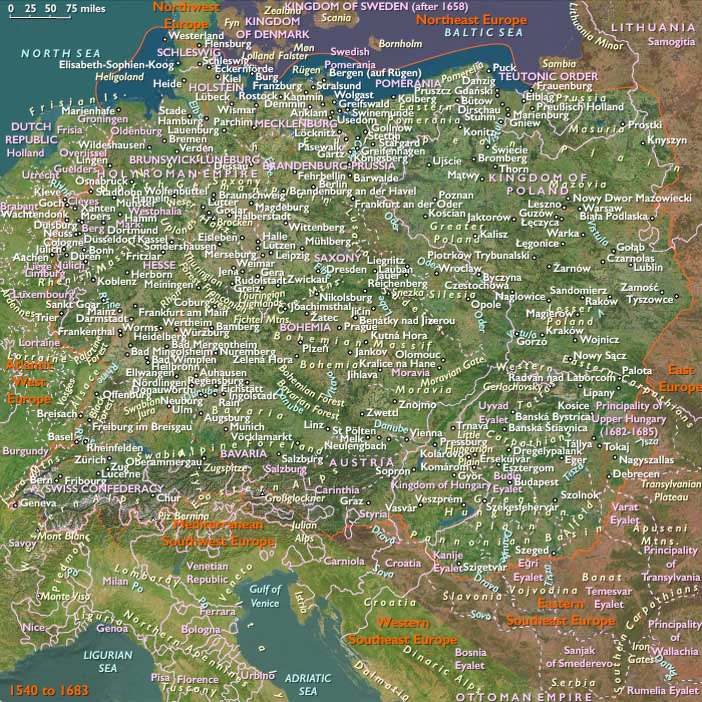
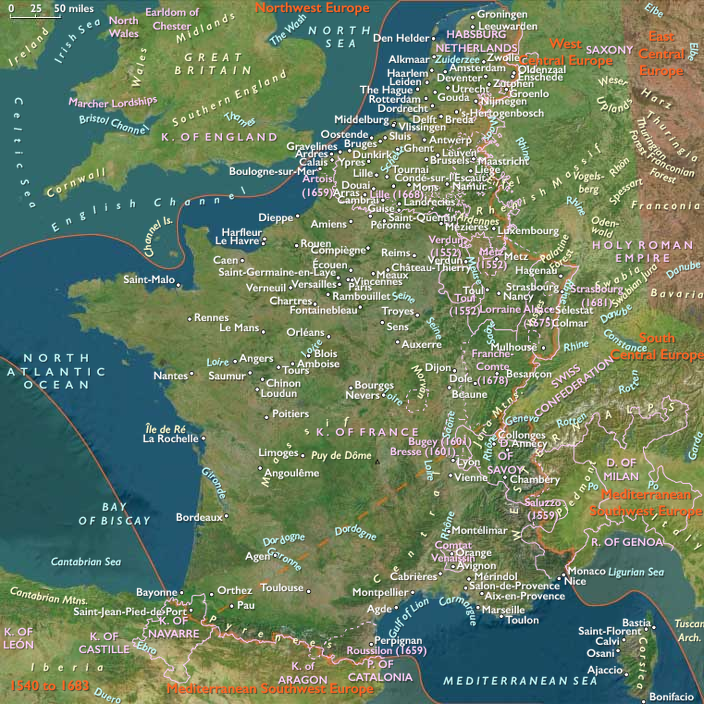
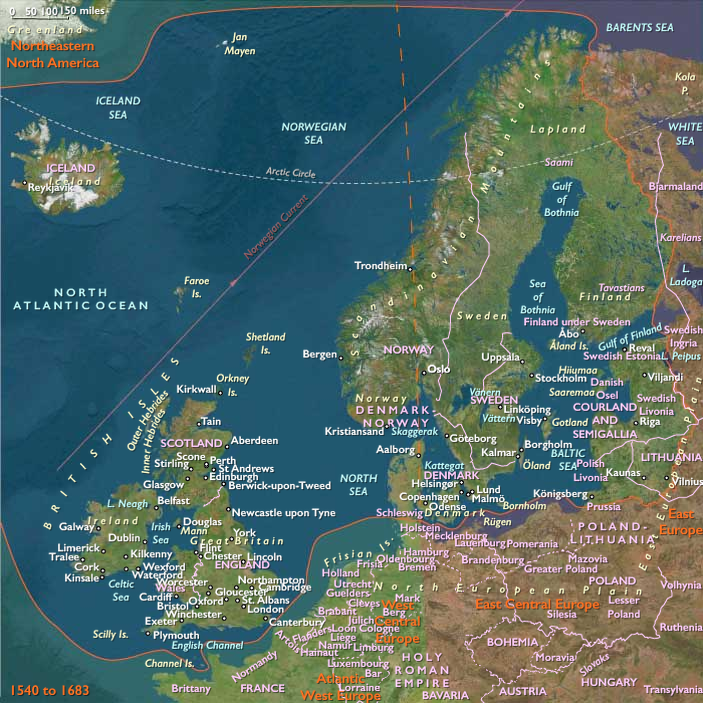
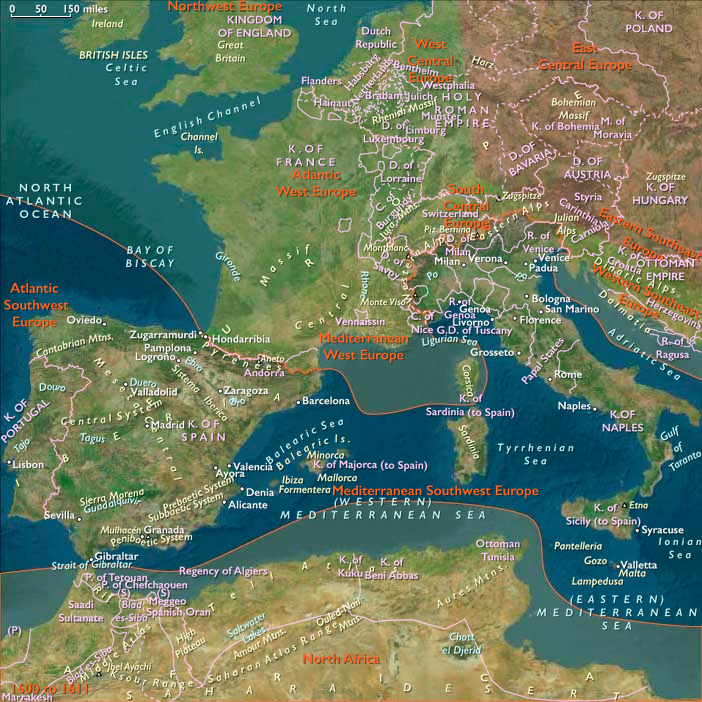
Northwest Europe (1600–1611 CE): Transitions, Unifications, and Continued Struggles
England: End of the Elizabethan Era
The opening years of the seventeenth century saw the culmination and conclusion of the Elizabethan age. Queen Elizabeth I died in 1603, bringing to an end her long and largely successful reign. She was succeeded by James VI of Scotland, who ascended the English throne as James I, marking the beginning of the Stuart dynasty. This union of the crowns under James initiated a new political landscape, uniting Scotland and England under a single monarch, though both countries retained separate parliaments and administrations.
James I faced immediate challenges, notably the Gunpowder Plot of 1605, a failed Catholic conspiracy led by Robert Catesby and famously involving Guy Fawkes, who sought to assassinate the king and destroy Parliament. The plot's failure heightened anti-Catholic sentiments and intensified religious tensions within the realm. James, concerned about Catholic threats and assassination attempts justified by European Catholic writings, responded by expelling Jesuits and other Catholic priests from England and reimposing fines for recusancy, further aggravating religious tensions.
Ireland: End of Tyrone’s Rebellion
The prolonged Nine Years' War in Ireland reached its conclusion during this period. Hugh O'Neill, Earl of Tyrone, initially successful in employing guerrilla tactics, ultimately suffered defeat at the Battle of Kinsale in 1601. This decisive English victory under Lord Mountjoy marked the collapse of Gaelic resistance and the reaffirmation of English authority. The Treaty of Mellifont (1603) formalized O'Neill's submission, bringing temporary peace but setting the stage for subsequent displacements and the Plantation of Ulster, which began in earnest during these years, profoundly reshaping Ireland’s demographic and cultural landscape.
Scotland: Consolidation under James VI
With his ascension to the English throne, James VI sought to unify his realms more closely, though political and religious differences persisted. James advocated strongly for his concept of the divine right of kings, detailed in his writings such as the Basilikon Doron. His efforts to harmonize Scottish and English policies, however, met resistance from both nations’ elites, complicating his vision for a unified Britain.
Scandinavia: Continued Prosperity under Christian IV
Christian IV of Denmark-Norway continued to strengthen his realms economically and culturally. His reign saw the expansion of trade and infrastructure, notably with significant improvements in Copenhagen. Christian actively promoted exploration, initiating expeditions to North America, and further reinforced Lutheran orthodoxy, asserting greater control over religious and social life.
Cultural Achievements: Flourishing Literature and Theater
English culture continued to thrive under James I, who actively patronized literary and theatrical arts. William Shakespeare produced some of his greatest tragedies during this era, including Hamlet (1601), Othello (1603–1604), and King Lear (1605–1606). The theatrical scene also featured the works of other notable playwrights such as Ben Jonson, whose satirical comedies like Volpone (1605–1606) achieved considerable acclaim. The issuance of the King James Bible in 1611 became a cornerstone for English literature and Protestant thought.
Maritime and Colonial Ambitions
Maritime exploration and imperial ambitions persisted. The English established their first permanent settlement in North America at Jamestown, Virginia in 1607, signaling the beginning of sustained English colonial presence. The Virginia Company of London financed this venture, hoping to profit from gold and other resources, though the colony initially struggled with harsh conditions and high mortality rates. The East India Company, established in 1600, began asserting England's global commercial presence, contending with Iberian rivals for domination of world trade.
Legacy of the Era
By 1611 CE, Northwest Europe had undergone significant transformations, marked by dynastic changes, the conclusion of major rebellions, and continued cultural flourishing. The peaceful transition from Elizabethan to Stuart rule in England, despite challenges such as the Gunpowder Plot, laid the foundation for ongoing debates over monarchy and governance. Ireland’s defeat at Kinsale fundamentally altered its societal structure, setting patterns of colonization and conflict. Scotland’s integration with England under James VI and I began reshaping both kingdoms politically. Meanwhile, cultural achievements, particularly in drama and literature, maintained their vibrancy, continuing to enrich European civilization profoundly.
Thomas Lee, four days after the apprehension of Essex on charges of treason, seeks the assistance of Sir Henry Nevill and Sir Robert Crosse (with four other gentlemen) to surprise the queen in her privy chamber at supper tim.
His plan is to lock her in and pin her up until she signs a warrant for the delivery of Essex.
However, Crosse informed the authorities of their plan, and Lee is apprehended as he watches the door of the chamber in preparation for an attempt on the following evening.
Lee is tried the next day.
Crosse testifies against him.
Lee denies the construction put upon his words by the attorney-general and speaks boldly in defense of Essex, who had written in commendation of him to Lord Mountjoy.
He admits that "it was ever my fault to be loose and lavish of my tongue", adding that "he had lived in misery and cared not to live, his enemies were so many and so great".
Upon conviction and sentencing, he pleads for his son's inheritance.
He is put to death at Tyburn the same day, dying "very christianly".
Charles Blount, the second son of James Blount, 6th Baron Mountjoy, has become the most notable of the later holders of the barony, inheriting the title in 1594 on the death of his unmarried elder brother William.
The favor which his youthful good looks had procured for him from Queen Elizabeth I of England had aroused the jealousy of Robert Devereux, 2nd Earl of Essex, and led to a duel between the two courtiers, who later became close friends.
Charles between 1586 and 1598 had spent a lot of time on the continent, serving in the Netherlands and in Brittany.
He had joined Essex and Sir Walter Raleigh in their expedition to the Azores in 1597, along with his distant cousin, Sir Christopher Blount, who had married Essex's mother, Lettice Knollys, the Dowager Countess of Leicester.
Mountjoy had gone to Ireland in 1600 as Lord Deputy in succession to Essex.
He successfully orders an amphibious landing in July 1601 at Lough Foyle, near Derry, which penetrates the north of the province and undermines the rebels.
The Irish rebels have been seeking help from Spain since 1591, and in 1601 a Spanish landing finally materializes.
Bad weather has separated the ships dispatched by Philip III of Spain, and nine of them, carrying the majority of veteran soldiers and gunpowder, have had to turn back, but the remaining four thousand men disembark on October 2, 1601, at Kinsale, just south of Cork.
Another force commanded by Alonso de Ocampo manages to land at Baltimore.
The Spaniards rush to fortify the precarious fortifications to withstand the approaching English armies.
Mountjoy, on hearing of the Spanish landing, weakens the garrisons around the Pale and rushes to Kinsale with as many men as he can take, where he lays siege to the town.
Reinforcements are brought in through Oysterhaven, the army's complement up to twelve thousand, but many of these fall ill, and only about seventy-five hundred are capable of fighting.
At the same time, Hugh O'Neill and his ally O'Donnell consider their positions, before setting out—separately from each other—with a total of five thousand infantry and seven hundred cavalry, on a three hundred-mile winter march.
The combined armies of O’Neill, O’Donnell and Tyrrell come to six thousand one hundred and eighty.
This includes five hundred of Donal Cam O'Sullivan Beare’s men, and two hundred of Ocampo’s Spaniards.
Lord Mountjoy's forces are incapable of surrounding the town of Kinsale and its surrounding area's (now called Belgooley) but they do seize some higher ground and subject the Spanish forces to constant artillery fire.
The English cavalry, pursuing a scorched-earth policy, rides through the surrounding countryside destroying livestock and crops, while both sides call for allegiance from the population.